Notes from the workshop.
Engineering writeups on combustion physics, simulator internals, and the decisions behind the sandbox.
 17 min read
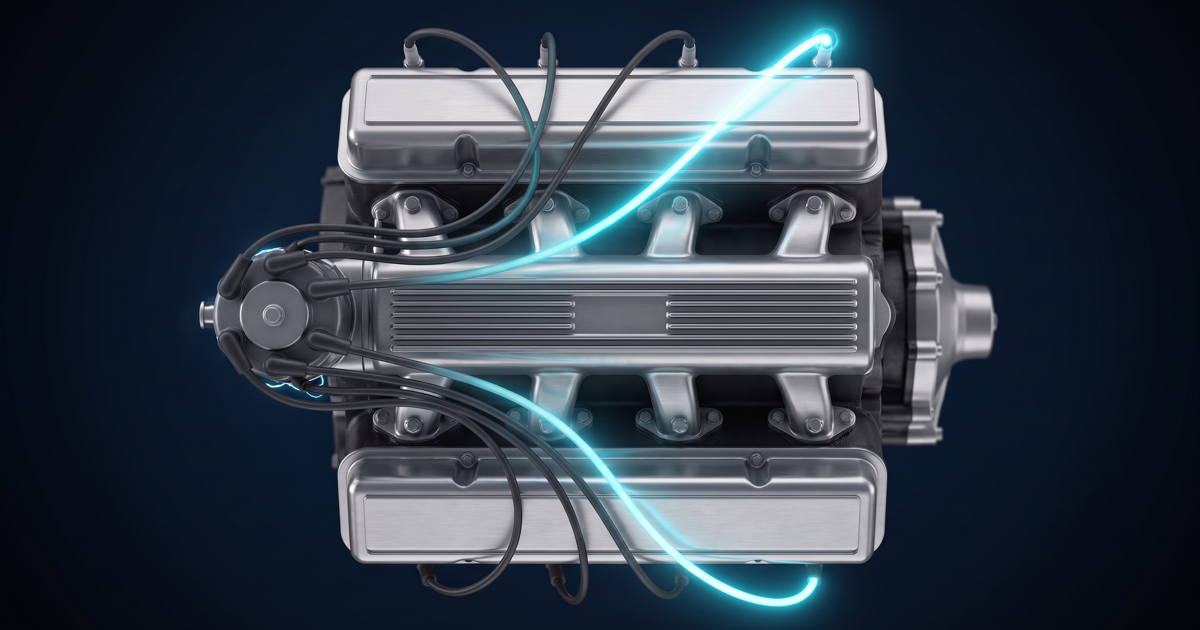
Firing Order Explained: SBC, LS, Ford, Hemi and Diesel Orders
Firing order is the sequence an engine's cylinders fire in: the SBC, LS, Ford, Hemi, Duramax and Power Stroke orders, cylinder numbering, and what it changes.
Read post →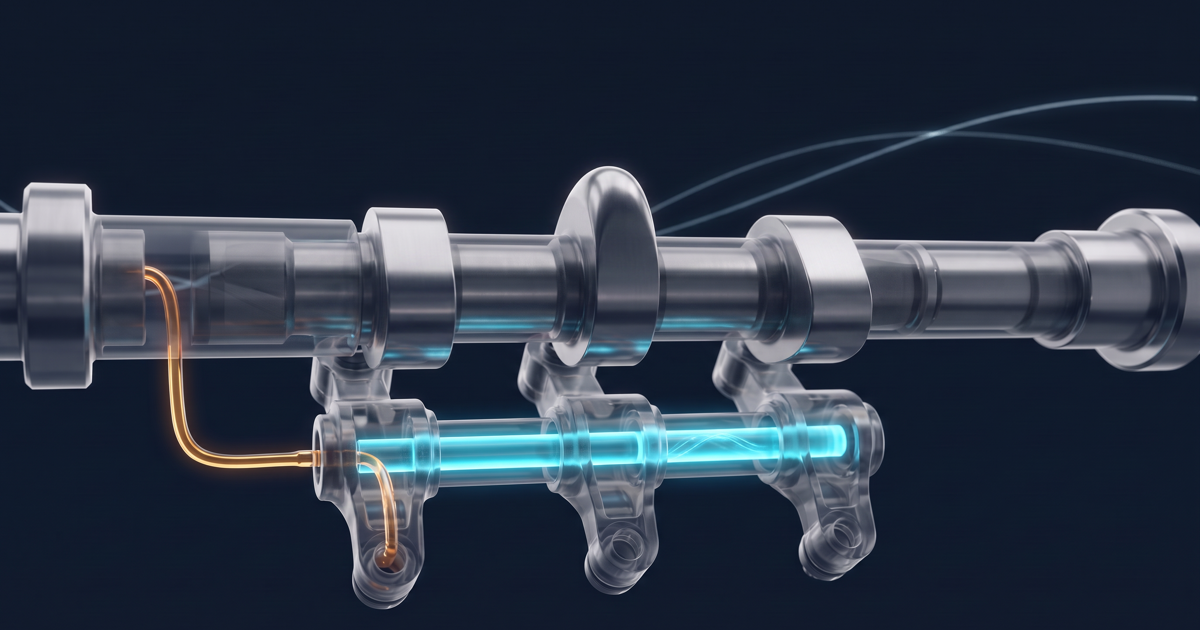 16 min read
How Does VTEC Work? Variable Valve Timing on the Dyno
How VTEC works: two cam profiles, a hydraulic pin, and a switch at the rpm where the two torque curves cross. Measured on a 2.0 L four, and how VVT-i differs.
Read post →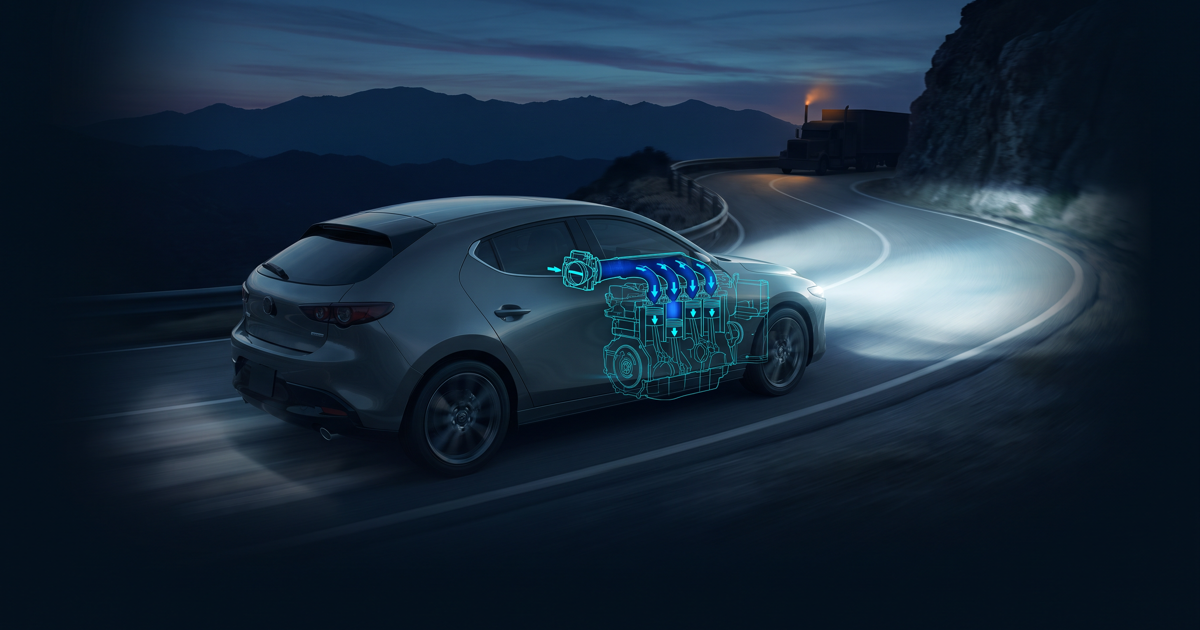 19 min read
What Is Engine Braking? We Measured It on Gasoline and Diesel
Engine braking is the drag an engine puts on a car in gear when you lift off. How it works, whether it is bad, and why trucks need Jake brakes, measured.
Read post →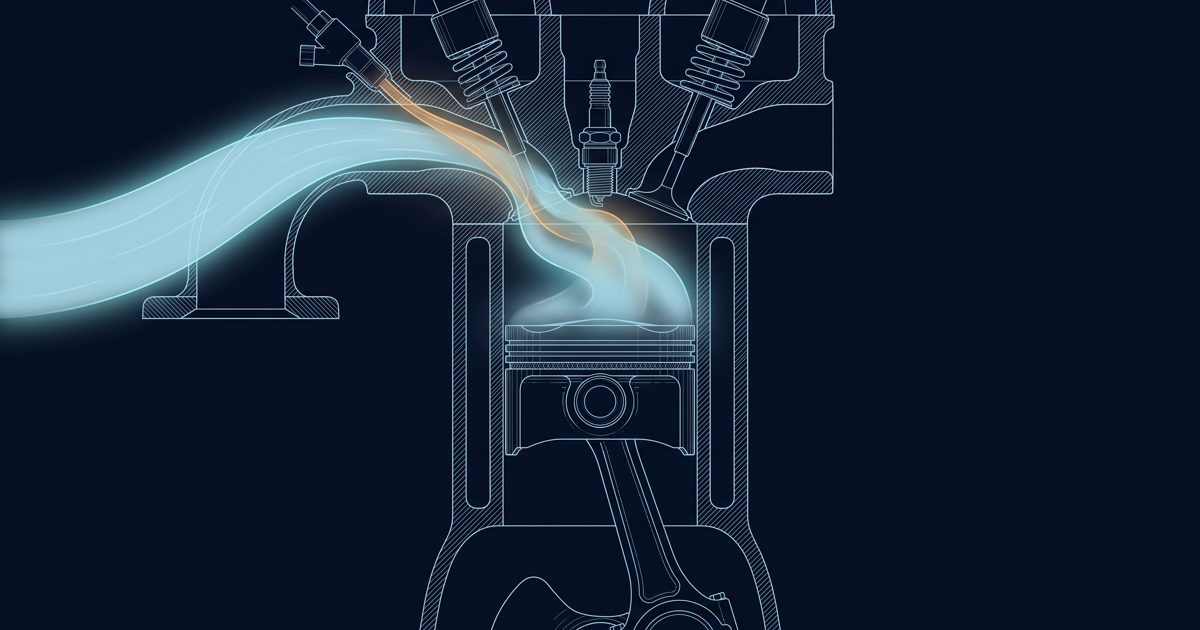 17 min read
Air-Fuel Ratio Explained: Stoichiometric, Lean vs Rich, and a Good AFR
What air-fuel ratio means, why 14.7:1 is gasoline's number only, what lean and rich do to power and fuel, and a simulator where you drag lambda and watch.
Read post →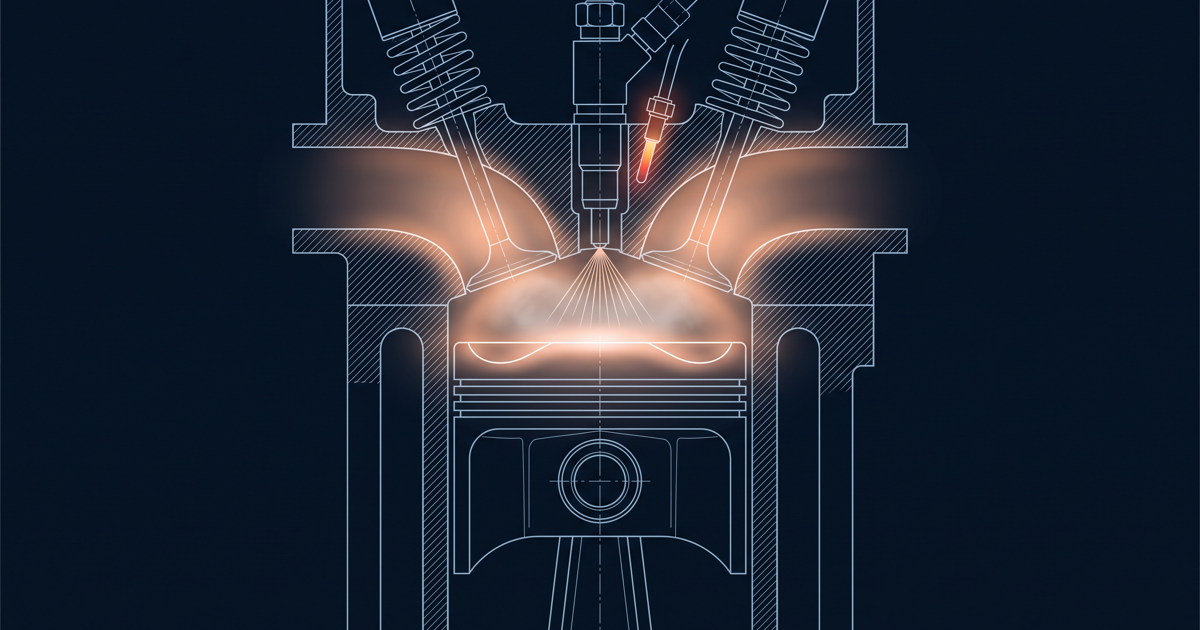 13 min read
Does a Diesel Engine Have Spark Plugs? No, and What Replaces Them
Diesels have no spark plugs, coils or distributor: compressed air lights the fuel on contact. What glow plugs are for, why 17.5:1 matters, and a simulator to try.
Read post →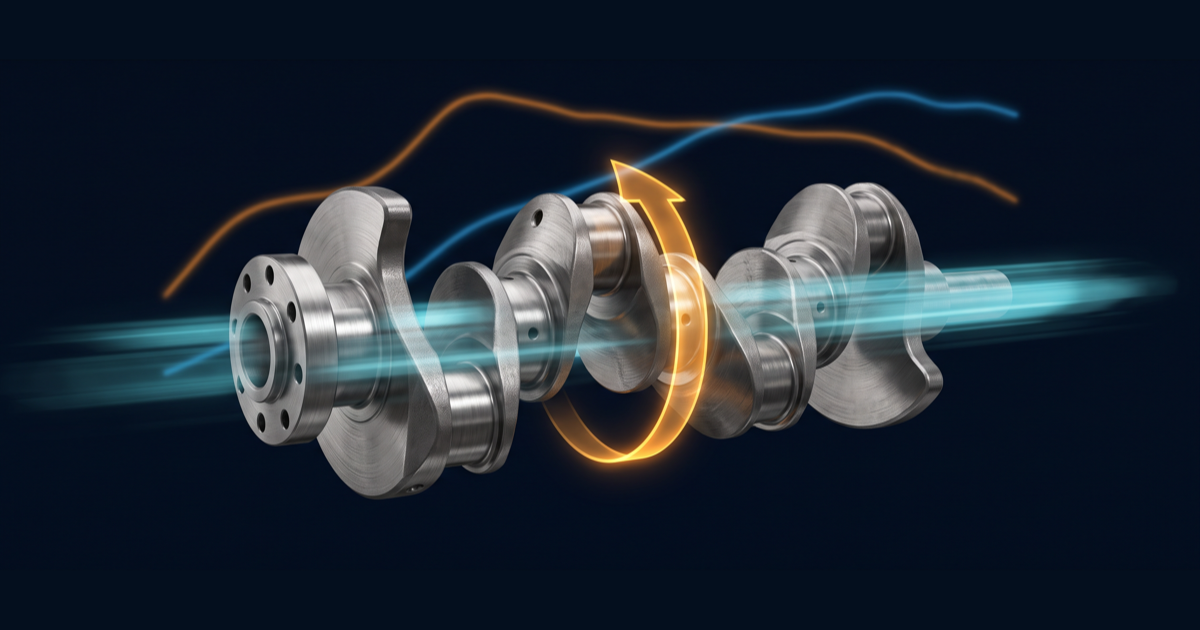 16 min read
Horsepower vs Torque: The Difference, Measured on a Dyno
Torque is the twist, horsepower is torque times speed, and the curves cross at 5,252 rpm. Measured on a turbo-diesel, a pushrod V8 and an F1 V8.
Read post → 22 min read
Does a Bigger Turbo Really Mean More Lag? We Sized Five and Timed Them
Five turbo wheels, 60 to 110 mm, on one 3.0 L six at the same 1.92 bar target. We timed each to boost at four speeds and found where lag turns into never.
Read post → 22 min read
Supercharger vs Turbocharger: Which Makes More Power? We Fitted Both to One V8
Supercharger or turbocharger? We fitted a Roots, a centrifugal and a turbo to one 6.2 V8. The turbo wins peak power, the Roots leads below 2,080 rpm.
Read post → 22 min read
How Much Horsepower Does One Point of Compression Add? We Measured It
Forums say 3–4% per point. We swept an LS7 and a 4.6 Modular from 8.5:1 to 13.5:1 with knock on and off, and found where the gain stops being free.
Read post → 20 min read
Why Do Diesel Engines Make So Much Torque? We Took the Turbo Off to Find Out
Long stroke, high compression, or the turbo? We measured a Cummins 6BT against two gasoline V8s, then removed each lever to see which one torque follows.
Read post →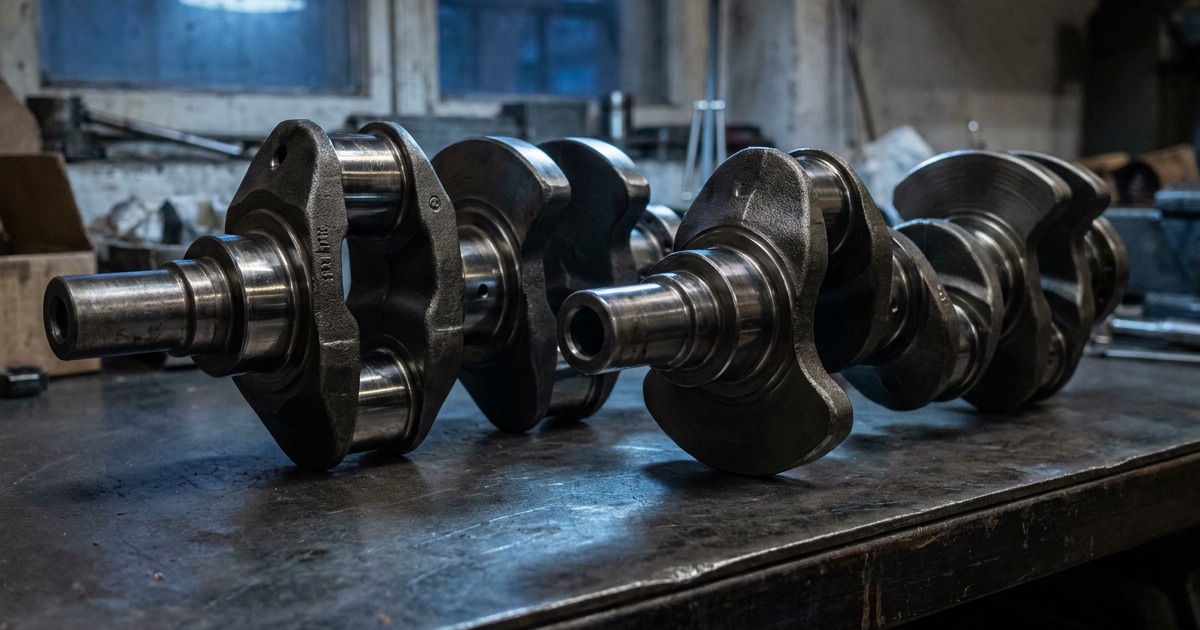 14 min read
Cross-Plane vs Flat-Plane Crank: Why V8s Sound Different
Cross-plane V8s burble and flat-plane V8s scream, yet both fire every 90°. What a flat-plane crank is, what each exhaust bank hears, and whether it costs power.
Read post →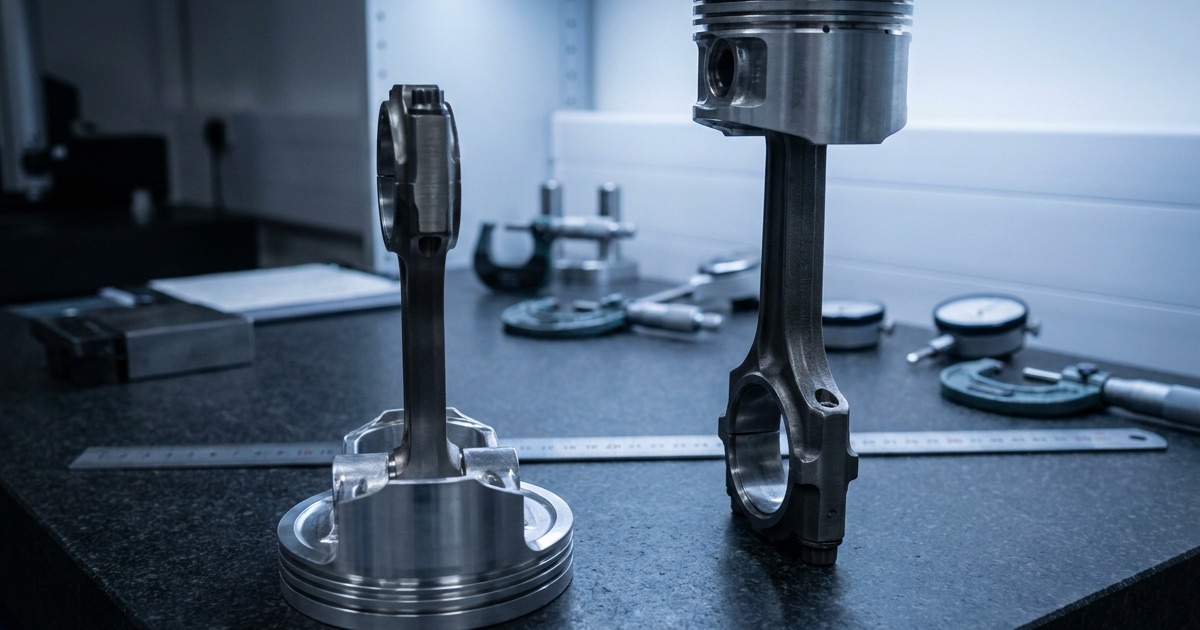 14 min read
Why F1 Engines Could Rev to 20,000 rpm (and Why Yours Can't)
A 39.75 mm stroke is the whole trick. We ran the Cosworth CA2006 against its nine-point published power curve and landed within 1.9% at the rated point.
Read post → 16 min read
8 Engine Experiments for the Classroom (No Dyno Required)
Compression ratio, knock, torque vs power, boost — eight reproducible experiments built on a free browser simulator, each with the measured numbers and an honest note on where the model and reality part ways.
Read post →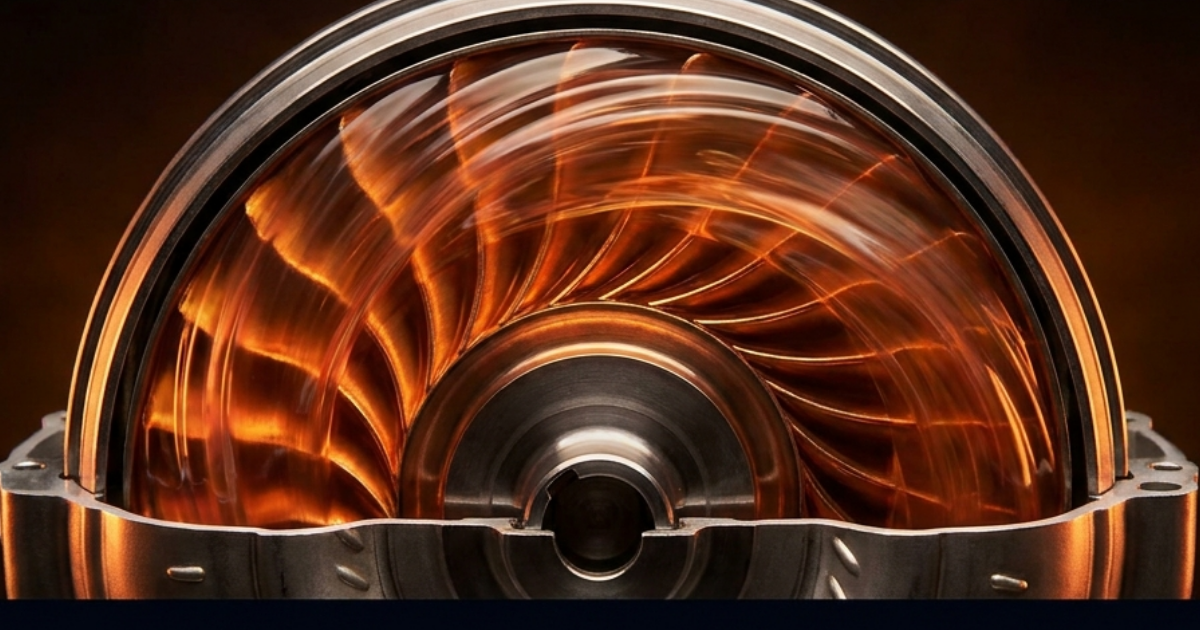 15 min read
How a Torque Converter Works (And Why It Can Be Quicker Than a Clutch)
A converter multiplies torque before the car even moves. Measured on real gearboxes in the simulator: 2.10x at a dead stop, a coupling point at 2.4 seconds, and automatics beating manuals off the line.
Read post → 12 min read
Inline-6 vs V6: We Built Both at 3.0 Litres and Measured Them
Two three-litre sixes on identical physics, one inline and one 60° V. Peak power lands 1.1% apart, and with every other variable held equal the layout is worth 0.02 hp. What it does decide: balance, packaging and boost.
Read post →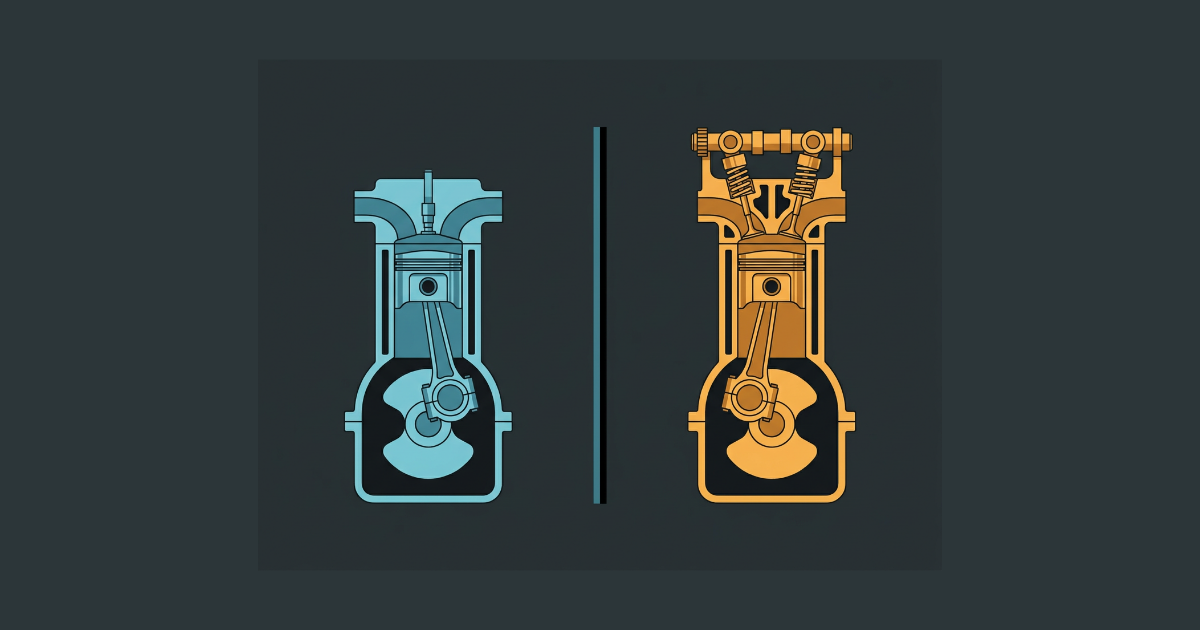 14 min read
Two-Stroke vs Four-Stroke Engine: What Actually Differs (Measured)
A two-stroke fires every revolution, so it should make twice the power at equal displacement. It doesn't — measured here at 1.89x to 2.35x, and the reason is not what most explanations say.
Read post →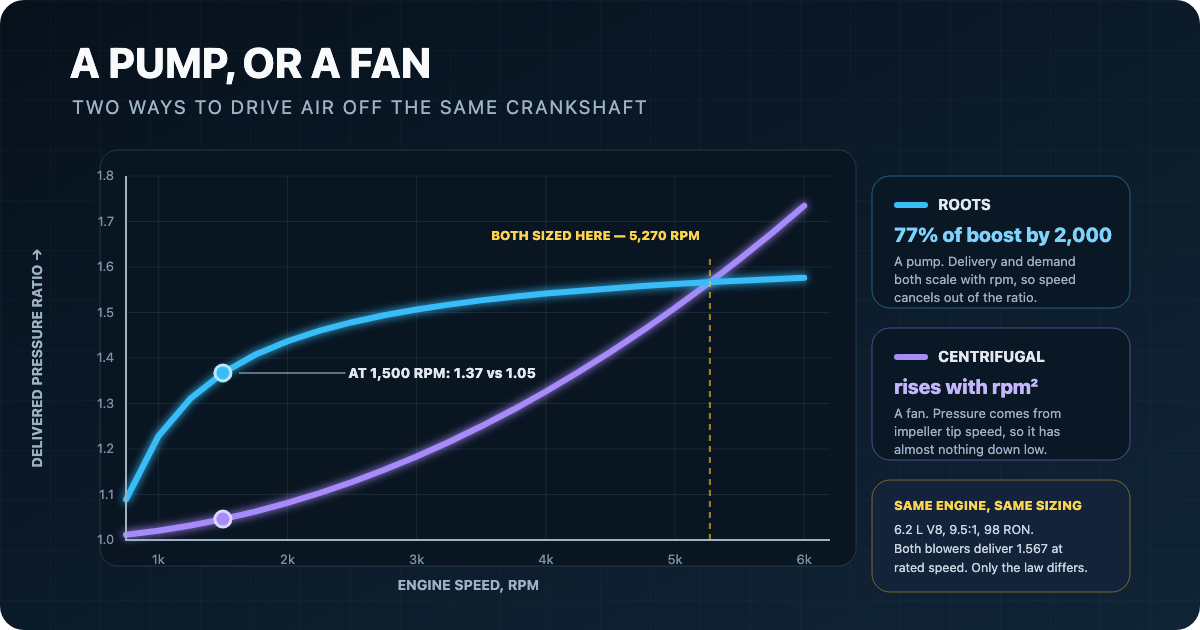 17 min read
Roots vs Centrifugal Supercharger: Boost Curves Compared
Two crank-driven blowers, two pressure laws. Measured torque, belt drag and charge heat on one 6.2 V8 — plus the A/B that says which difference matters.
Read post →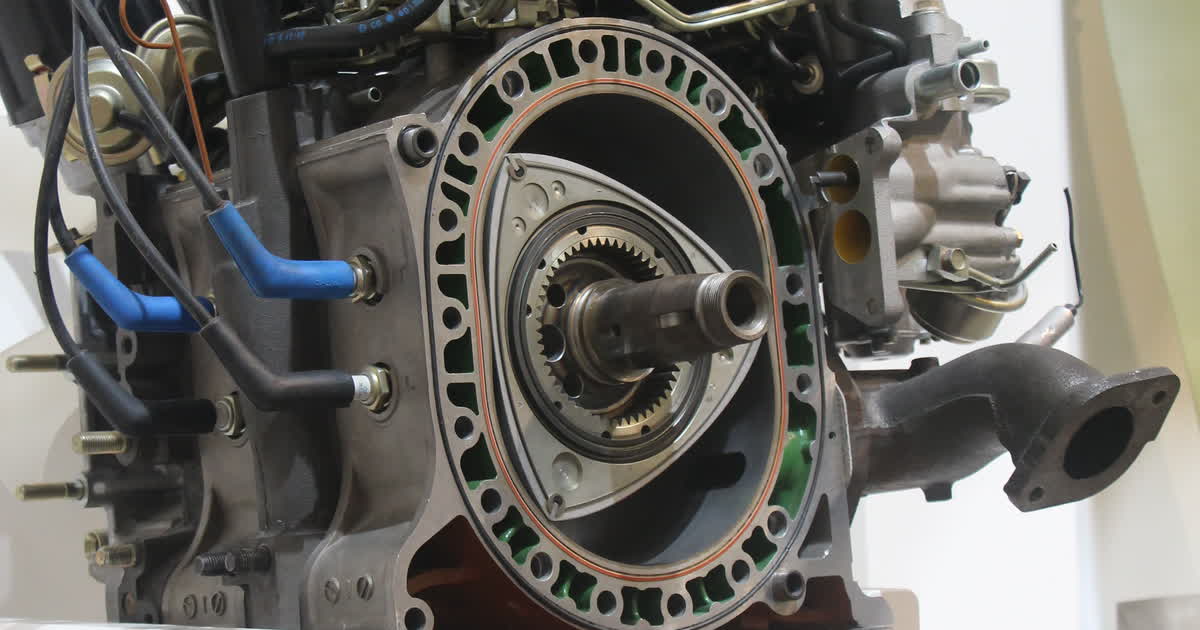 17 min read
Why the Rotary Engine Is Coming Back (and Why It Left)
Mazda stopped building rotary engines in 2012 and restarted in 2023. Why the Wankel returned as a generator, what killed it, and what the numbers show.
Read post →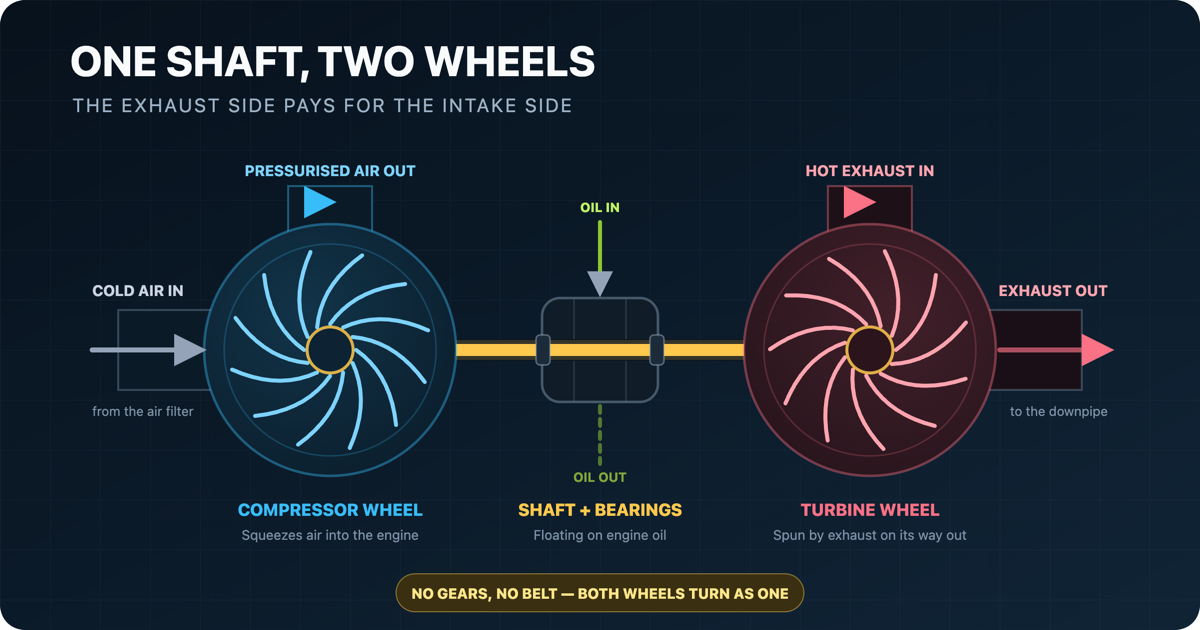 18 min read
How a Turbocharger Works (Boost, Lag, and Wastegates)
A turbocharger is an air pump driven by exhaust you were about to throw away. How the turbine, compressor, wastegate and intercooler work, with measured curves.
Read post →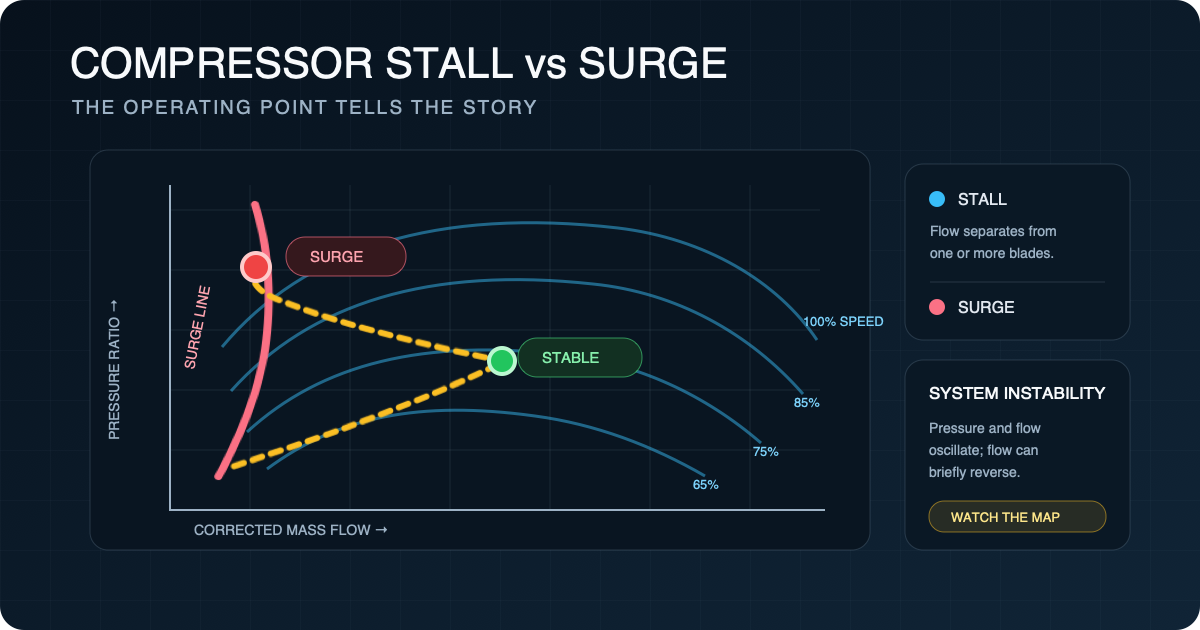 9 min read
Compressor Stall vs Surge in Jet Engines
Compressor stall is blade-passage flow separation, often local or rotating; surge is a system-wide oscillation. Learn the map, causes, and protection.
Read post →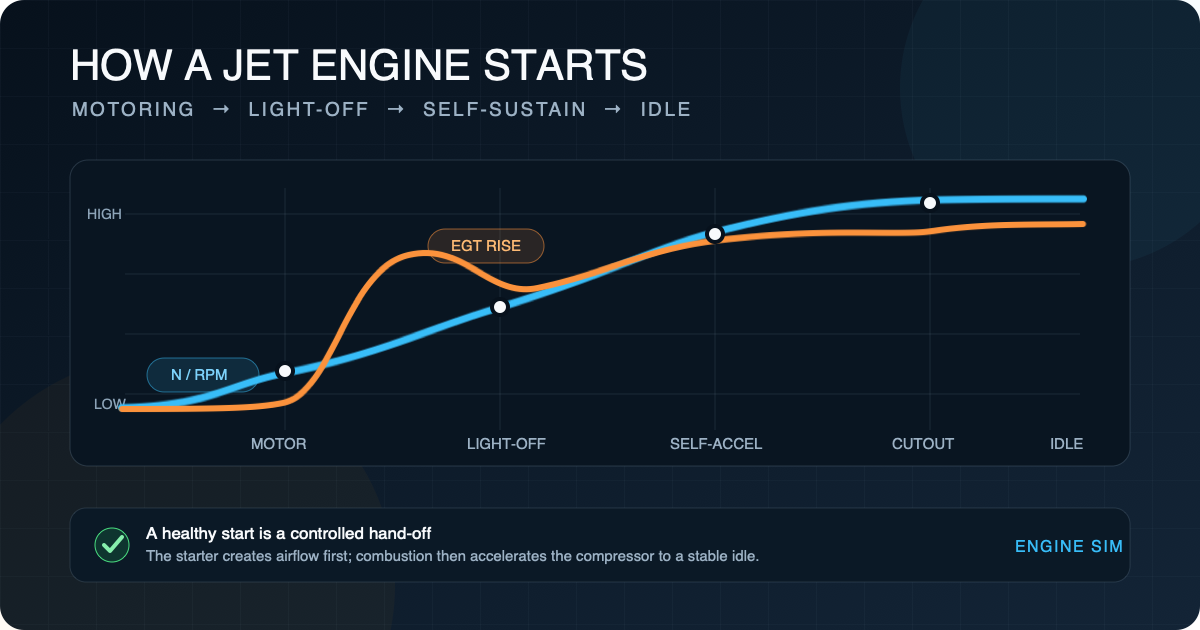 8 min read
How Does a Jet Engine Start? Step by Step
A jet engine starts by spinning its compressor, adding ignition and fuel, then accelerating to governed idle. The sequence, the gauges, and the failure modes.
Read post →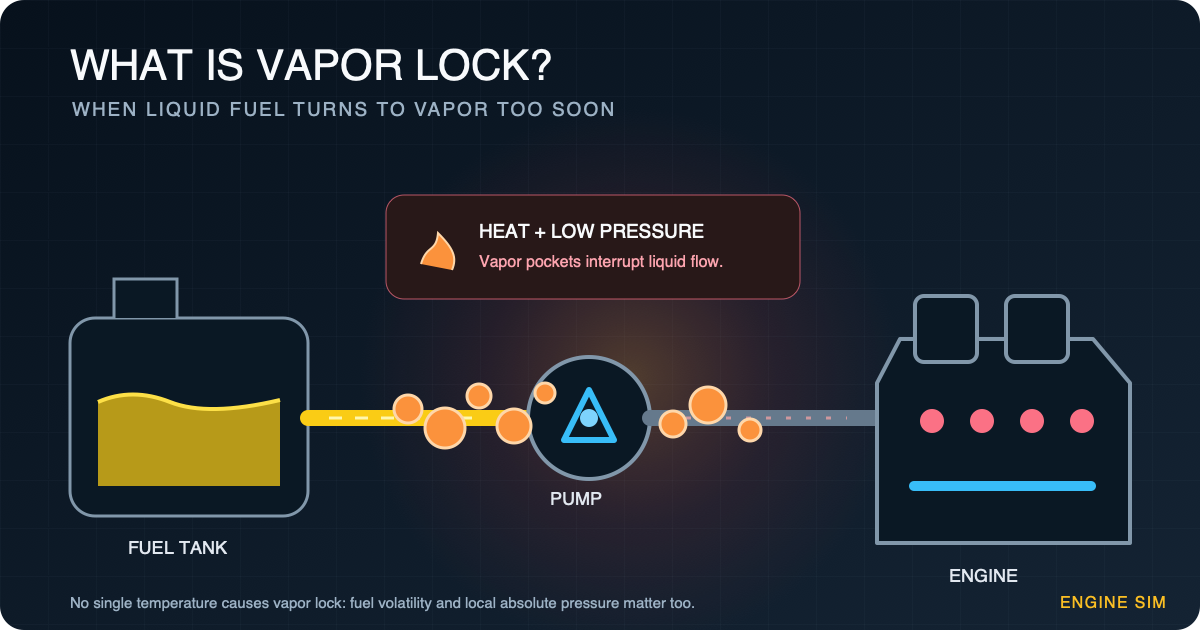 18 min read
What Is Vapor Lock? Symptoms, Causes and How to Fix It
Vapor lock is gasoline boiling in the fuel line, so the engine starves on a full tank. Symptoms, the temperature it starts at, roadside fixes, permanent cures.
Read post →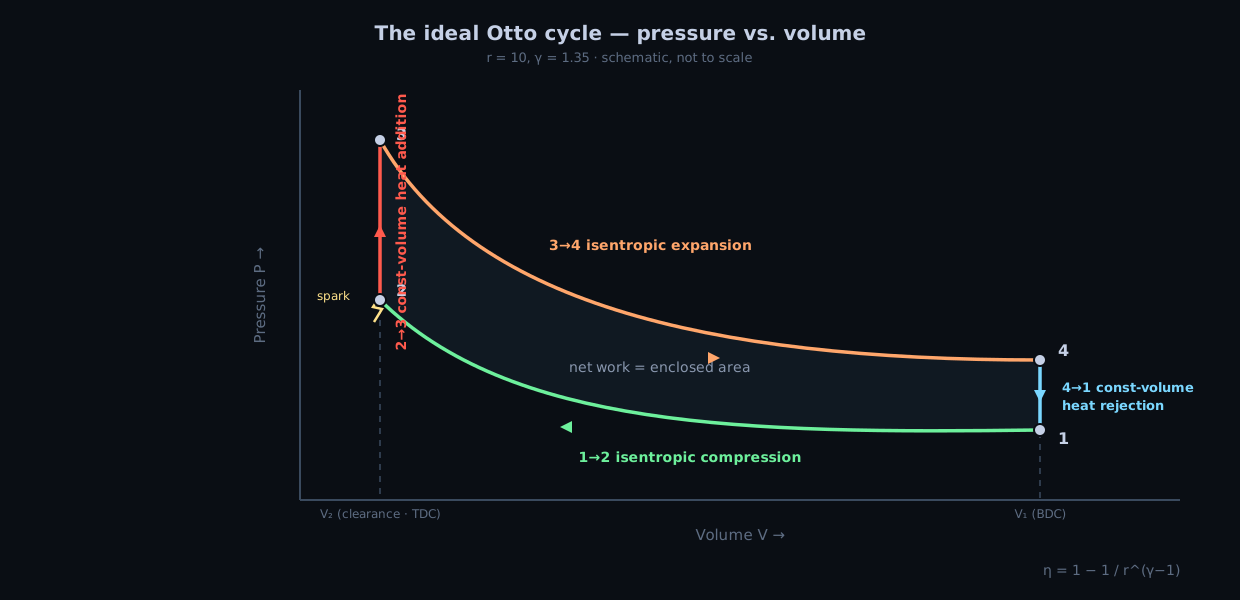 9 min read
Otto Cycle Explained: Live P-V Diagram and Efficiency Formula
The Otto cycle's four processes on a P-V diagram you can drag, the efficiency formula η = 1 − 1/r^(γ−1) worked at r = 10 (59%), and why real engines get half.
Read post →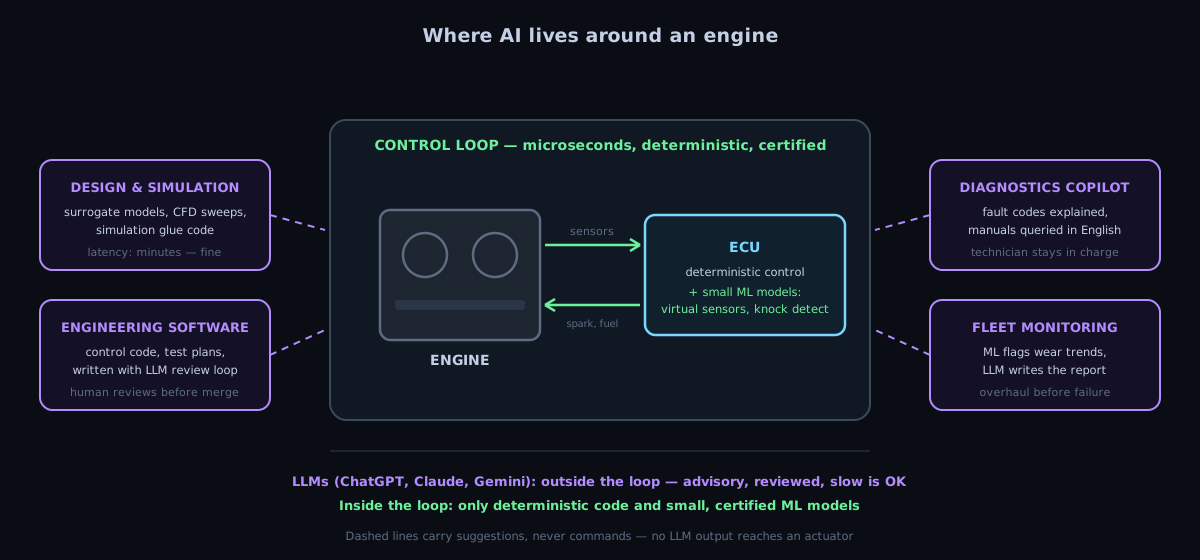 8 min read
AI in Engines: Can ChatGPT, Claude, or Gemini Run One?
LLMs like ChatGPT, Claude, and Gemini cannot run an engine, yet AI is already deep inside one. Where machine learning lives in a production engine, and where LLMs help.
Read post →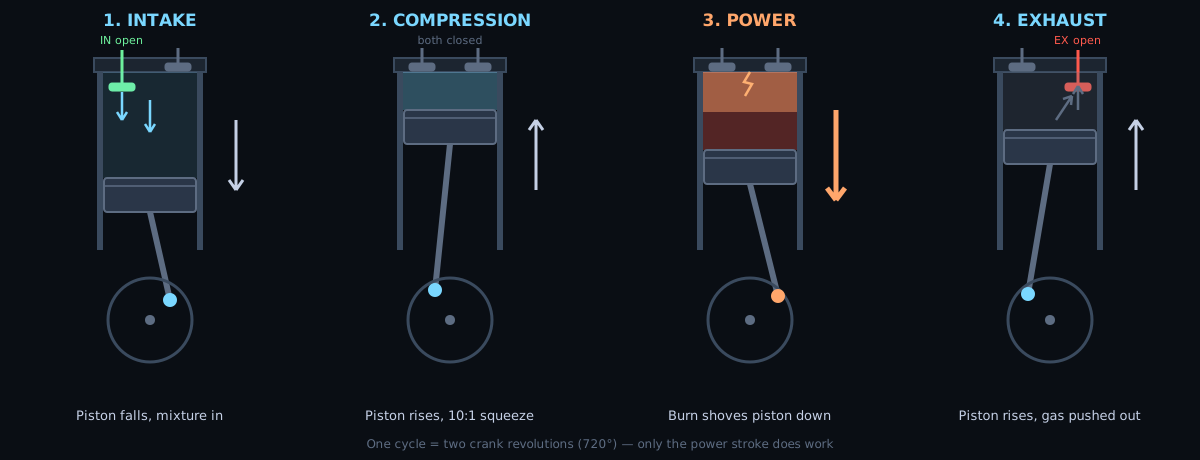 8 min read
The 4 Strokes of an Engine: Intake, Compression, Power, Exhaust
What happens in each of the four strokes of an engine (intake, compression, power, exhaust), why only one of them makes power, and an engine you can watch run.
Read post →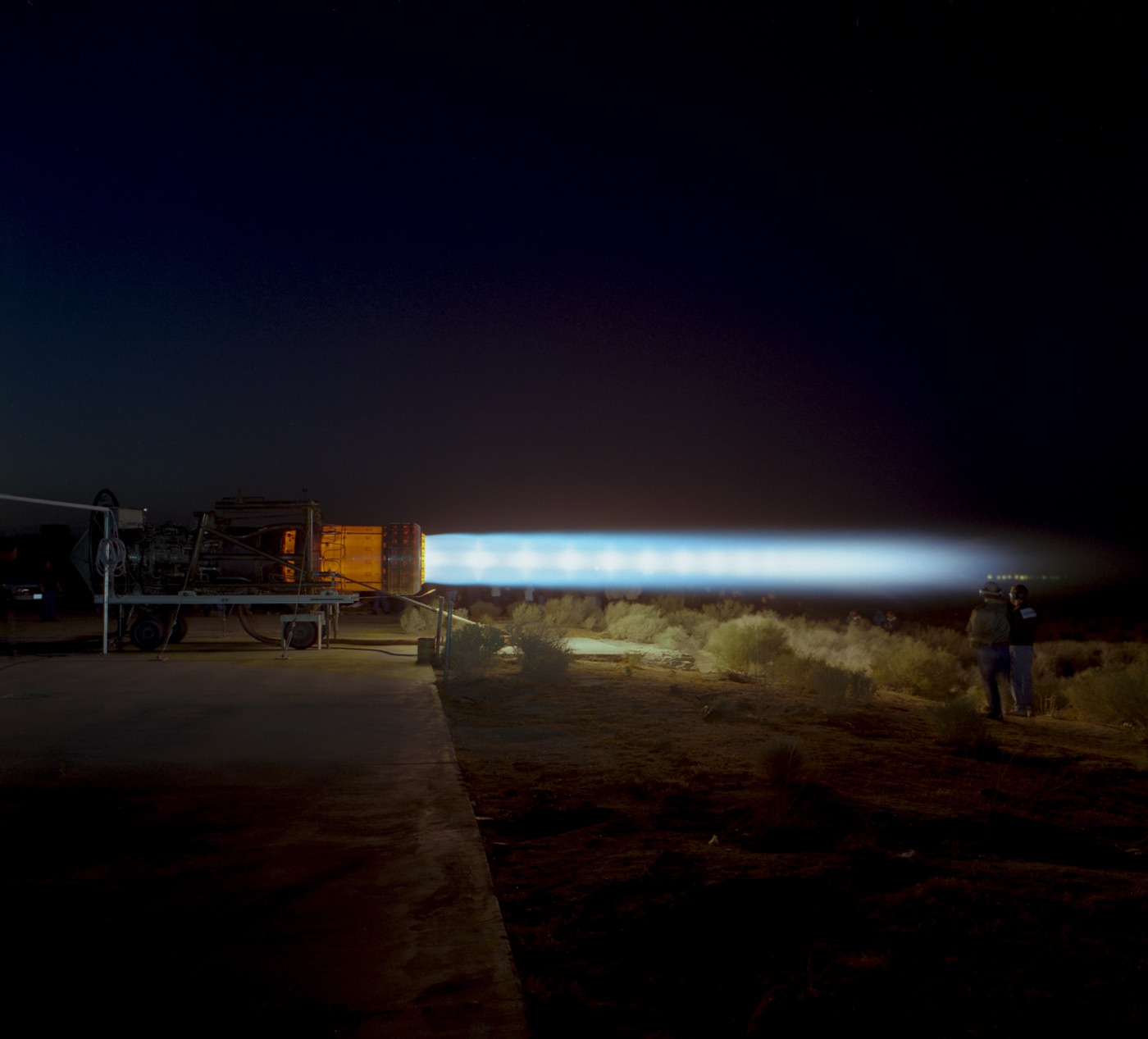 8 min read
Jet Engine vs Rocket Engine: Which Is More Powerful?
Jets breathe air; rockets carry their own oxygen. That one difference decides thrust, efficiency, and top speed. The full comparison, with real numbers.
Read post →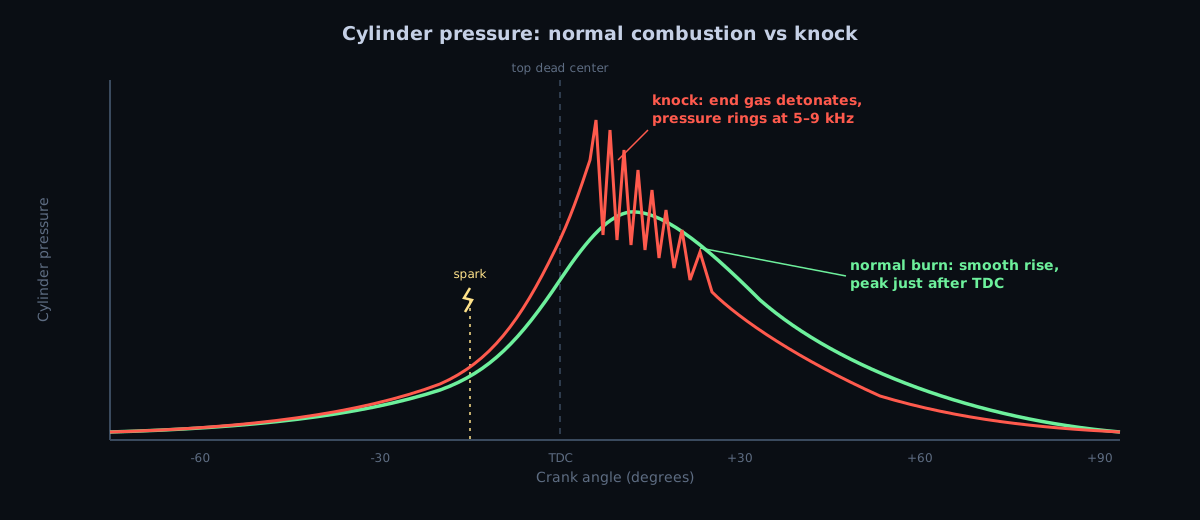 7 min read
What Is Engine Knock? Causes, Sounds, and How to Stop It
Engine knock is fuel detonating before the flame front arrives, a metallic ping that hammers pistons. What causes knock, what it damages, and how to stop it.
Read post →