Your engine lab,
in a browser tab.
Forty-six engines across piston, radial, Wankel rotary, and turbojet families, simulated cycle by cycle, 240 times a second. Tune every spec while it runs, and hear every misfire.
Real physics, not canned curves · piston + rotary + jet · no install, no sign-up to run
This is the real physics core stepping in your tab right now — the simulator adds the 3D engine, sound, and every control.
Every number on screen is computed from the physics.
Torque from cylinder pressure.
Wiebe heat release, Otto cycle thermodynamics, crank-slider geometry: the simulator computes torque from cylinder pressure on each cycle. Sweep idle to redline and the dyno plots what your spec changes do.
- Wiebe combustion model
- lumped intake / exhaust gas dynamics
- per-cylinder pressure traces
A V8 sounds like a V8.
Web Audio synthesizes the exhaust from the firing order, sample-accurately. Change the bank angle or drop a cylinder and the cadence changes in your ears, because the pulses moved.
- sample-accurate firing pulses
- cadence follows your tuning live
- misfires are audible
Break it like you mean it.
Pool fuel in a cold combustor and torch it. Slam a hydromechanical J85 and ride the compressor into surge. Vapor-lock gasoline at 40 °C, gel diesel at −15 °C, bounce off the rev limiter. Each fault is simulated, logged, and recoverable.
- wet starts & EGT spikes
- compressor surge & lean blowout
- vapor lock · cold gel · knock
From cold metal to redline in three steps.
Pick an engine
Forty-six presets across four engine families: gasoline, diesel, LPG pistons, two supercharged radial aero engines, a one-to-four-rotor Wankel lineup, and three turbojets. Or start from one and make it yours.
Start it properly
Glow plugs on a cold diesel. Choke on a carbureted four. Fuel cock and igniters on the J85. Real engines have start procedures, and so do these.
Tune it while it runs
Bore, stroke, rotor geometry, compression, mass flow, nozzle area: every spec is live-editable. The sound, the dyno, and the failure modes respond as you drag.
Thirty-seven pistons. Two radials. Four rotaries. Three turbojets. All yours.
A Hellcat-spec blown V8, a 2JZ-GTE, a 13B rotary, the radial that flew the Corsair. Each preset is a real configuration: geometry, fuel, control system.
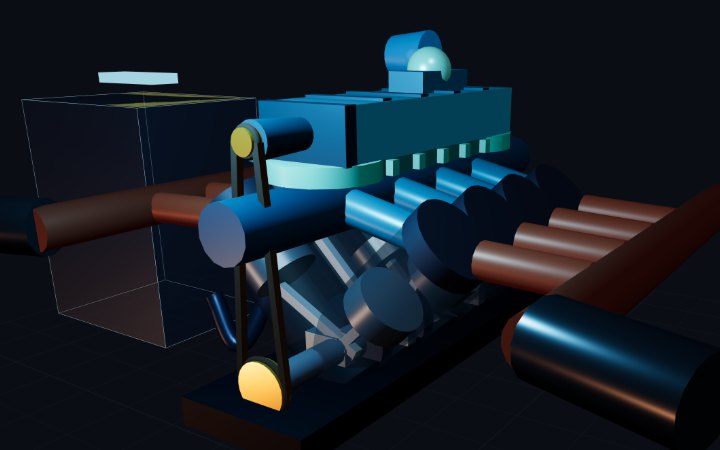 533hpPISTONSupercharged V8 6.2L8 cyl · 6.2 L · gasoline · superchargedSame bore, stroke and compression ratio as the Dodge Hellcat 6.2 HEMI
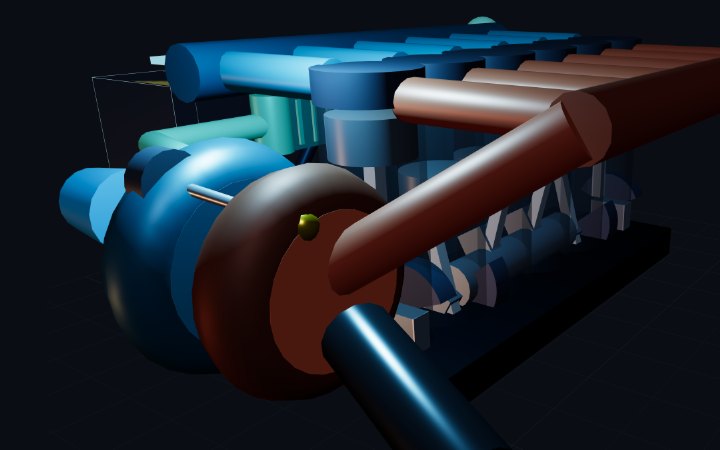 385hpPISTONTurbo I6 3.0L6 cyl · 3.0 L · gasoline · turboSame bore, stroke and compression ratio as the Toyota 2JZ-GTE
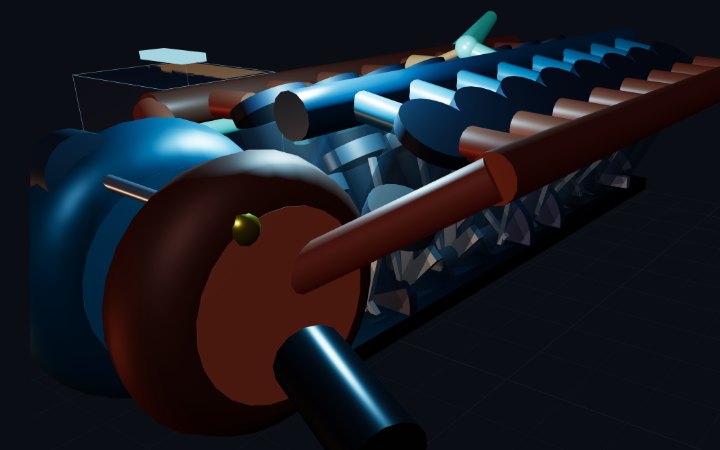 2,522hpPISTONDiesel V16 60L16 cyl · 60.4 L · diesel · turboSame bore, stroke, compression ratio and displacement as the Cummins QSK60
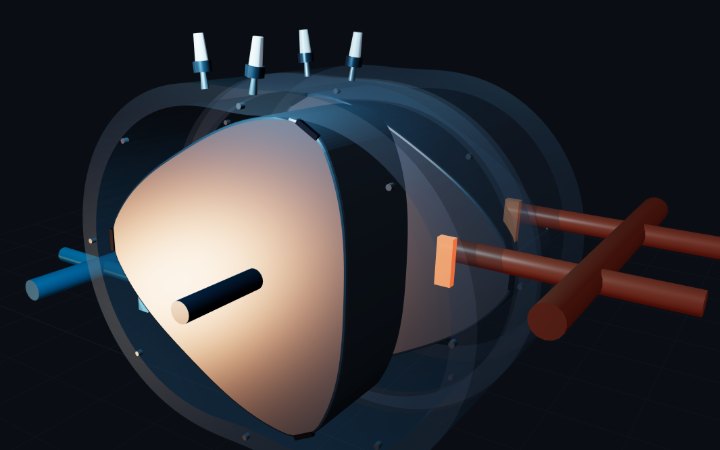 159hpROTARYNaturally Aspirated 2-Rotor 1.3L2 rotors · 1.3 L · 8,500 rpmSame rotor count and chamber displacement as the Mazda 13B-REW
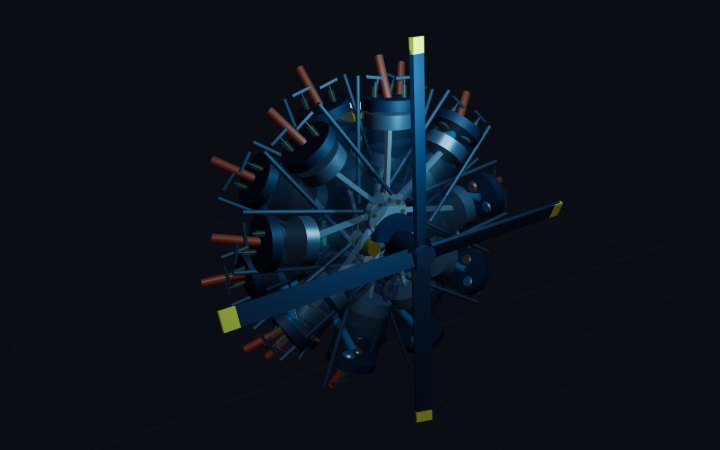 1,966hpRADIALP&W R-2800 Double Wasp (18-cyl twin-row)18 cyl · 46.0 L · avgas · superchargedSame layout as the Vought F4U Corsair and the Republic P-47 Thunderbolt.
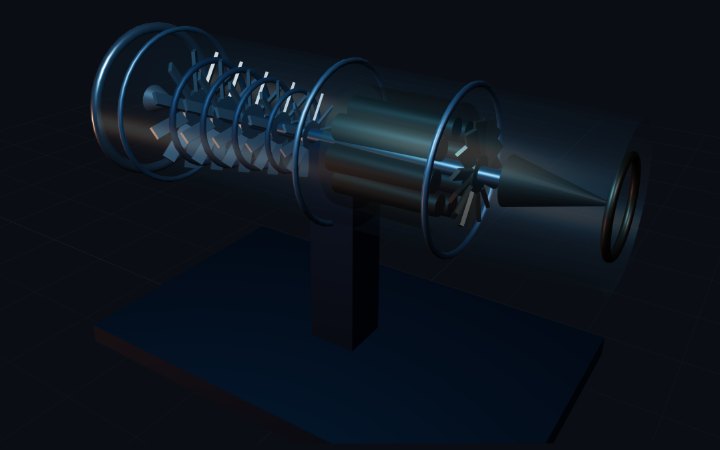 14.71kNTURBOJETGE J85 (hydromech)20.00 kg/s · OPR 7.0 · 16,500 rpmSame layout as the Northrop F-5 Freedom Fighter and the Northrop T-38 Talon.
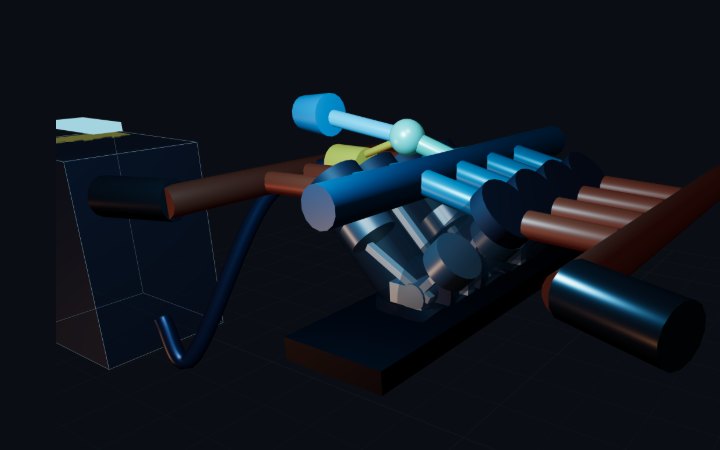 297hpPISTONV8 5.0L 90°8 cyl · 5.0 L · gasolineSame layout as the Ford Coyote 5.0 and the Chevrolet LS3.
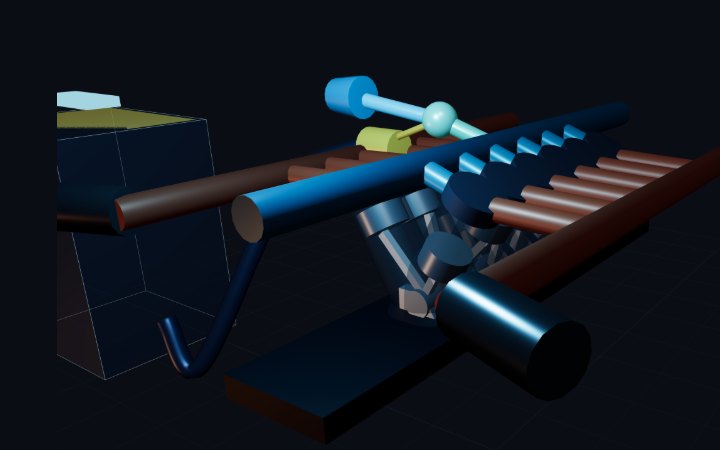 392hpPISTONV12 5.0L 60°12 cyl · 5.0 L · gasolineSame layout as the Ferrari F133 (550 Maranello) and the Lamborghini V12.
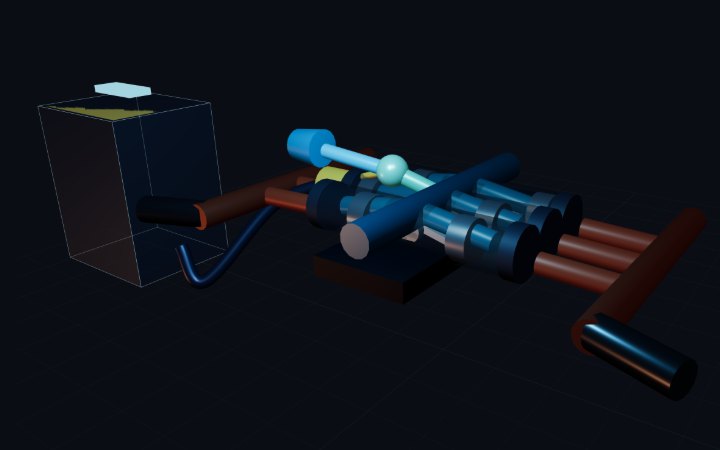 189hpPISTONBoxer-6 3.0L6 cyl · 3.0 L · gasolineSame layout as the Porsche 911 flat-six (964/993) and the Subaru EZ30.
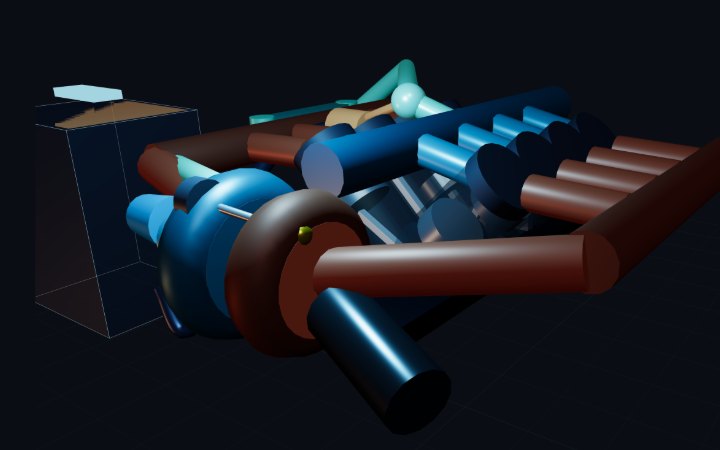 594hpPISTONTurbo Diesel V8 6.7L8 cyl · 6.6 L · diesel · turboSame layout as the Ford 6.7 Power Stroke and the GM Duramax 6.6.
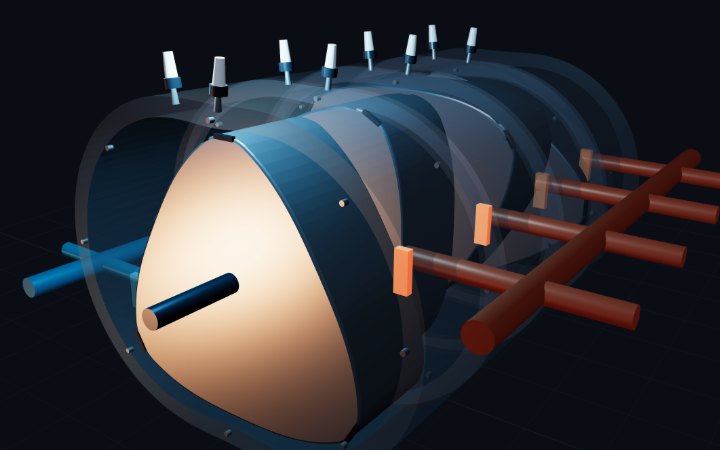 693hpROTARYNaturally Aspirated 4-Rotor 2.6L (26B)4 rotors · 2.6 L · 9,000 rpmSame rotor count and chamber displacement as the Mazda R26B (787B)
Work the numbers out first.
- Compression ratio calculatorStatic, dynamic and boosted CR from bore, stroke, chamber, gasket and piston
- Engine displacement calculatorBore × stroke × cylinders to cc, litres and cubic inches, with overbore, and a cc to cubic inch converter
- Bore and stroke calculatorSolve bore or stroke for a target size, the ratio, and piston speed at redline
- Horsepower calculatorTorque and rpm to hp, kW and PS, power from a quarter-mile run, wheel to crank, or an estimate from displacement
- Dyno correction calculatorSAE, STD, DIN and EC corrected power from one reading
- Gear ratio calculatorGears, final drive and tyre size to speed and rpm in every gear, or gear teeth to ratio and torque
Questions people ask.
Yes, this one. Every real engine runs in your browser tab: no download, no account, no payment. The physics core, 3D rendering, and sound all run on your machine. Building your own engine is the one paid part.
Combustion uses a Wiebe heat-release model on Otto-cycle thermodynamics with crank-slider kinematics; intake and exhaust are lumped filling-and-emptying gas models. Torque comes from computed cylinder pressure on every cycle.
Yes. Three single-spool turbojets (a hobby microjet and two GE J85 variants) with a transient compressor map, surge line, EGT dynamics, and a full start procedure: fuel cock, igniters, wet starts and hot starts included.
Yes. Web Audio synthesizes the exhaust from the firing order, so changing the firing order, cylinder count, or rpm changes the cadence you hear in real time.
Every spec is live-editable: bore, stroke, compression ratio, turbojet mass flow, nozzle area, and more. The simulation carries its state across the edit, so the engine keeps running while the hardware changes under it. The advanced piston specs (spark, conrod, flywheel and the rest) need a free sign-in.
Constantly, if you let it. Gasoline vapor-locks when hot, diesel gels below −15 °C, jets surge on slammed throttles and flame out lean, and pooled fuel torches on wet starts. Faults latch in an event log and most are recoverable in-sim.
The dyno sweeps the engine from idle to redline in a separate unlimited-fuel simulation pass, sampling brake torque at each speed and deriving power from it, with the same physics core driven through a sweep.
Nothing to install: open the link and the simulator loads, and the simulation runs on your machine. No account to run any engine. A free sign-in unlocks the advanced piston specs; building your own engine is the paid part.
Ready to redline?
Pick one of 46 engines and put your foot down. Free, in your browser, right now.
Start an engine