ROTARY · Mazda 13B-REW
Naturally Aspirated 2-Rotor 1.3L
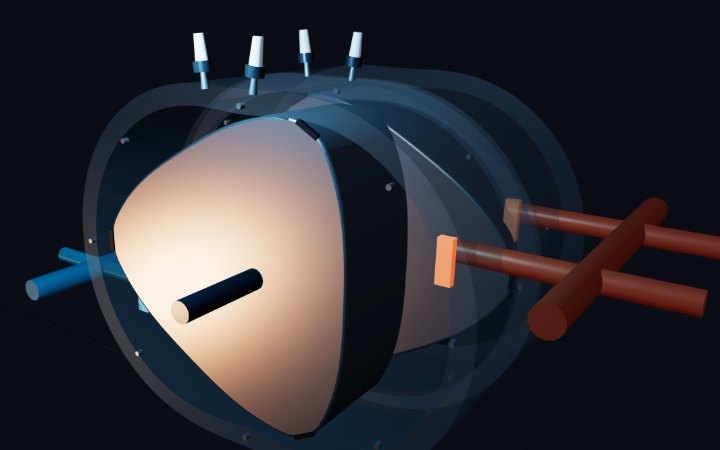
Two inline rotors, six moving chambers, and no pistons at all.
The real engine
Same rotor count and chamber displacement as the Mazda 13B-REW.
Same layout as the Mazda 13B Renesis (RX-8).
2 rotors · 1.3 L · 8,500 rpm
 159hp
Peak power
159hp
@ 6,917 rpm
Peak torque
193N·m
@ 4,067 rpm
Displacement
1,309cc
Nominal swept volume
Redline
8,500rpm
Specifications
- Rotors
- 2
- Chamber volume
- 655 cc
- One face of one rotor; three faces sweep per rotor
- Displacement
- 1,309 cc
- Nominal swept volume
- Generating radius
- 105.0 mm
- Eccentricity
- 15.0 mm
- Rotor width
- 80.0 mm
- Compression ratio
- 10.0:1
- Fuel
- Gasoline, 95 octane
- Induction
- Naturally aspirated
- Idle
- 900 rpm
- Redline
- 8,500 rpm
Measured on the dyno
Every point is a full sweep of this engine in the simulator, not a figure copied off a spec sheet.
What it is
Each rotor rides a 15 mm eccentric inside a housing of 105 mm generating radius, and the rotor is 80 mm wide. Those three dimensions are the whole displacement calculation: one chamber sweeps 654.7 cc, so two rotors make 1.309 litres. Rotor count and chamber displacement agree with the Mazda 13B-REW, which Mazda publishes at 654 cc a rotor, and the ports carry its timing. The output is calibrated to an older 13B, the naturally aspirated one in the 1989–91 RX-7, rated at 160 hp at 7,000 rpm and 190 N·m at 4,000. The model solves each of the six faces on its own 1080 degree cycle, four 270 degree quarters of intake, compression, expansion and exhaust, and the torque on the dyno comes out of chamber pressure worked against that chamber's own volume derivative.
The 1.3 litres undersells this engine, and getting that right matters to the model. A Wankel finishes one power event per rotor for every turn of the eccentric shaft, where a four stroke needs two turns. Divide torque by 2π instead of the four stroke's 4π and the mean effective pressure at the torque peak lands at 9.3 bar, under the 11.3 bar anchoring the naturally aspirated piston presets. Each event does less work than a piston's, and there are twice as many of them. Breathing doubles for the same reason, so fitting a turbo hands the sizing law 2.6 litres rather than 1.3: this engine draws its nominal displacement once per revolution instead of once per two.
There is no camshaft anywhere in the file. The ports are fixed openings that the rotor face uncovers as it sweeps past, so the four angles defining them are numbers you can edit rather than a profile ground into steel. Intake opens at 32 degrees of shaft angle and closes at 320, exhaust opens at 738 and closes at 48 of the next cycle, so the two stand open together for 16 degrees. Compression is 10:1, the fuel is 95 octane, and ignition fires 15 degrees before the chamber reaches its smallest volume.
Things to try
- Eccentricity spans 8 to 25 mm and displacement tracks it in a straight line. Take it from 15 mm to 20 and every chamber grows by a third, with the torque leverage to match.
- Drag Seal leakage across the full width of its bar, 0.01 mm² to 20. Peak power falls a seventh of one percent. Apex seals cost a rotary its durability, and the model charges them almost nothing in output.
- Bring Exhaust opens earlier than 738 degrees. Blowdown gets easier and backpressure falls, and you pay for it in the expansion work the chamber never finished.
Seen in
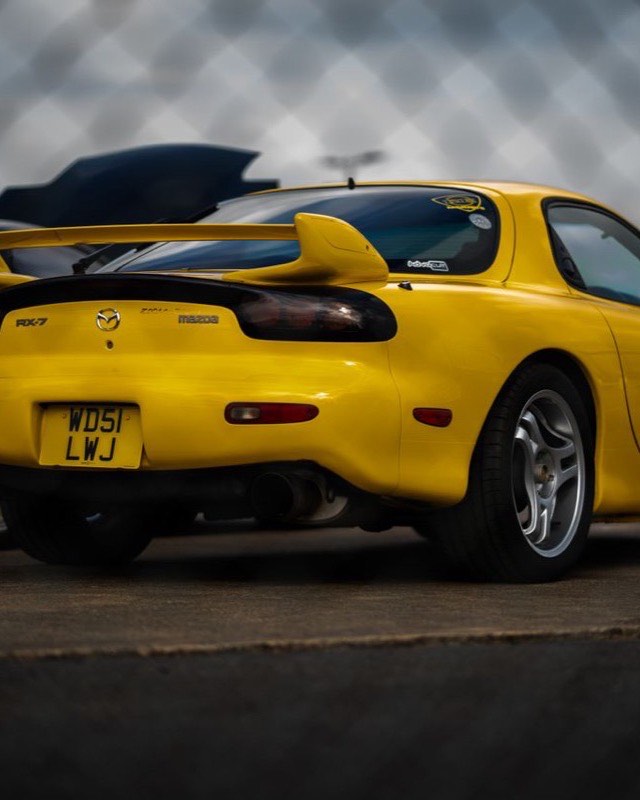
Mazda RX-7 (FD3S)
Runs this engine1992–2002. The 13B-REW's home and the last RX-7: two rotors, pop-up headlights, and factory sequential turbochargers this naturally aspirated preset leaves off.
Photo: Jagjeet Dhuna · Pexels
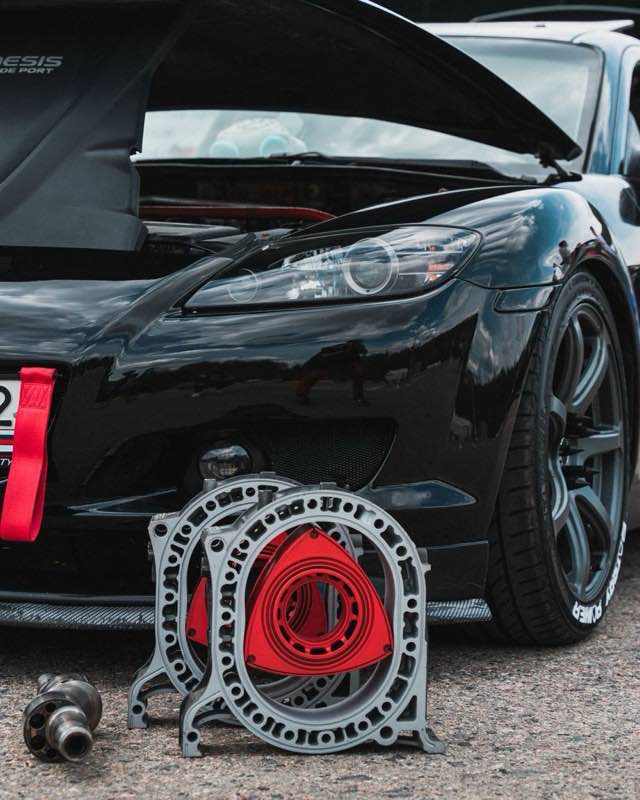
Mazda RX-8
Same layoutSame layout, different engine: the 13B Renesis is also a two-rotor 1.3, and the RX-8 was the last rotary sports car Mazda built, discontinued in June 2012.
Photo: Alex Urezkov · Pexels
Variants
Other Wankel Rotary engines in the simulator.
One rotor, three chambers, the smallest and revviest thing in the lineup.
1 rotor · 655 cc · 9,000 rpm
Three rotors stacked for a howl no piston engine can fake.
3 rotors · 2.0 L · 8,000 rpm
Four rotors, Le Mans pedigree, and a redline that keeps climbing.
4 rotors · 2.6 L · 9,000 rpm
More like this
Hear it run
It cranks, idles, revs and knocks in the browser. Nothing to download, nothing to install.