ROTARY · Mazda R26B (787B)
Naturally Aspirated 4-Rotor 2.6L (26B)
Four rotors, Le Mans pedigree, and a redline that keeps climbing.
The real engine
Same rotor count and chamber displacement as the Mazda R26B (787B).
4 rotors · 2.6 L · 9,000 rpm
 359hp
359hpPeak power
359hp
@ 6,638 rpm
Peak torque
488N·m
@ 2,925 rpm
Displacement
2,619cc
Nominal swept volume
Redline
9,000rpm
Specifications
- Rotors
- 4
- Chamber volume
- 655 cc
- One face of one rotor; three faces sweep per rotor
- Displacement
- 2,619 cc
- Nominal swept volume
- Generating radius
- 105.0 mm
- Eccentricity
- 15.0 mm
- Rotor width
- 80.0 mm
- Compression ratio
- 10.0:1
- Fuel
- Gasoline, 95 octane
- Induction
- Naturally aspirated
- Idle
- 900 rpm
- Redline
- 9,000 rpm
Measured on the dyno
Every point is a full sweep of this engine in the simulator, not a figure copied off a spec sheet.
What it is
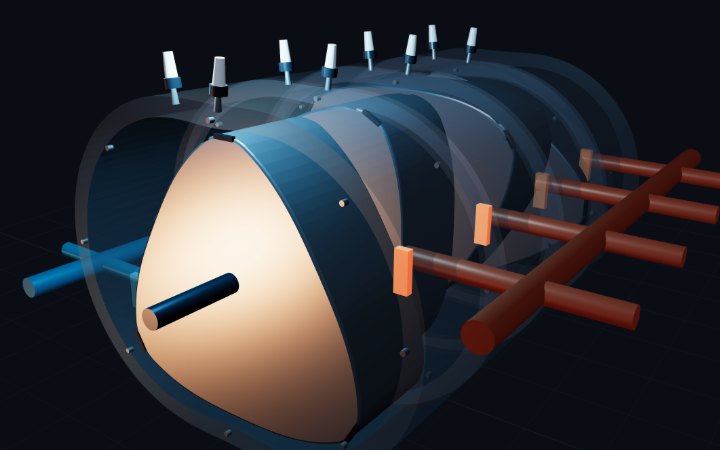
Eccentricity is 15 mm, the generating radius 105 mm and each rotor 80 mm wide. Run those through the Wankel swept-volume identity and one rotor takes 654.7 cc, so four of them come to 2.619 litres. The rotor count and the chamber displacement match the Mazda R26B. Nothing else here was copied from one. Torque comes out of a Wiebe heat release solved against the epitrochoid chamber volume, twelve faces at once, each stepping through its own 1080 degree cycle.
Every rotor fires once per turn of the eccentric shaft, and the four sit 90 degrees apart on it. That is four power events a revolution, the count a V8 four-stroke needs eight cylinders and two revolutions to reach. At the 9,000 rpm redline the exhaust takes 600 a second. The audio path reads that rate off the rotor count, which is why a four-rotor and a two-rotor sound like two instruments.
A Wankel has no valves. Intake and exhaust are holes in the housing wall that the passing rotor face uncovers, open from 0 to 270 degrees of eccentric shaft angle and from 810 to 1080. Both edges are editable, which is as close as this engine gets to a camshaft swap. The loss that defines it sits in the friction block: 0.1 mm² of equivalent apex and side seal gap, on a log slider reaching 20 mm². Compression is 10:1 on 95 octane. The rotary model reports no knock, so raising it buys efficiency without the detonation bill a piston engine pays.
Things to try
- Walk Seal leakage up from 0.1 mm² toward the 20 mm² top of its log slider. The gas that escapes past the apex seals is compression the face never gets to burn.
- Take Rotors from 4 down to 2 and back up. Displacement, the 90 degree phase spacing and the firing rate all re-derive from that one number, and the exhaust note gains or loses an event per revolution with each housing.
- Move Exhaust opens earlier than 810 degrees. Blowdown starts sooner and the housing empties more freely, at the price of expansion work the face had not finished doing.
Seen in
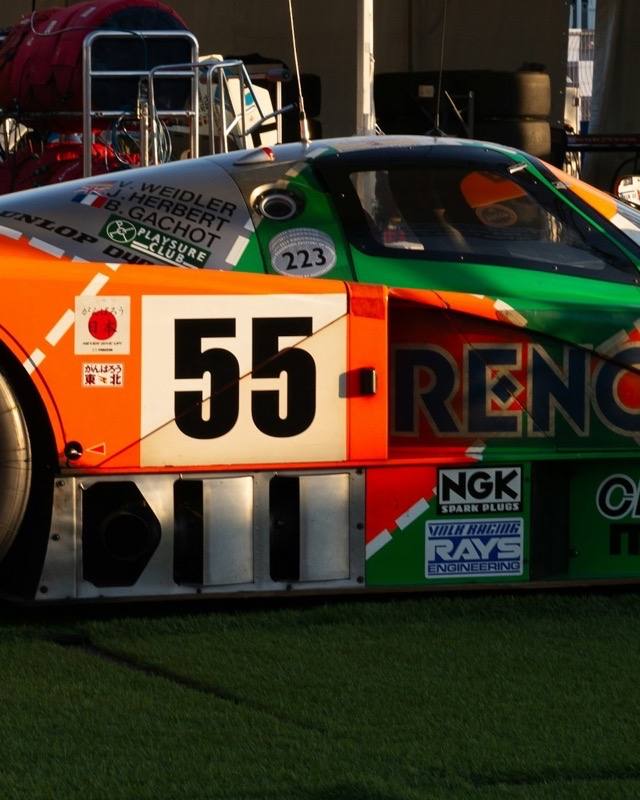
Mazda 787B
Runs this engine1990–1991. The R26B's only home, and the one rotary car ever to win Le Mans outright, which it did in 1991 in these colours and this number.
Photo: Pieter Olievier · Unsplash
Variants
Other Wankel Rotary engines in the simulator.
Two inline rotors, six moving chambers, and no pistons at all.
2 rotors · 1.3 L · 8,500 rpm
One rotor, three chambers, the smallest and revviest thing in the lineup.
1 rotor · 655 cc · 9,000 rpm
Three rotors stacked for a howl no piston engine can fake.
3 rotors · 2.0 L · 8,000 rpm
More like this
Hear it run
It cranks, idles, revs and knocks in the browser. Nothing to download, nothing to install.