TURBOJET · General Electric J85
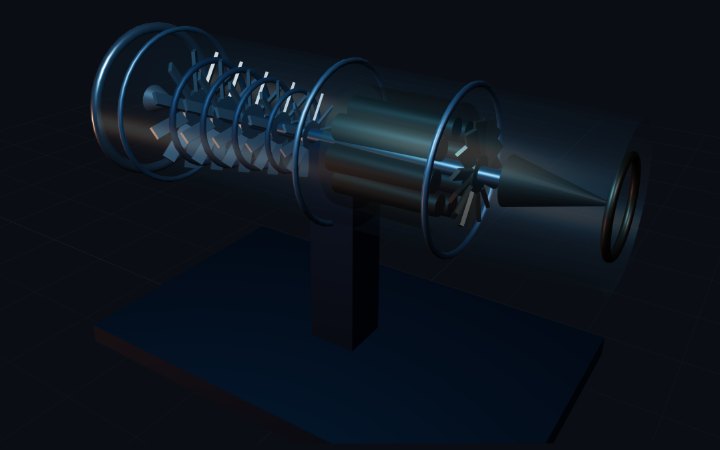
GE J85 (hydromech)
Hydromechanical fuel control. Slam the throttle and it WILL surge.
The real engine
Same layout as the Northrop F-5 Freedom Fighter and the Northrop T-38 Talon.
20.00 kg/s · OPR 7.0 · 16,500 rpm
 14.71kN
Peak thrust
14.71kN
at 100% N
Best SFC
1.04
lower is leaner
Mass flow
20.00kg/s
Max spool
16,500rpm
Specifications
- Design mass flow
- 20.00 kg/s
- Pressure ratio
- 7.0:1
- Single spool, so OPR is the compressor's own
- Turbine inlet limit
- 1,250 K
- Nozzle area
- 602.9 cm²
- Maximum spool speed
- 16,500 rpm
- Ground idle
- 46% N
- Fuel control
- Hydromechanical
- No limiter authority, so a slammed throttle can surge it
- Tank
- 400 litres
Measured on the dyno
Every point is a full sweep of this engine in the simulator, not a figure copied off a spec sheet.
What it is
Design airflow is 20 kg per second, the compressor pressure ratio is 7:1, and the spool turns to 16,500 rpm. Those three figures come from published data for the General Electric J85, the single-spool turbojet behind the Northrop F-5 and the T-38 Talon. The model carries no thrust figure and no exhaust temperature. Both come out of a Brayton cycle that runs every millisecond, with whatever turbine power the compressor does not take going into the spool.
The fuel control is what you fly here. A speed governor asks for fuel, and on the FADEC sibling an acceleration ceiling clips that request at 1.65 times the steady fuel-to-pressure ratio while a lean floor holds it up. This version keeps the floor and drops the ceiling once the engine is past idle. Slam the lever there and the fuel turns up at once while 1.2 kg·m² of spool inertia holds the speed where it was. Turbine temperature spikes, the running line climbs into the surge line, and the compressor stalls. Real hydromechanical units metered an acceleration schedule of their own. This preset drops that clamp on purpose, which sharpens the contrast against the FADEC and overstates how bare the real control was.
Starting it is a sequence you can get wrong. The starter turns 500 N·m and drops out at 38 percent spool speed, the light-off window opens at 13 percent, and idle sits at 46 percent, which is why a turbojet at the bottom of the lever still makes thrust. Push the lever forward during the start and the fuel cam follows it, pouring fuel into an engine that is barely breathing. When the probe reads past 845 °C, the T-38's start overtemp figure, you have a hot start.
Things to try
- Tighten Surge margin from 20 percent toward 8. A slam eats 10 to 15 points of it, so once the design margin is that thin even an ordinary push on the lever bangs.
- Shrink Nozzle A8 and the turbine has to push against more backpressure. Watch the running point on the compressor map walk up toward the surge line as you do it.
- Drop Starter cutout below 38 percent and the starter quits before the engine can carry itself. The spool parks under idle with EGT climbing, which is a hung start.
Seen in
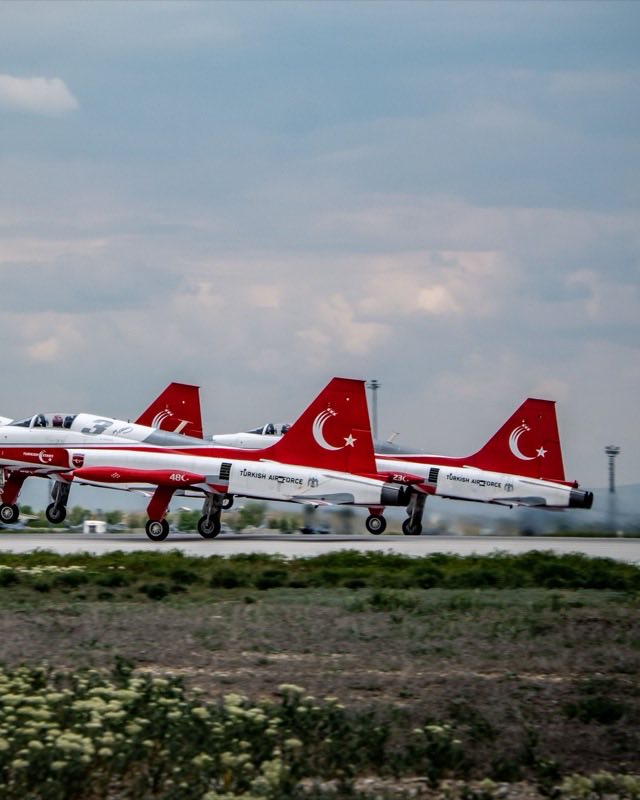
Northrop F-5 Freedom Fighter
Same layoutTwo J85s sit side by side in its tail. These three are Turkish Stars NF-5s at Konya, the display team that still flies the type.
Photo: Beytullah Temen · Pexels
Variants
Other General Electric J85 engines in the simulator.
Digital schedules ride under the surge line, so you can slam the throttle.
20.00 kg/s · OPR 7.0 · 16,500 rpm
More like this
Hear it run
It cranks, idles, revs and knocks in the browser. Nothing to download, nothing to install.