TURBOJET · General Electric J85
GE J85 (FADEC retrofit)
Digital schedules ride under the surge line, so you can slam the throttle.
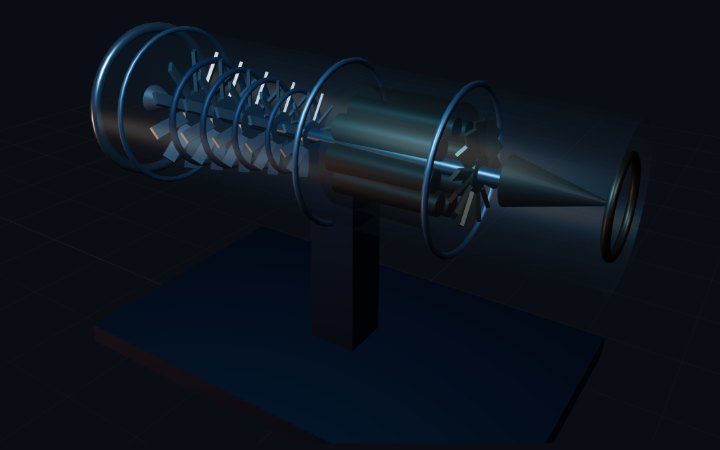
The real engine
Same layout as the Northrop F-5 Freedom Fighter and the Northrop T-38 Talon.
20.00 kg/s · OPR 7.0 · 16,500 rpm
 14.71kN
Peak thrust
14.71kN
at 100% N
Best SFC
1.04
lower is leaner
Mass flow
20.00kg/s
Max spool
16,500rpm
Specifications
- Design mass flow
- 20.00 kg/s
- Pressure ratio
- 7.0:1
- Single spool, so OPR is the compressor's own
- Turbine inlet limit
- 1,250 K
- Nozzle area
- 602.9 cm²
- Maximum spool speed
- 16,500 rpm
- Ground idle
- 46% N
- Fuel control
- FADEC
- Accel and decel schedules ride under the surge line
- Tank
- 400 litres
Measured on the dyno
Every point is a full sweep of this engine in the simulator, not a figure copied off a spec sheet.
What it is
The compressor swallows 20 kilograms of air a second, presses it to seven times atmospheric, and the spool turns to 16,500 rpm. All three numbers belong to the hydromechanical J85 on the roster as well. The two presets are one gas path with two different things holding the fuel valve. Both solve the same transient cycle a thousand times a second, carrying the combustor's own pressure as a state variable, so the spool accelerates on whatever power the turbine has left after driving the compressor.
Slam the lever on the hydromechanical engine and the fuel arrives before the spool does. Flow jumps, turbine inlet temperature climbs toward its 1,250 K ceiling, and the rotor is still where its own inertia left it, so the compressor is asked for pressure at an airflow it has not reached. The surge line sits 20 percent above the design pressure ratio. Cross it and the machine stalls: pressure capability collapses, the combustor plenum blows down and refills, and the engine thumps its way around that cycle until you pull the lever back. The digital control clips fuel to 1.65 times the running line's steady fuel-to-pressure ratio, which is as quick as the margin allows and not a gram quicker.
The start is the other half of the retrofit. A hydromechanical start cam follows the power lever, so advancing it while the engine is barely breathing pours in fuel that the airflow cannot cool. That is the hot start the T-38 procedure exists to prevent. The digital schedule ignores the lever and meters light-off at 30 percent of the rich limit every time. If exhaust temperature passes 1,118 K during a start anyway, the FADEC cuts fuel and latches it off until you cycle the fuel cock closed. The hydromechanical unit lights the annunciator and keeps burning. Thermocouples lag by about a second, so the exceedance often registers after the spool is already through idle, and the protection stays armed for three seconds past it.
Things to try
- Set Limiter authority to HYDROMECH and slam the power lever from idle. Nothing in the gas path changed, and the compressor bangs.
- Wind Surge margin down from 20 percent toward 8. The schedule is a fixed multiple of the running line rather than of the surge line you just moved, so the protected engine surges too once the two meet.
- Drop Starter cutout from 38 percent toward 5 and try a start. The starter quits before the turbine can carry itself, the spool parks below idle, and the temperature climbs into a hung start. Digital authority over the fuel valve does not rescue a bad sequence.
Seen in
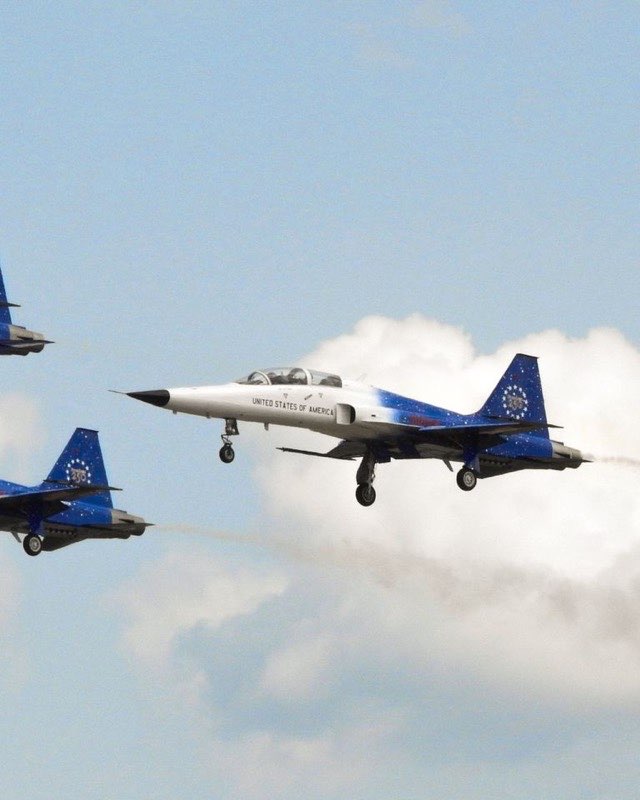
Northrop T-38 Talon
Same layoutIn service since 1961. A pair of J85s in a light airframe made the world's first supersonic trainer, and USAF pilots still learn on it.
Photo: Lillian S · Pexels
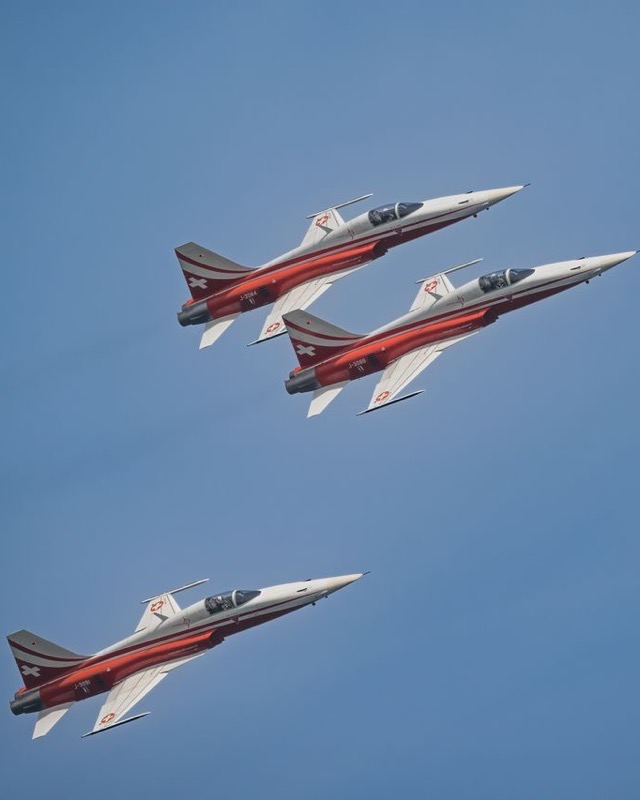
Northrop F-5E Tiger II
Same layoutThe fighter half of the family, on the same pair of J85s. Switzerland's display team has flown F-5Es since 1995 and keeps them in the air today.
Photo: Miguel Cuenca · Pexels
Variants
Other General Electric J85 engines in the simulator.
Hydromechanical fuel control. Slam the throttle and it WILL surge.
20.00 kg/s · OPR 7.0 · 16,500 rpm
More like this
Hear it run
It cranks, idles, revs and knocks in the browser. Nothing to download, nothing to install.