TURBOJET · JetCat P300 Microjet
JetCat P300 (micro)
Hobby microjet: 0.5 kg/s, 105,000 rpm, ECU-protected start.
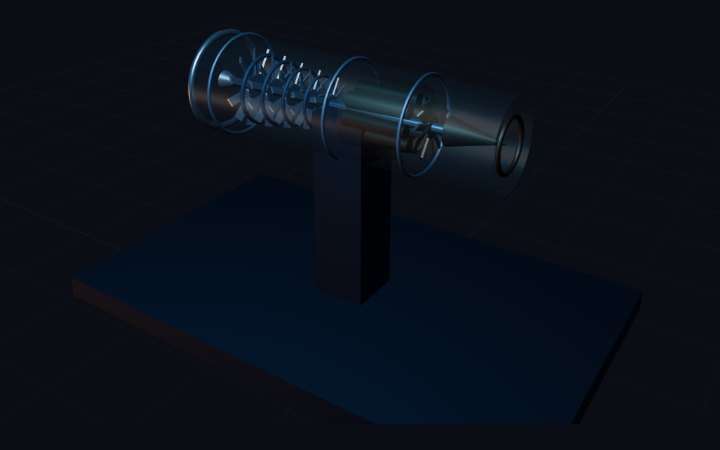
The real engine
Same layout as the RC turbine aircraft.
0.50 kg/s · OPR 3.6 · 105,000 rpm
 0.26kN
Peak thrust
0.26kN
at 99% N
Best SFC
1.35
lower is leaner
Mass flow
0.50kg/s
Max spool
105,000rpm
Specifications
- Design mass flow
- 0.50 kg/s
- Pressure ratio
- 3.6:1
- Single spool, so OPR is the compressor's own
- Turbine inlet limit
- 1,100 K
- Nozzle area
- 23.0 cm²
- Maximum spool speed
- 105,000 rpm
- Ground idle
- 33% N
- Fuel control
- FADEC
- Accel and decel schedules ride under the surge line
- Tank
- 3 litres
Measured on the dyno
Every point is a full sweep of this engine in the simulator, not a figure copied off a spec sheet.
What it is
Design mass flow is half a kilogram of air a second, the pressure ratio is 3.6:1, and the spool runs to 105,000 rpm. Those are the published design figures for the JetCat P300-PRO, a hobby turbine rated at about 300 newtons. Nothing else here was copied from one. Thrust comes out of a transient single-spool cycle where the combustor's own pressure is a state, integrated a thousand times a second, and the spool accelerates on whatever power the turbine makes above what the compressor takes.
The GE J85 on this roster swallows 20 kg/s, forty times as much, and turns 16,500 rpm to do it. What a compressor can raise depends on the speed of its blade tips, so a wheel this small spins six times faster for a much smaller pressure rise: 3.6:1 against the J85's 7.0. The efficiency written into this preset is 0.74 where the J85 carries 0.83. Running clearances stay about the same size as the wheel shrinks, and what escapes over the tips is a larger share of a smaller flow. At its design point this engine burns 35 kg of fuel an hour. The J85 burns 1,568.
Spool inertia is 0.00025 kg·m² against the J85's 1.2, nearly five thousand times less. Only surplus power accelerates a rotor, which is the whole reason a jet lags, and there is barely any rotor here to accelerate. The real P300 still takes 2.5 to 4 seconds to reach full thrust, and the ECU sets that figure rather than the gas path, pacing fuel to protect the turbine. This model has no such pacing, so it spools faster than the real engine permits. Its limits are the hobby ones: no light-off below 6 percent N, the electric starter still driving at 24 percent, and a single EGT ceiling of 750 degrees covering both starting and running, where the J85 allows 845 on a start and 800 after.
Things to try
- Switch Control to HYDROMECH and slam the throttle from idle. Nothing clips the fuel to an accel schedule now, so watch the running point climb into the surge line on the compressor map while the spool is still catching up.
- Take Spool inertia up from 0.00025 toward the J85's 1.2. Thrust at any given speed is unchanged, but the throttle now takes seconds to mean anything, and you are flying a big engine.
- Pull Starter cutout below 24 percent N. Drop the starter before the engine can carry itself and the spool parks under idle with EGT climbing, which is a hung start.
Seen in
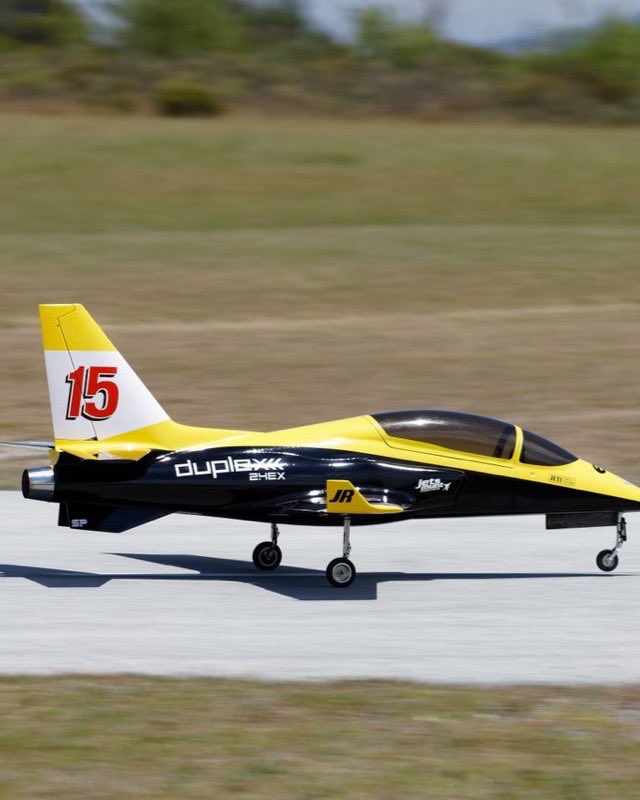
Large-scale RC turbine jet
Same layoutA sport jet on its takeoff roll, with the turbine's polished tailpipe standing clear of the tail cone. One engine in the P300's class flies an airframe this size.
Photo: Arnauld van Wambeke · Pexels
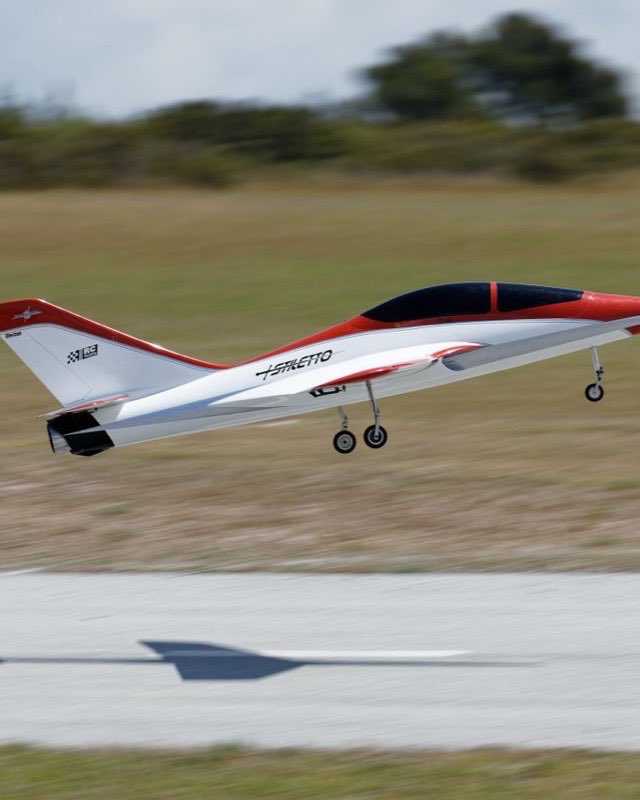
Stiletto sport jet
Same layoutThe same class of airframe leaving the ground. An ECU runs the whole start on an engine this small, then paces the fuel so an abrupt stick input cannot surge it.
Photo: Arnauld van Wambeke · Pexels
More like this
Hear it run
It cranks, idles, revs and knocks in the browser. Nothing to download, nothing to install.