ROTARY · Mazda 20B-REW
Naturally Aspirated 3-Rotor 2.0L (20B)
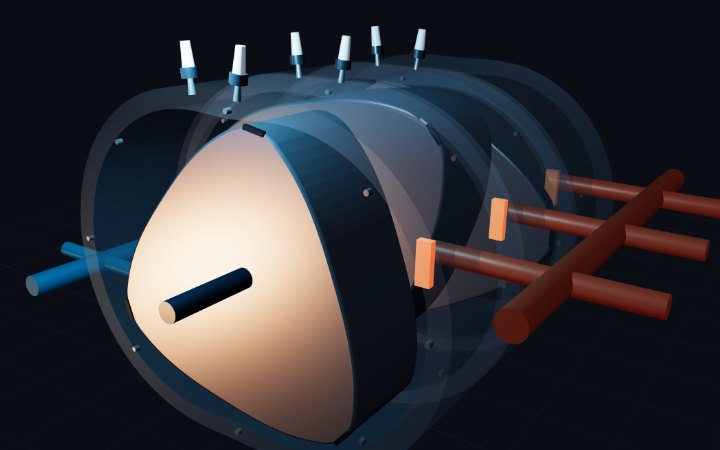
Three rotors stacked for a howl no piston engine can fake.
The real engine
Same rotor count and chamber displacement as the Mazda 20B-REW.
3 rotors · 2.0 L · 8,000 rpm
 238hp
238hpPeak power
238hp
@ 6,817 rpm
Peak torque
289N·m
@ 4,154 rpm
Displacement
1,964cc
Nominal swept volume
Redline
8,000rpm
Specifications
- Rotors
- 3
- Chamber volume
- 655 cc
- One face of one rotor; three faces sweep per rotor
- Displacement
- 1,964 cc
- Nominal swept volume
- Generating radius
- 105.0 mm
- Eccentricity
- 15.0 mm
- Rotor width
- 80.0 mm
- Compression ratio
- 10.0:1
- Fuel
- Gasoline, 95 octane
- Induction
- Naturally aspirated
- Idle
- 900 rpm
- Redline
- 8,000 rpm
Measured on the dyno
Every point is a full sweep of this engine in the simulator, not a figure copied off a spec sheet.
What it is
Eccentricity is 15 mm, the generating radius 105 mm, and each rotor is 80 mm wide. Multiply those three out and you get 654.7 cc of chamber per rotor, 1,964 cc across three. Rotor count and chamber displacement agree with the Mazda 20B-REW. Mazda published 654 cc a rotor, about a tenth of a percent under this geometry. Mazda never published the 20B's port timing, so the ports carry the 13B-REW's, and nothing else here was copied from one. Each of the nine faces carries its own Wiebe heat release, solved against a chamber volume that opens and closes twice in the 1,080 degrees a cycle runs.
Three rotors fire once each per turn of that shaft, which a six-cylinder four-stroke matches only by spreading six events over two turns. You pay for the third housing in mass that never stops going round. The flywheel carries 0.17 kg·m² where the two-rotor takes the 0.12 default, the starter wants 110 N·m instead of 80 to break it loose, and the redline sits at 8,000 rpm, the lowest of the four rotary presets on the roster.
There is no camshaft here and no valve to time. Induction is a side port that opens at 32 degrees of the cycle and shuts at 320, exhaust runs from 738 back around past 1,080 to 48, and you can type all four of those numbers yourself. Compression is 10:1, the spark lands 15 degrees before minimum volume, and the tank holds 9 litres of 95 octane. Sealing that a piston engine hands to its rings, a Wankel hands to the seals riding three rotor apexes. The model charges it as a 0.1 mm² leak out of each of the nine faces.
Things to try
- Drag Rotors from three down to one and back. Displacement moves by roughly 0.655 L a rotor and Working chambers by three, both re-derived from the geometry rather than stored.
- Open Seal leakage up from its 0.1 mm². The loss is charged per second rather than per cycle, so the slower the engine turns the more of each chamber goes missing, and idle is where it shows first.
- Push Ignition advance past its 15 degrees. Peak torque climbs about 4 percent by 30 degrees and stops there: beyond it the burn starts while the chamber is still closing, and the work of finishing that squeeze comes straight back off the shaft.
Variants
Other Wankel Rotary engines in the simulator.
Two inline rotors, six moving chambers, and no pistons at all.
2 rotors · 1.3 L · 8,500 rpm
One rotor, three chambers, the smallest and revviest thing in the lineup.
1 rotor · 655 cc · 9,000 rpm
Four rotors, Le Mans pedigree, and a redline that keeps climbing.
4 rotors · 2.6 L · 9,000 rpm
More like this
Hear it run
It cranks, idles, revs and knocks in the browser. Nothing to download, nothing to install.