PISTON · Rolls-Royce Vulture
X-24 42.5L Aero
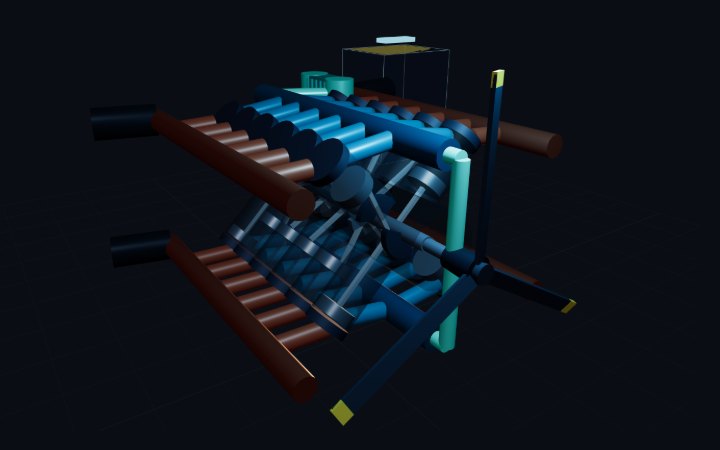
Four banks of six in a cross on one crank, two of them pointing down. It fires every 30°.
The real engine
Same bore, stroke, compression ratio and displacement as the Rolls-Royce Vulture.
The rating is genuinely disputed — 1,780 hp at 2,850–3,000 rpm on +6 psi as designed, derated to 1,450–1,550 hp in service. This one measures 1,379 hp, 11% under the derate. It also runs plain slider-crank rods; the real engine put a master rod and three articulated rods on every crankpin, which is the arrangement the Allison X-4520 did NOT use.
Same layout as the Isotta Fraschini Zeta, the Allison X-4520 and the Ford X-8.
X-24 · 42.5 L · avgas · supercharged
 1,374hp
Peak power
1,374hp
@ 2,902 rpm
Peak torque
3,576N·m
@ 2,510 rpm
Displacement
42,472cc
42.5 litres
Redline
3,000rpm
Specifications
- Cylinders
- 24
- Layout
- X
- 90° between banks
- Bore × stroke
- 127.0 × 139.7 mm
- Displacement
- 42,472 cc
- 42.5 litres
- Compression ratio
- 6.0:1
- Conrod length
- 245.0 mm
- Firing order
- 1-21-14-7-3-23-18-10-5-24-16-11-6-22-17-12-4-20-13-9-2-19-15-8
- Cycle
- Four-stroke
- Fuel
- Gasoline, 130 octane
- Induction
- Centrifugal supercharger
- 1.41:1 at its rated speed
- Idle
- 650 rpm
- Redline
- 3,000 rpm
Check these numbers in the engine displacement calculator, the bore and stroke calculator or the compression ratio calculator, with this engine already filled in.
Measured on the dyno
Every point is a full sweep of this engine in the simulator, not a figure copied off a spec sheet.
What it is
Bore is 127 mm, the stroke 139.7 mm, and twenty-four cylinders of that come to 42.47 litres at a compression ratio of 6.0:1. Those figures match the Rolls-Royce Vulture. Nothing else here was copied from one. The torque on the dyno comes out of a Wiebe heat release solved against crank-slider geometry, with the plenum, the runners and the collector filling and emptying around it.
Four banks of six stand in a 90 degree cross on a single crankshaft, two of them pointing at the ground. That crank carries six throws spaced 120 degrees, a straight-six's table, and seven main bearings take all twenty-four pistons, four rods to every crankpin. The twenty-four fire angles fall out of that block instead of being typed in. They come out evenly spaced at 30 degrees, stepping round the cross so no two consecutive cylinders share a bank. Rolls-Royce did it with a master rod and three articulated rods on each square big end. Lubricating that big end killed the engine. The company built 538 before the Avro Manchester's failures ended the programme, and Avro brought the airframe back with four Merlins as the Lancaster. This preset runs plain slider-crank rods, the arrangement the Allison X-4520 used on the same kind of block.
The blower is a single-stage centrifugal rated at 2,850 rpm, holding 1.41 bar absolute. That is the +6 psi the engine was rated on, and nothing cools the charge afterwards, because the Vulture carried no aftercooler. The real blower had two speeds. This one runs at a single speed fixed to that rated point, and the fuel is 100/130 grade avgas. The cross itself reaches the render and the sound and stops there: the downward banks make the crankcase a drum instead of a box, the lower vee takes a second induction plenum routed round the nose of the block because a straight line would run through the crankshaft, and the four banks sort into two stereo buses by which side of the crank each head leans.
Things to try
- Bring Intercooler up from zero. The Vulture had no aftercooler, and this preset spells the zero out so the model cannot default it to a modern core. The uncooled charge costs about seven percent here, and you take it back as you climb.
- Blower ratio and Manifold cap both read 1.41, so the impeller makes what the ceiling allows and neither has slack. Raise Blower ratio on its own and the cap starts to bind. Raise the pair together and the knock ceiling printed under them is what stops you, because 130 octane at 6.0:1 leaves room.
- Drag Bank angle off 90 degrees. The cross splays in the render while the Firing intervals row stays on the even 30, because the phase table came from the 90 degree block and only a change of cylinder count discards it.
Hear it run
It cranks, idles, revs and knocks in the browser. Nothing to download, nothing to install.