PISTON · Dodge Hellcat 6.2 HEMI
Supercharged V8 6.2L
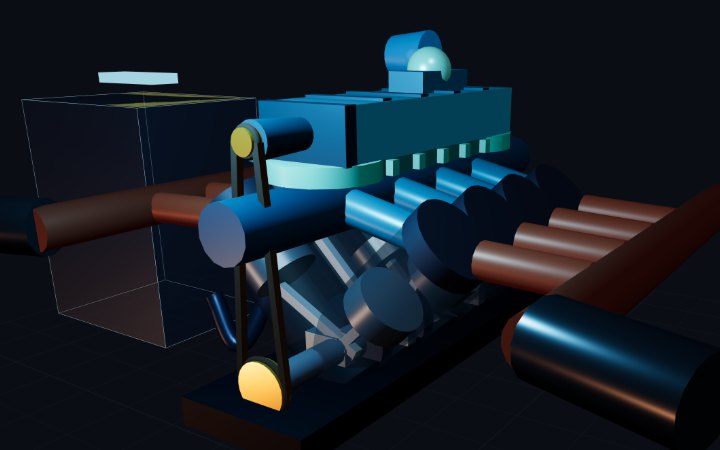
A belt-driven blower on the crank. Boost the instant you ask for it.
The real engine
Same bore, stroke and compression ratio as the Dodge Hellcat 6.2 HEMI.
The real Hellcat uses a twin-screw blower; this one is a Roots, which heats the charge harder.
Same layout as the Chevrolet LSA and the Ford Predator 5.2.
8 cyl · 6.2 L · gasoline · supercharged
 533hp
533hpPeak power
533hp
@ 6,200 rpm
Peak torque
768N·m
@ 4,156 rpm
Displacement
6,166cc
6.2 litres
Redline
6,200rpm
Specifications
- Cylinders
- 8
- Layout
- V
- 90° between banks
- Bore × stroke
- 103.9 × 90.9 mm
- Displacement
- 6,166 cc
- 6.2 litres
- Compression ratio
- 9.5:1
- Conrod length
- 155.0 mm
- Firing order
- 1-8-7-3-6-5-4-2
- Cycle
- Four-stroke
- Fuel
- Gasoline, 98 octane
- Induction
- Roots supercharger
- 1.57:1 at its rated speed
- Intercooler
- 72% effectiveness
- Idle
- 750 rpm
- Redline
- 6,200 rpm
Check these numbers in the engine displacement calculator, the bore and stroke calculator or the compression ratio calculator, with this engine already filled in.
Measured on the dyno
Every point is a full sweep of this engine in the simulator, not a figure copied off a spec sheet.
What it is
Bore measures 103.9 mm, stroke 90.9 mm and the compression ratio is 9.5:1. Those three figures match the Dodge Hellcat 6.2 HEMI. Nothing else here was copied from one. The torque on the dyno comes out of a Wiebe heat release solved against crank-slider geometry, with the plenum, the runners and the collector filling and emptying around it, and a belt-driven pump in front of all of it.
A 9.5:1 compression ratio is low for a petrol V8, and the rest of the roster shows why. The naturally aspirated 5.0 runs 10.8:1 and the 7.0 pushrod runs 11.0:1, because neither has to leave room for boost. Pack more air into the same swept volume and the charge reaches the top of the compression stroke hotter, where the end gas can light itself ahead of the flame front. Builders take compression out to buy that margin back. On 98 octane it works out at a knock ceiling of 1.57 bar absolute, with the cooler removing 72 percent of the blower's temperature rise.
The blower is a Roots, a pump rather than a fan, and you can read that straight off the torque curve. It carries a fixed volume per turn and so does the engine, so engine speed cancels out of the ratio: the boost it holds at 2,000 rpm is the boost it holds at 6,000. Leakage past the rotor clearance does not cancel. That is a near-fixed subtraction from a delivered volume that grows with revs, so delivery reaches 58 percent of the design rise at a quarter of rated speed, 86 percent at half and 95 percent at three quarters, which gives the curve a knee just off idle and a shelf above it. You pay at the crank. The belt pulls the whole time the engine runs, and at 0.60 adiabatic efficiency against a turbo's 0.76 the charge leaves hotter for the same pressure.
Things to try
- Switch Blower type to centrifugal. The bottom of the curve falls away and the top picks up, because a centrifugal's head rises with the square of impeller speed instead of holding flat. It also compresses more efficiently, which earns it a higher ceiling: 1.68 bar against the Roots' 1.57.
- Push Manifold cap above the 1.57 bar it ships with. A blower's ceiling is hard where a wastegate creeps, so the engine lands on the number you set and the KNOCK chip arrives on schedule.
- Pull Intercooler down from 72 percent toward zero. Charge density falls and the knock margin goes with it, and it goes quickly here: at 0.60 adiabatic efficiency the Roots delivers the hottest charge of any compressor in the model.
Seen in
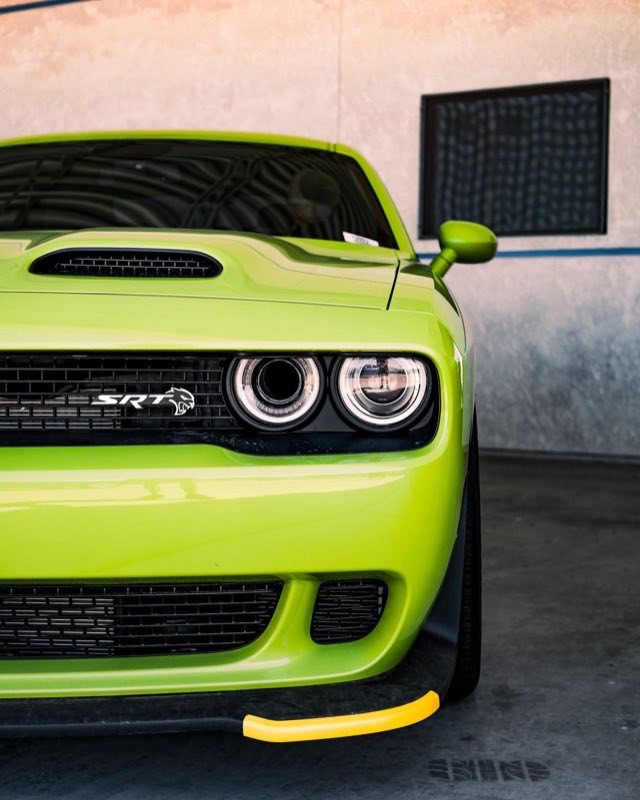
Dodge Challenger SRT Hellcat
Runs this engine2015–2023. The car the supercharged 6.2 HEMI was built for. This one is the Widebody, which bought the arches and left the engine alone.
Photo: Shane West · Pexels
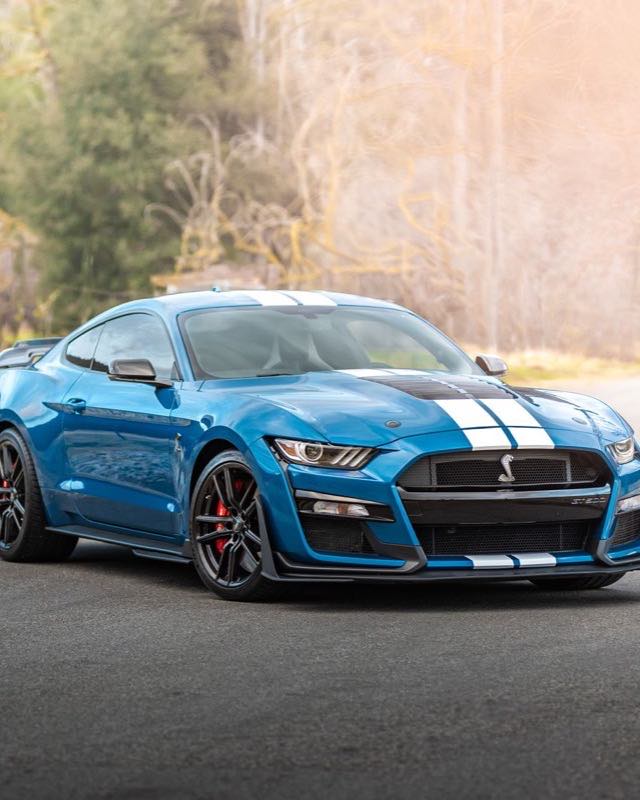
Ford Mustang Shelby GT500
Same layout2020–2022. Same layout, different engine: Ford's Predator 5.2 is also a V8 with a blower turning off the crank, built to answer exactly this.
Photo: Tyler Clemmensen · Pexels
Hear it run
It cranks, idles, revs and knocks in the browser. Nothing to download, nothing to install.