PISTON · Flat-four
Boxer-4 2.0L
Flat, low and wide, with the burble that started a cult.
The real engine
Same layout as the Subaru EJ20, the Subaru FA20 and the Porsche 718 flat-four.
4 cyl · 2.0 L · gasoline
 114hp
114hpPeak power
114hp
@ 4,950 rpm
Peak torque
178N·m
@ 3,925 rpm
Displacement
1,995cc
2.0 litres
Redline
7,000rpm
Specifications
- Cylinders
- 4
- Layout
- Flat / boxer
- Bore × stroke
- 84.0 × 90.0 mm
- Displacement
- 1,995 cc
- 2.0 litres
- Compression ratio
- 10.5:1
- Conrod length
- 140.0 mm
- Firing order
- 1-3-2-4
- Cycle
- Four-stroke
- Fuel
- Gasoline, 95 octane
- Induction
- Naturally aspirated
- Idle
- 850 rpm
- Redline
- 7,000 rpm
Measured on the dyno
Every point is a full sweep of this engine in the simulator, not a figure copied off a spec sheet.
What it is
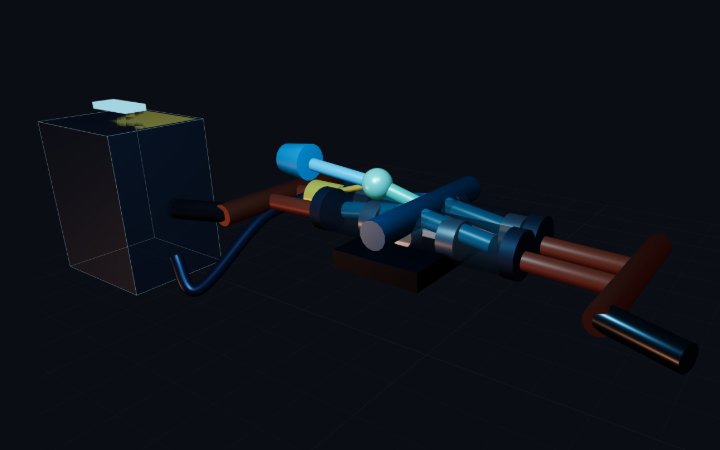
Bore is 84 mm, stroke 90 mm, compression is 10.5:1, and four cylinders of that come to 1,995 cc. The bank angle is 180 degrees, so the two rows lie flat at plus and minus 90 degrees from vertical and the pistons work sideways. Nothing here was copied from a production flat-four. The cars beside this page share the architecture and no more than that. Torque comes out of a Wiebe heat release solved against crank-slider geometry, with the plenum, the runners and the collector filling and emptying around it.
180 is also the highest number the Bank angle field takes. It never reaches the crank-slider solver, which does not ask which row a cylinder sits in, so folding the block up into a vee redraws the mesh, the schematic and the exhaust routing and leaves the dyno curve where it was. The one thing it does decide is which of the two exhaust pipes each cylinder blows down.
Firing order is 1-3-2-4 and the fires are evenly spaced, one every 180 degrees. The pipes are not. Cylinders 1 and 3 sit on the left row and 2 and 4 on the right, so each pipe takes two pulses 180 degrees apart and then waits 540 degrees for the next pair. The roster's inline four is the control: two litres as well, all four fires on one pipe, spaced the same. What you hear is those two lopsided pulse trains, one of them running its tailpipe delay 6 percent longer than the other.
Things to try
- Drag Bank angle down to zero. The rows collapse into one, both pipes become one pipe, and the throb flattens into an inline four. One step back up to 5 degrees brings it back.
- Push Compression up from 10.5 and wait for the KNOCK chip. The low ratio is also why FIT TURBOCHARGER takes this engine untouched, while the naturally aspirated straight-six built on the same 84 by 90 mm cylinder reads TOO MUCH COMPRESSION FOR BOOST at 11.0:1.
- Walk VE peak rpm up from 4,400 toward 6,500. The torque hump follows it up the rev range and the bottom end hollows out. That trade is what you are picking when you pick a runner length.
Seen in
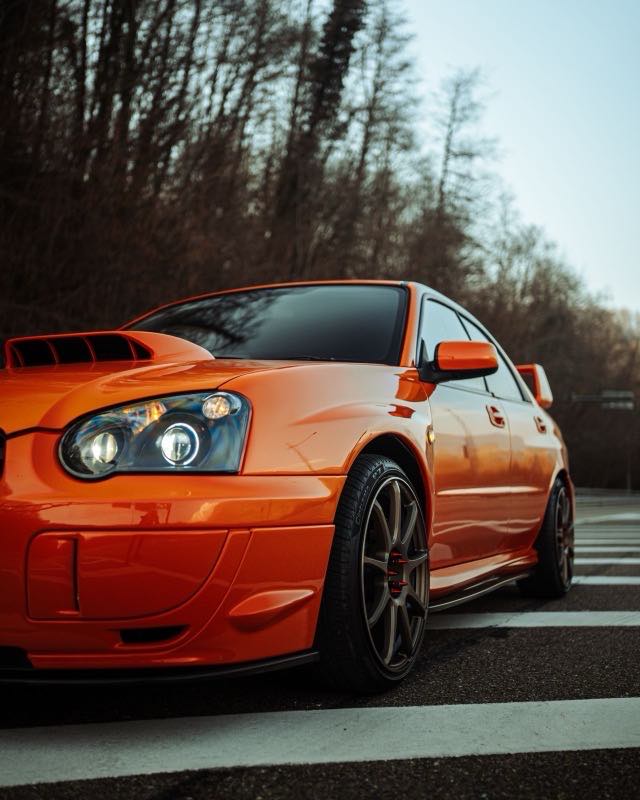
Subaru Impreza WRX (GD)
Same layout2000 to 2007. The turbocharged EJ flat-four under a bonnet scoop, and the car most people have actually heard a boxer in.
Photo: GURYAN · Pexels
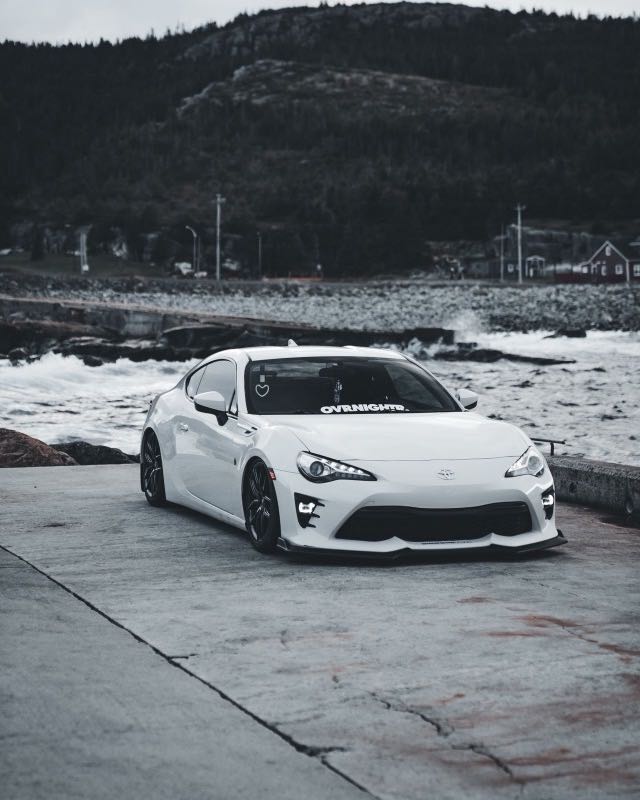
Toyota GT86 (ZN6)
Same layout2012 to 2020. Subaru's naturally aspirated FA20 flat-four, the same engine as the BRZ, sitting as low in the chassis as a flat engine allows.
Photo: Erik Mclean · Pexels
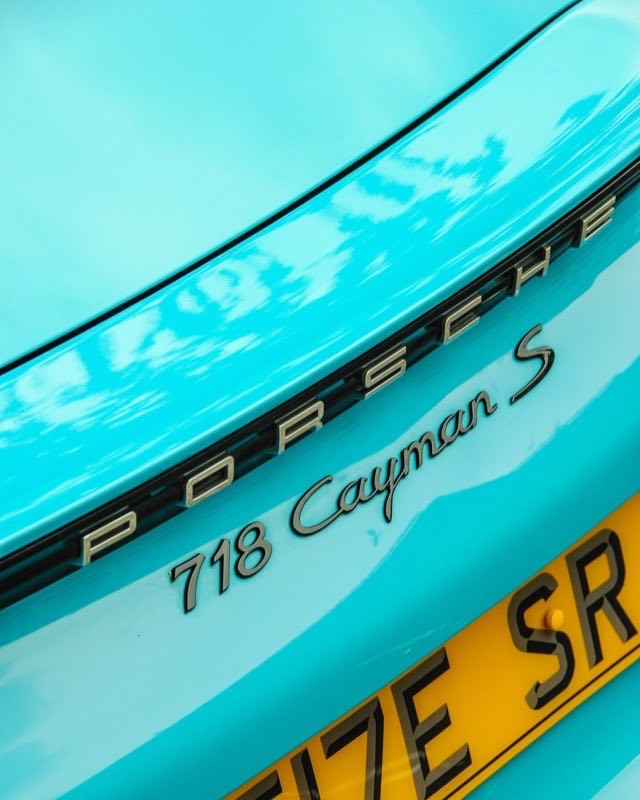
Porsche 718 Cayman S (982)
Same layout2016 onward. Porsche swapped the Cayman's flat-six for a turbocharged flat-four and put 718 on the tailgate to say so.
Photo: Nik · Unsplash
More like this
Hear it run
It cranks, idles, revs and knocks in the browser. Nothing to download, nothing to install.