PISTON · Cross-plane V8
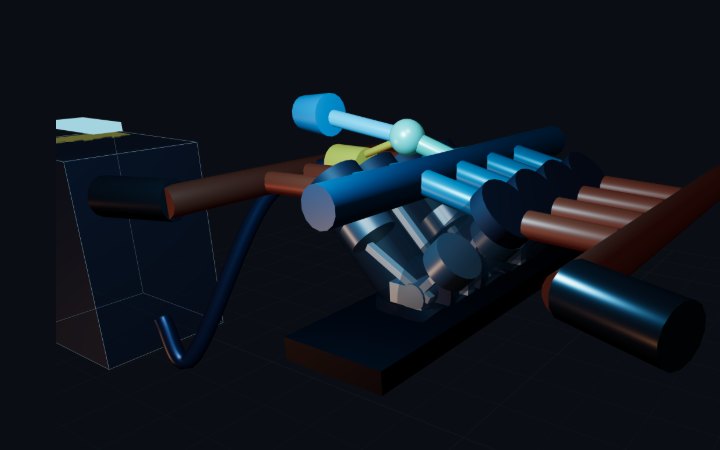
V8 5.0L 90°
Five litres, cross-plane, no boost. The one to learn a V8 on.
The real engine
Same layout as the Ford Coyote 5.0, the Chevrolet LS3 and the Lexus 2UR-GSE.
8 cyl · 5.0 L · gasoline
 297hp
297hpPeak power
297hp
@ 7,000 rpm
Peak torque
445N·m
@ 3,910 rpm
Displacement
4,997cc
5.0 litres
Redline
7,000rpm
Specifications
- Cylinders
- 8
- Layout
- V
- 90° between banks
- Bore × stroke
- 94.0 × 90.0 mm
- Displacement
- 4,997 cc
- 5.0 litres
- Compression ratio
- 10.8:1
- Conrod length
- 155.0 mm
- Firing order
- 1-8-4-3-6-5-7-2
- Cycle
- Four-stroke
- Fuel
- Gasoline, 95 octane
- Induction
- Naturally aspirated
- Idle
- 820 rpm
- Redline
- 7,000 rpm
Check these numbers in the engine displacement calculator, the bore and stroke calculator or the compression ratio calculator, with this engine already filled in.
Measured on the dyno
Every point is a full sweep of this engine in the simulator, not a figure copied off a spec sheet.
What it is
The bore is 94 mm, the stroke 90 mm and the compression ratio 10.8:1, which comes to 4,997 cc across eight cylinders in a 90 degree vee. Nothing here was matched against a real engine's published figures. A Ford Coyote 5.0, a Chevrolet LS3, a Lexus 2UR-GSE and a BMW S62 are built to the same architecture, and that association is the whole of the claim. The torque on the dyno comes out of a Wiebe heat release solved against crank-slider geometry, with the plenum, the runners and the collector filling and emptying around it.
The crank is cross-plane, which is where the character comes from. All eight cylinders fire 90 degrees of crank apart, and the exhaust never hears it that way. Odd cylinders sit on one bank and even ones on the other, so one header takes its pulses 90, 180, 270 and 180 degrees apart while the other takes the same four gaps starting in a different place. Two cylinders on one side fire back to back a quarter turn apart, and then that side waits three quarters of a turn with nothing. Each bank drives its own audio bus, so two uneven pulse trains reach you instead of one even one. The 2.4 litre Formula One V8 on this roster runs a flat-plane crank and measures a flat 180 on both banks. That gap between them is the burble, and it comes out of the firing order rather than a recording.
It breathes best at 4,300 rpm against a 7,000 rpm limit, 61 percent of the way up. The curve generator will carry a four-stroke's breathing peak as high as eight tenths of redline, and the 7.0 litre pushrod V8 here is written hard against that stop at 5,600. This one sits nowhere near it. Volumetric efficiency holds a floor of 82 percent of its best value however far from the peak the engine strays, where the model's default floor is 78, so the torque arrives early and stays broad. Friction is charged on mean piston speed rather than on rpm, and a 90 mm stroke at 7,000 rpm moves 21.0 metres a second, which is what the 1.3 bar base friction figure is set against.
Things to try
- Retype Firing order as a sequence that alternates banks, say 1-8-3-6-5-2-7-4, so each side takes every other fire. Both headers go to a flat 180 degrees and the burble hardens into the even bark of a flat-plane V8. The dyno curve does not move: the sound is the only thing the order changes.
- Open TURBO. The button reads TOO MUCH COMPRESSION FOR BOOST, and the line beneath it puts the ceiling at 1.10 bar at 10.8:1 on 95 RON, noting that 8.5:1 would allow 2.08. A wastegate holds its set point by running a standing error above it, so a turbo aimed at that ceiling would arrive past it. Open SUPERCHARGER and a blower is offered on the same engine, because it lands on a hard cap instead of creeping through one. Walk Compression down to 10.65:1 and the turbo stops refusing as well.
- Pull Flywheel down from 0.37 in ADVANCED. At an 820 rpm idle the flywheel is carrying that uneven bank spacing, so lightening it sharpens the rev-up and roughens the idle in one move.
Seen in
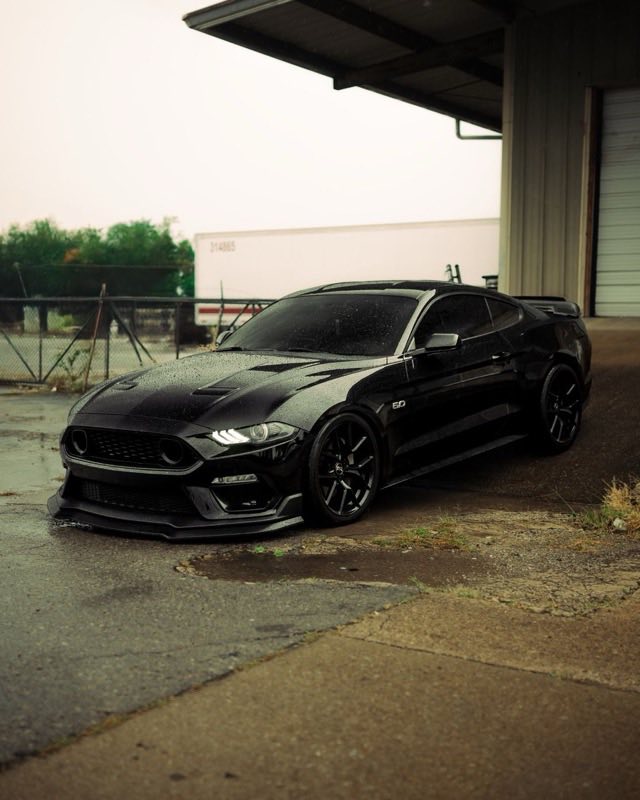
Ford Mustang GT (S550)
Same layout2015–2023. Same layout, different engine: Ford's Coyote 5.0 is a four-cam cross-plane V8, and the badge behind the front wheel is what names it.
Photo: ceesz · Pexels
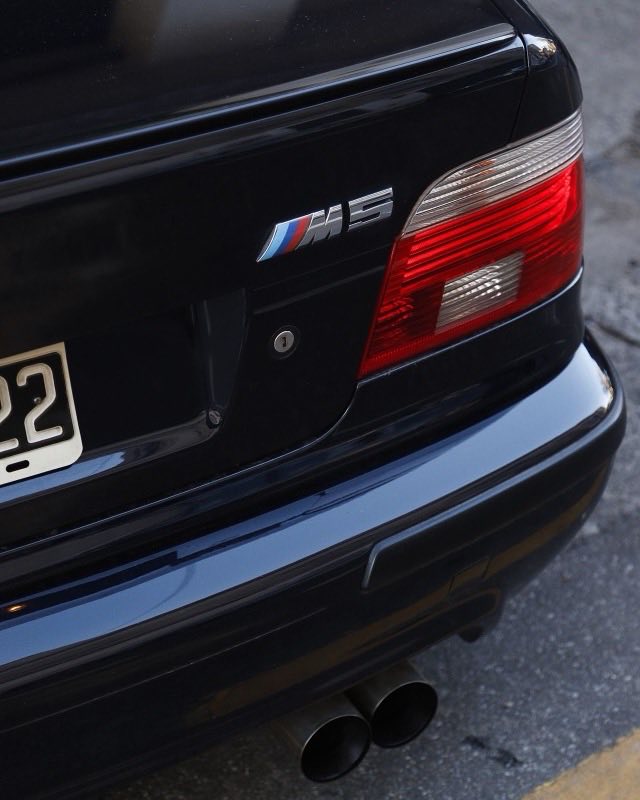
BMW M5 (E39)
Same layout1998–2003. Same layout, a long way from a muscle car: the S62 is a 5.0 litre 90 degree V8 in a saloon, and the four tips under the bumper are how you spot one.
Photo: Sofía Nuñez · Pexels
Variants
Other Cross-plane V8 engines in the simulator.
Seven litres on two valves and one cam, spinning to 7,000. The biggest small block there was.
8 cyl · 7.0 L · gasoline
Four point six litres, a cam over each bank, and the idle of every police car you have heard.
8 cyl · 4.6 L · gasoline
More like this
Hear it run
It cranks, idles, revs and knocks in the browser. Nothing to download, nothing to install.