PISTON · Cosworth CA2006
F1 V8 2.4L
Ninety-eight of bore, forty of stroke, and each bank firing every 180°. The highest-revving engine ever raced.
The real engine
Same bore, stroke, displacement, compression ratio and vee angle as the Cosworth CA2006.
The real engine made 755 bhp at 19,250 rpm and 290.7 N·m at 17,000 from a 95 kg package on pneumatic valve springs; none of that is claimed here, only the geometry.
Same layout as the Ferrari 056, the Mercedes-Benz FO 108S and the Renault RS26.
8 cyl · 2.4 L · gasoline
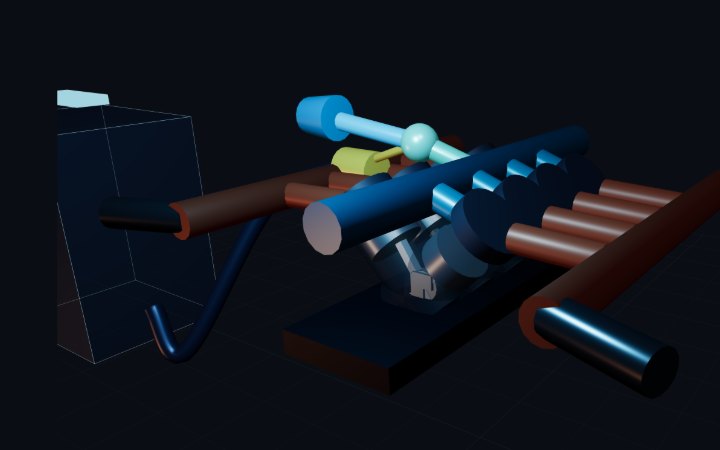 729hp
729hpPeak power
729hp
@ 19,250 rpm
Peak torque
285N·m
@ 16,708 rpm
Displacement
2,399cc
2.4 litres
Redline
19,250rpm
Specifications
- Cylinders
- 8
- Layout
- V
- 90° between banks
- Bore × stroke
- 98.0 × 39.8 mm
- Displacement
- 2,399 cc
- 2.4 litres
- Compression ratio
- 13.3:1
- Conrod length
- 102.2 mm
- Firing order
- 1-5-4-8-3-7-2-6
- Cycle
- Four-stroke
- Fuel
- Gasoline, 102 octane
- Induction
- Naturally aspirated
- Idle
- 4,000 rpm
- Redline
- 19,250 rpm
Check these numbers in the engine displacement calculator, the bore and stroke calculator or the compression ratio calculator, with this engine already filled in.
Measured on the dyno
Every point is a full sweep of this engine in the simulator, not a figure copied off a spec sheet.
What it is
The bore is 98 mm, the stroke 39.75 mm, the compression ratio 13.3:1 and the vee 90 degrees. Those are Cosworth's own figures for the CA2006 that Williams raced in 2006. Nothing else here was copied from one. The curve on the dyno comes out of a Wiebe heat release solved against crank-slider geometry, and the solver adds substeps as the crank speeds up, so no step spans more than 60 degrees of rotation.
Most of that geometry came straight out of the 2006 rulebook. Capacity could not exceed 2,400 cc, the engine had to be eight cylinders in a 90 degree vee, and no bore could go past 98 mm. Cosworth took the bore to that limit, which leaves 39.75 mm of stroke to reach the capacity. The lint chips call the resulting 2.47 bore-to-stroke ratio oversquare. The rules banned variable-geometry inlets too, so the intake is tuned for one speed, and this preset breathes best at 18,500 rpm where volumetric efficiency reaches 1.20.
The pistons average 25.5 m/s at 19,250 rpm, and two parts of the model charge for that differently. Friction here is quadratic in mean piston speed rather than in rpm, so the 1.6 bar this preset carries becomes 4.33 bar of friction MEP at the redline. Knock relaxes instead: end gas detonates only if it stays hot long enough, so the temperature the model tolerates climbs 32 percent between the 4,400 rpm it was fitted at and 19,250. The 102 octane the fuel rules allowed behaves like 172 up there. That is why 13.3:1 is comfortable at the top of the range and marginal at the bottom.
Things to try
- Pull Redline back to 18,000, the speed Cosworth re-tuned a later CA for once the FIA capped revs. The whole top of the curve goes with it.
- Take Compression up past 13.3:1 and watch where the KNOCK chip lights. It arrives at the bottom of the range rather than the top, because end gas spends less time hot at 19,000 rpm than it does off the line.
- Flywheel is 0.05 kg·m², against the 0.30 the seven-litre pushrod V8 on this roster carries. Raise it and the throttle blip turns into a slow swell.
Seen in
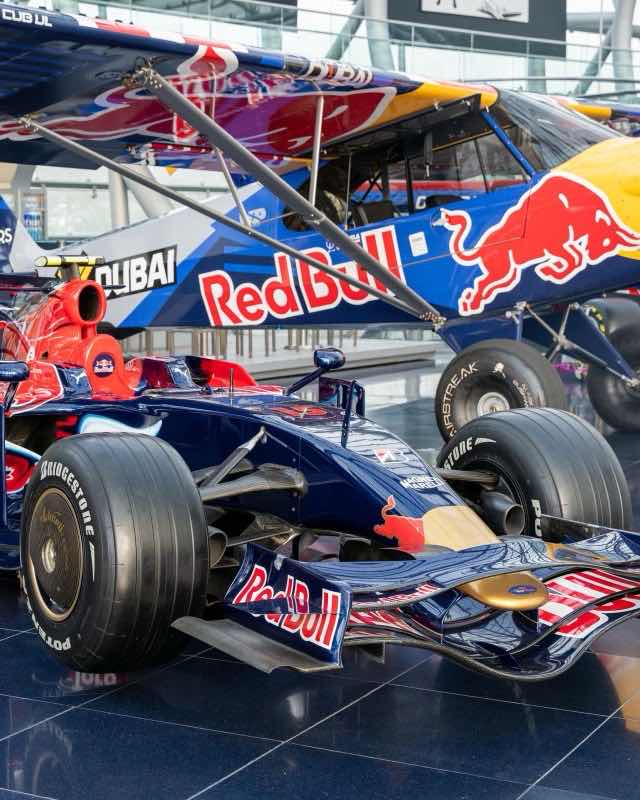
Toro Rosso STR3 (2008)
Same layoutSame layout, different engine: Ferrari's 056 put 2.4 litres in the same 90 degree vee, and this is the car Sebastian Vettel won the 2008 Italian Grand Prix with in the rain.
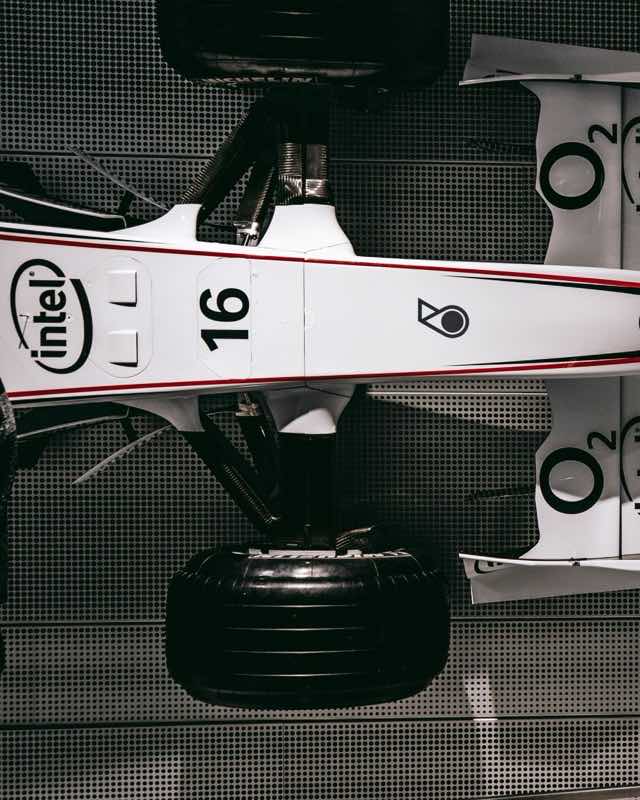
BMW Sauber F1.06 (2006)
Same layoutIt shared the grid with the Cosworth in 2006, running BMW's own 2.4 litre V8 under the regulations that fixed bore, capacity and vee angle for everyone.
Photo: Maria Geller · Pexels
More like this
Hear it run
It cranks, idles, revs and knocks in the browser. Nothing to download, nothing to install.