PISTON · V10
F1 V10 3.0L
Three litres at nineteen thousand rpm. The last V10 to win a championship.
The real engine
Same layout as the Renault RS25, the BMW P84/5 and the Cosworth TJ2005.
10 cyl · 3.0 L · gasoline
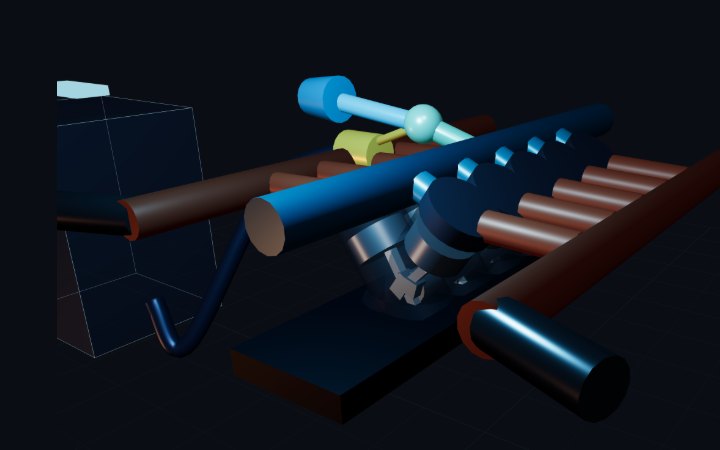 897hp
897hpPeak power
897hp
@ 19,250 rpm
Peak torque
364N·m
@ 16,073 rpm
Displacement
2,998cc
3.0 litres
Redline
19,250rpm
Specifications
- Cylinders
- 10
- Layout
- V
- 72° between banks
- Bore × stroke
- 98.0 × 39.8 mm
- Displacement
- 2,998 cc
- 3.0 litres
- Compression ratio
- 13.0:1
- Conrod length
- 102.0 mm
- Firing order
- 1-6-5-10-2-7-3-8-4-9
- Cycle
- Four-stroke
- Fuel
- Gasoline, 102 octane
- Induction
- Naturally aspirated
- Idle
- 4,000 rpm
- Redline
- 19,250 rpm
Check these numbers in the engine displacement calculator, the bore and stroke calculator or the compression ratio calculator, with this engine already filled in.
Measured on the dyno
Every point is a full sweep of this engine in the simulator, not a figure copied off a spec sheet.
What it is
Renault's own figures for the RS25 are ten cylinders in a 72 degree vee, three litres between them, a maximum speed of 19,250 rpm and about 900 hp. It won the 2005 championship in the back of the R25 and was the last V10 to take a title. The bore, the stroke and the compression ratio are not Renault's. Nobody publishes those for this engine, so the figures in the spec table are era-plausible choices rather than facts about the RS25. The dyno reading comes out of a Wiebe heat release solved against crank-slider geometry, with the plenum, the runners and the collector filling and emptying around it, and its peak lands two tenths of a percent off the 900.
Write-ups of these engines call the 98 mm bore an FIA limit for 2005. There was no 2005 bore limit. Ninety-eight millimetres is the ceiling for the V8s that replaced them, and it sits in the 2005 rulebook under an article headed CHANGES FOR 2006, next to the cut to 2,400 cc that killed the V10 off. Three litres across ten cylinders on that bore leaves 39.75 mm of stroke, which is the whole of the reasoning behind the figure this preset carries. The 2005 rules did allow one thing the 2006 book banned by name: a variable inlet trumpet, which Renault used to move the intake tuning with engine speed. This model has one tuned length, so it breathes best at one speed. Volumetric efficiency reaches 1.20 at 17,500 rpm, and the curve climbs from 8,000 rpm to the top of the range without a bend in it, which no other engine on this roster does.
One number sets the spark timing for every speed and every load, and here it is 20 degrees before top dead centre. A real engine advances and retards as it goes, so a value fitted at the power peak is wrong at a standing start. This one idles at 4,000 rpm, and a launch spends its first seconds between there and 6,000. Held at 4,500 rpm under full load, on the 102 RON the 2005 rules allowed, the knock reading is 0.232 against the 0.35 at which the panel calls heavy knock, and by 6,000 rpm it has gone. The 25 degrees this preset first carried read 0.403 at 4,500, over the line on a car pulling away. Backing the timing off cost the top of the range and put the peak on Renault's 900 rather than five percent above it. It is still a compromise: 10 detector samples out of 720 over a twelve second launch read above the heavy threshold, and closing that gap needs a spark map this model does not have. The car under it weighs 605 kg and carries four square metres of lift area, so grip runs out only in the launch. In top gear, drag stops it.
Things to try
- Take Stroke up from 39.75 mm. Displacement follows it and the friction bill follows faster, because the model charges friction on mean piston speed rather than on rpm. At 19,250 rpm the pistons average 25.5 metres a second, which turns the 1.6 bar of Friction MEP under ADVANCED into 4.33.
- Open ADVANCED and walk VE peak rpm up from 17,500. It stops at 18,287, which is 95 percent of redline. Most of this roster is held to eight tenths, and the two Formula One presets are the only ones let that close to the limiter.
- Open Bank angle out from 72 degrees toward the 90 the 8.4 litre V10 here runs. The vee widens in the render and the firing interval does not move off 72 degrees, because this model spaces cylinders by their position in the firing order rather than by the bank they sit in. The offset crank pins a real ten needs to fire evenly are something it never has to buy.
Seen in
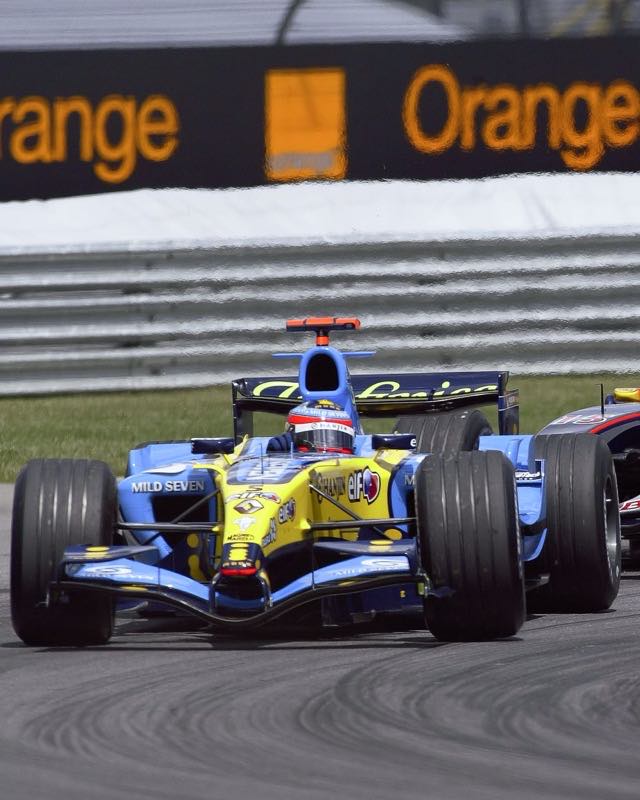
Renault R25
Same layout2005. The RS25's only home, and the last car to win a championship on ten cylinders. Fernando Alonso took the title in it.
Photo: Adriaan Greyling · Pexels
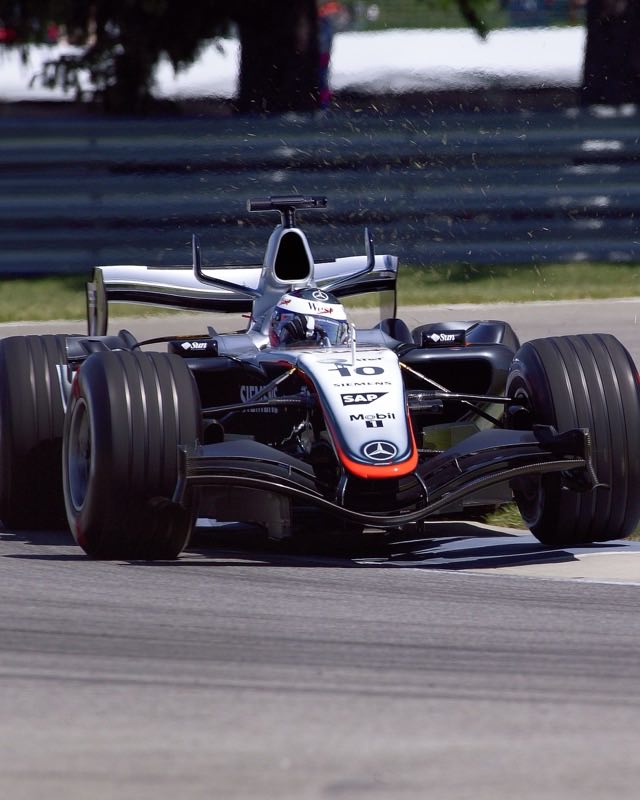
McLaren MP4-20
Same layoutSame layout, different engine: Mercedes built its own three-litre V10 for 2005, and this is the car that raced the R25 for the championship.
Photo: Adriaan Greyling · Pexels
Variants
Other V10 engines in the simulator.
Eight and a half litres of two-valve pushrod V10, and torque from idle.
10 cyl · 8.4 L · gasoline
More like this
Hear it run
It cranks, idles, revs and knocks in the browser. Nothing to download, nothing to install.