PISTON · Dodge Viper 8.4 V10
V10 8.4L
Eight and a half litres of two-valve pushrod V10, and torque from idle.
The real engine
Same bore, stroke, compression ratio and displacement as the Dodge Viper 8.4 V10.
Same layout as the BMW S85 V10 and the Lamborghini Gallardo V10.
10 cyl · 8.4 L · gasoline
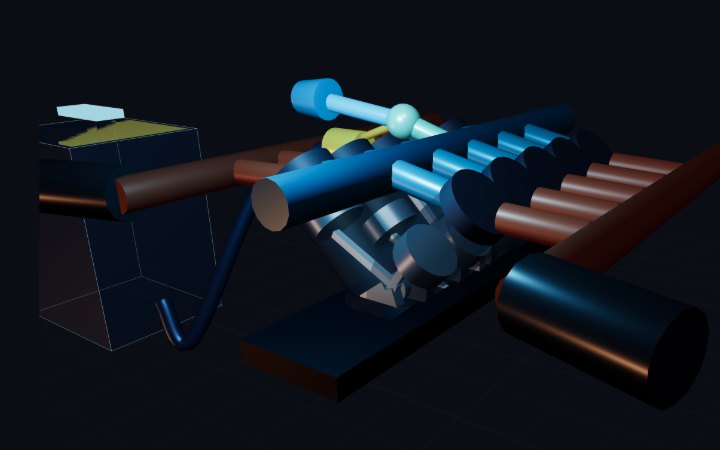 614hp
614hpPeak power
614hp
@ 6,200 rpm
Peak torque
855N·m
@ 3,475 rpm
Displacement
8,382cc
8.4 litres
Redline
6,200rpm
Specifications
- Cylinders
- 10
- Layout
- V
- 90° between banks
- Bore × stroke
- 103.0 × 100.6 mm
- Displacement
- 8,382 cc
- 8.4 litres
- Compression ratio
- 10.2:1
- Conrod length
- 157.5 mm
- Firing order
- 1-10-9-4-3-6-5-8-7-2
- Cycle
- Four-stroke
- Fuel
- Gasoline, 96 octane
- Induction
- Naturally aspirated
- Idle
- 750 rpm
- Redline
- 6,200 rpm
Check these numbers in the engine displacement calculator, the bore and stroke calculator or the compression ratio calculator, with this engine already filled in.
Measured on the dyno
Every point is a full sweep of this engine in the simulator, not a figure copied off a spec sheet.
What it is
The bore is 103.0 mm, the stroke 100.6 mm and the compression ratio 10.2:1, which comes to 8,384 cc across ten cylinders in a 90 degree vee. Those figures match the Dodge Viper 8.4 V10, which Dodge rated at 640 hp at 6,100 rpm and 820 N·m at 5,100. Nothing else here was copied from one. The torque on the dyno is a Wiebe heat release solved against crank-slider geometry, with the plenum, the runners and the collector filling and emptying around it.
Ten cylinders in a 90 degree vee fire every 72 degrees, and a real one buys that evenness with offset crank pins. This model needs none. It spaces cylinders by their position in the firing order, not by the bank they sit on, so even firing comes out whatever the vee angle. The 90 degrees here places the cylinders rather than timing them. The order is 1-10-9-4-3-6-5-8-7-2.
Twelve point three bar of BMEP at the torque peak is a lot to ask of two valves and a camshaft in the block, and the preset pays for it in the breathing figures. The VE peak is 1.06, against 1.02 for the roster's 60 degree V12. The low-end floor is 0.90 where the default is 0.78, higher than anything else here, so the intake is still nine tenths effective down at the 750 rpm idle. It displaces 8.4 litres because it does not rev.
Things to try
- Press FIT TURBOCHARGER. It clears by a kelvin and a half. The gate delivers 1.30 bar, the end gas reaches 737 K, and this engine's 96 RON puts the threshold at 738.5. Take Compression up one click to 10.3:1 and the button reads TOO MUCH COMPRESSION FOR BOOST.
- Open ADVANCED and pull VE peak rpm down from 6,000. Nothing moves until 4,960, because the curve generator holds a four-stroke's breathing peak to eight tenths of redline and this preset asks for more than that. Below the clamp the peak walks down and the fat part of the curve goes with it.
- Take Redline up from 6,200 toward 7,000. The breathing peak follows at eight tenths, landing on 5,600, and the friction bill climbs with it: Friction MEP under ADVANCED is only the base term, and the model adds mean piston speed on top. A 100.6 mm stroke goes from 20.8 metres a second to 23.5.
Seen in
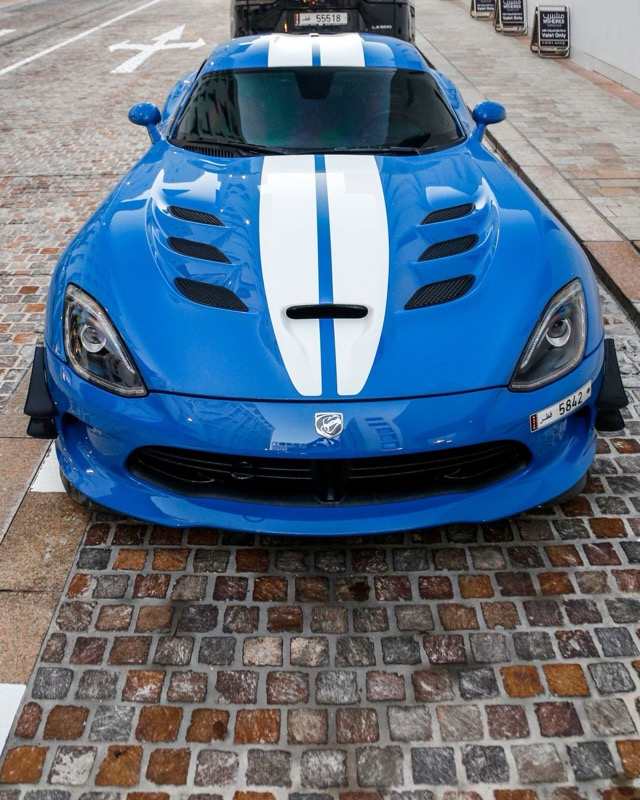
Dodge Viper (Gen V)
Runs this engine2013–2017. The last car built around the 8.4 litre V10, rated at 640 hp and naturally aspirated to the end.
Photo: Mohammad Hammad · Pexels
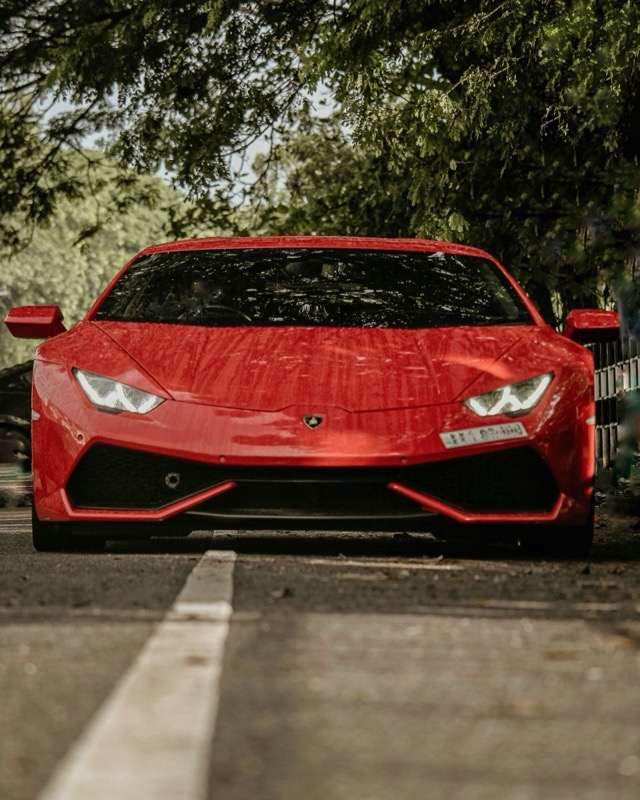
Lamborghini Huracán
Same layoutSame layout, different engine: Lamborghini's 5.2 litre V10 is another 90 degree ten, mid-mounted, four valves a cylinder and built to rev.
Photo: Hebin Antony · Pexels
Variants
Other V10 engines in the simulator.
Three litres at nineteen thousand rpm. The last V10 to win a championship.
10 cyl · 3.0 L · gasoline
More like this
Hear it run
It cranks, idles, revs and knocks in the browser. Nothing to download, nothing to install.