PISTON · V12
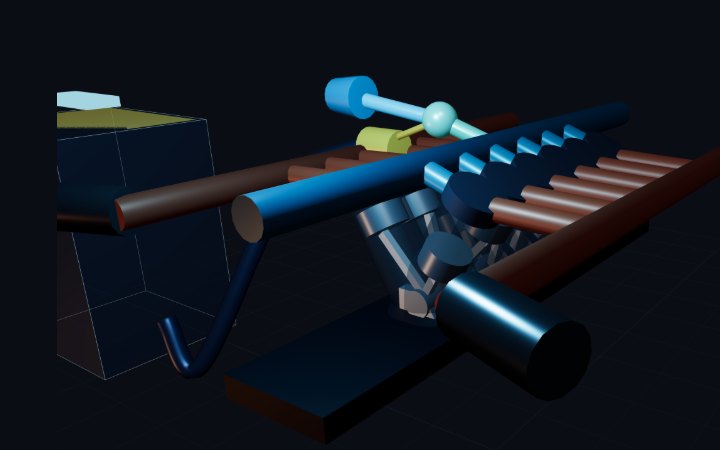
V12 5.0L 60°
Twelve cylinders, perfect primary and secondary balance, and a noise nothing else makes.
The real engine
Same layout as the Ferrari F133 (550 Maranello), the Lamborghini V12 and the BMW S70/2 (McLaren F1).
12 cyl · 5.0 L · gasoline
 392hp
392hpPeak power
392hp
@ 6,042 rpm
Peak torque
477N·m
@ 5,117 rpm
Displacement
4,988cc
5.0 litres
Redline
8,200rpm
Specifications
- Cylinders
- 12
- Layout
- V
- 60° between banks
- Bore × stroke
- 84.0 × 75.0 mm
- Displacement
- 4,988 cc
- 5.0 litres
- Compression ratio
- 11.5:1
- Conrod length
- 140.0 mm
- Firing order
- 1-12-5-8-3-10-6-7-2-11-4-9
- Cycle
- Four-stroke
- Fuel
- Gasoline, 95 octane
- Induction
- Naturally aspirated
- Idle
- 800 rpm
- Redline
- 8,200 rpm
Check these numbers in the engine displacement calculator, the bore and stroke calculator or the compression ratio calculator, with this engine already filled in.
Measured on the dyno
Every point is a full sweep of this engine in the simulator, not a figure copied off a spec sheet.
What it is
Bore is 84 mm, stroke is 75 mm and the compression ratio is 11.5:1. None of the three came off a real engine's drawing. This preset shares one thing with the Ferrari F133, the Lamborghini V12 and the BMW S70/2 out of the McLaren F1, and that is the layout: two banks of six at sixty degrees. The torque on the dyno comes out of a Wiebe heat release solved against crank-slider geometry 240 times a second, with the plenum, the runners and the collector filling and emptying around it.
Twelve cylinders on a four-stroke cycle fire 60 degrees of crank apart, evenly, which at the 8,200 rpm redline puts 820 combustion events into every second. The intake breathes best at 5,800. Volumetric efficiency peaks at 1.02 there and has fallen to around 0.80 by the redline, so you spend the last 2,400 rpm turning the same torque more often rather than making more of it.
Base friction is set at 1.791 bar of mean effective pressure, one of the three highest figures on the roster, and twelve sets of rings account for it. The speed-dependent part scales with mean piston speed rather than with rpm, which is cheap for a short stroke: 75 mm at 8,200 rpm is 20.5 metres a second, where 90 mm at the same rpm would be 24.6. An earlier version of that law spent the same terms in rpm and charged this engine about 17 percent too much near the redline.
Things to try
- Redline reads 8,200 and the slider runs to 9,000. Take it up there and the torque line sags further while friction climbs with piston speed. Watch where the power line rolls over.
- VE peak rpm reads 5,800 and its slider runs to 8,000, but the model caps the breathing peak at 80 percent of the redline, which is 6,560 here. Drag it past that and the dyno holds still until you raise Redline as well.
- Compression is 11.5:1 with nothing forcing air in, so knock barely registers: 0.010 at the breathing peak. The slider reaches 22:1. Somewhere on the way up the KNOCK chip lights, and the top of the rev range goes first.
Seen in
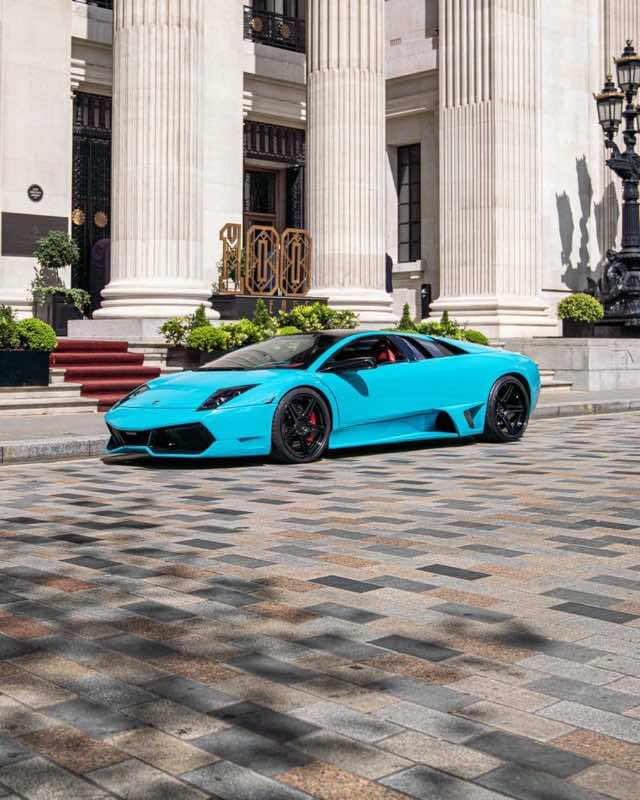
Lamborghini Murciélago
Same layout2001–2010. Same layout, different engine: Lamborghini's own 60-degree V12, sitting behind the seats rather than ahead of them.
Photo: Raja Khan · Pexels
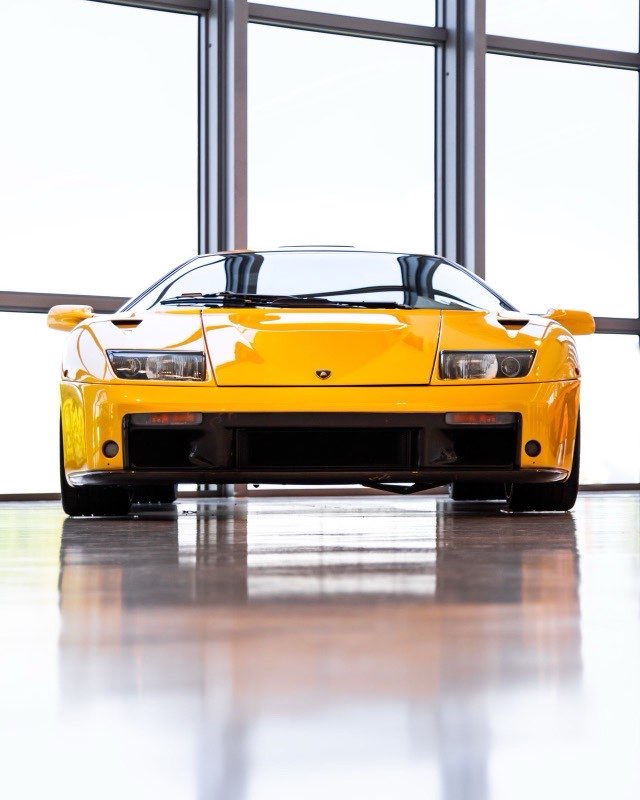
Lamborghini Diablo
Same layout1990–2001. The Murciélago's predecessor, and the car that carried the same 60-degree V12 through the nineties.
Photo: Quentin Martinez · Pexels
More like this
Hear it run
It cranks, idles, revs and knocks in the browser. Nothing to download, nothing to install.