PISTON · Bugatti W16
W16 8.0L Quad-Turbo
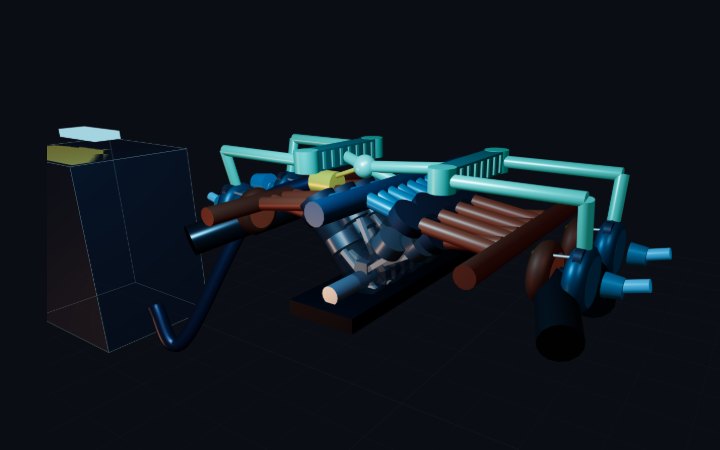
Sixteen cylinders in four rows over two heads, and a thousand horsepower asking for all of them.
The real engine
Same bore, stroke, compression ratio and displacement as the Bugatti W16.
16 cyl · 8.0 L · gasoline · turbo
 1,044hp
Peak power
1,044hp
@ 6,800 rpm
Peak torque
1,516N·m
@ 4,513 rpm
Displacement
7,993cc
8.0 litres
Redline
6,800rpm
Specifications
- Cylinders
- 16
- Layout
- W
- 90° between banks
- Bore × stroke
- 86.0 × 86.0 mm
- Displacement
- 7,993 cc
- 8.0 litres
- Compression ratio
- 9.0:1
- Conrod length
- 148.0 mm
- Firing order
- 1-8-9-16-4-5-12-13-2-7-10-15-6-3-14-11
- Cycle
- Four-stroke
- Fuel
- Gasoline, 98 octane
- Induction
- 4 turbochargers in parallel
- 65 mm compressor wheel
- Boost target
- 1.87 bar absolute
- Wastegate spring pressure, so boost creeps above it as flow rises
- Intercooler
- 78% effectiveness
- Idle
- 700 rpm
- Redline
- 6,800 rpm
Check these numbers in the engine displacement calculator, the bore and stroke calculator or the compression ratio calculator, with this engine already filled in.
Measured on the dyno
Every point is a full sweep of this engine in the simulator, not a figure copied off a spec sheet.
What it is
Bore and stroke both measure 86 mm, the compression ratio is 9.0:1, and the sixteen cylinders add up to 8.0 litres. Those figures match the Bugatti W16. Nothing else here was copied from one. The cylinders sit in four rows over two heads, two narrow-angle banks of eight with 15 degrees between the rows inside a bank and 90 degrees between the banks, and the firing order spreads sixteen power strokes evenly across two crank turns, one every 45 degrees. The torque on the dyno comes out of a Wiebe heat release solved against crank-slider geometry, with the plenum, the runners and the collector filling and emptying around it.
A 9.0:1 compression ratio is low for a petrol engine, and the naturally aspirated W12 on this roster shows why: it runs 10.75:1, because it never has to leave room for boost. Pack more air into the same swept volume and the charge reaches the top of the compression stroke hotter, where the end gas can light itself ahead of the flame front. Builders take compression out to buy that margin back. On the 98 octane Bugatti specifies, it works out at a knock ceiling of 2.16 bar absolute, and the wastegate sits at 1.87 so the boost creeping past its set point arrives on the ceiling instead of through it. Bore and stroke are the same 86 by 86 the turbocharged straight-six on this roster runs, and ten more cylinders of it.
Four turbochargers means four wheels in parallel, each fed a quarter of the engine. That puts every compressor at 65.5 mm across, where one turbo swallowing all 8.0 litres would want 104 mm, and the housings are flow-matched so the total throat comes out the same. Four wheels buy flow rather than pressure. Manifold pressure lands within 0.8 percent of the single big wheel, and spool at 3,000 rpm runs about 60 percent slower, because a small wheel at low exhaust energy sits further from its best blade-speed ratio. The intercooler removes 78 percent of the compressor's temperature rise. That figure is a calibration choice and not a hardware claim: three water-to-air coolers would justify a higher one, and a higher one hands this engine output the real W16 never claimed.
Things to try
- Take Compression up toward the 10.75:1 the naturally aspirated W12 runs. The ceiling falls as you climb while the gate stays where it is, so the KNOCK chip arrives on an engine that was clean a moment ago.
- Push Compressor Ø toward the 104 mm a single turbo on 8.0 litres would use. You now have four of those. Each rotor is heavier, and the bottom of the rev range waits longer for all of them.
- Drag Cylinders down and watch the turbo count follow. Four wheels need enough engine to feed them, so below about 1.8 litres of swept volume the quad stops being a quad.
Seen in
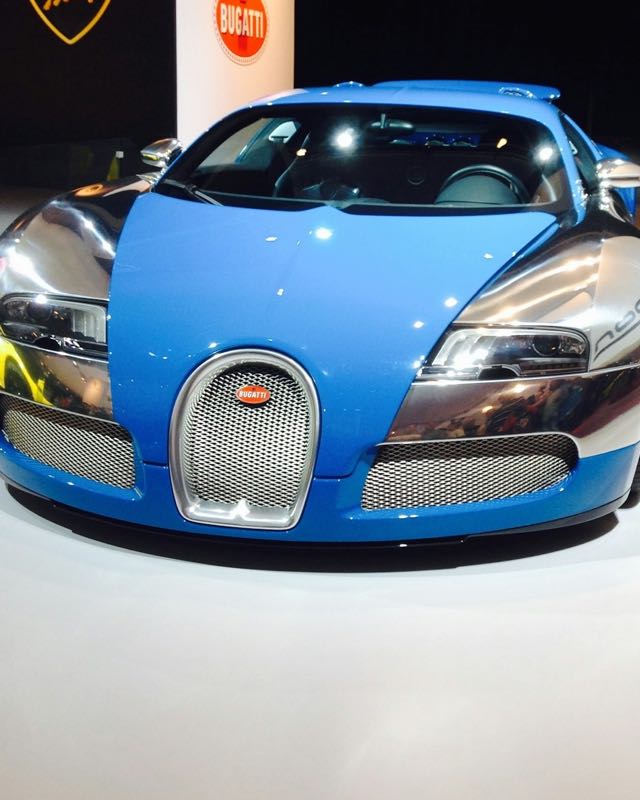
Bugatti Veyron 16.4
Runs this engine2005–2015. The car the 8.0 W16 was built for, rated 987 hp, and the reason four turbochargers were ever bolted to one engine.
Photo: Gijs Tissink · Unsplash
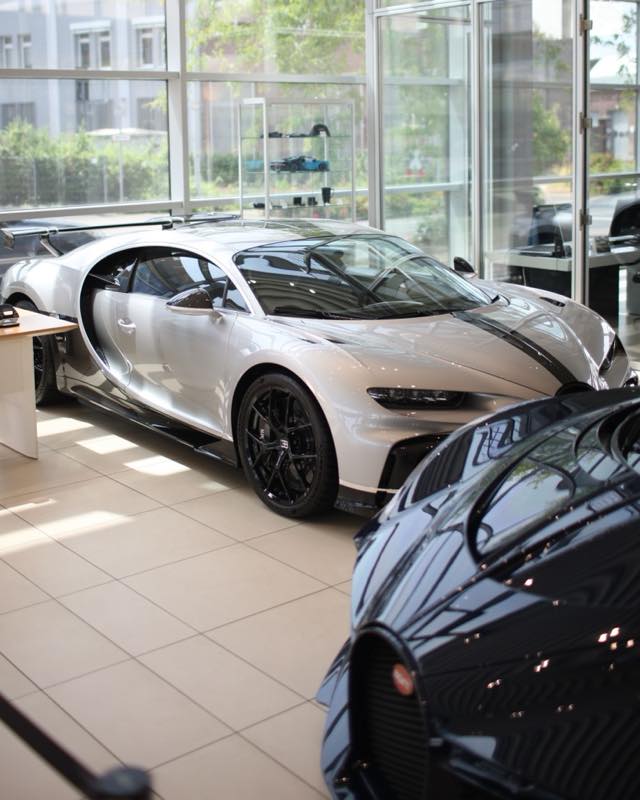
Bugatti Chiron
Runs this engine2016–2024. The same W16 in its second car, and the last Bugatti built around sixteen cylinders.
Photo: Dante Juhasz · Pexels
Hear it run
It cranks, idles, revs and knocks in the browser. Nothing to download, nothing to install.