PISTON · Chevrolet LS7 7.0 V8
V8 7.0L Pushrod
Seven litres on two valves and one cam, spinning to 7,000. The biggest small block there was.
The real engine
Same bore, stroke, compression ratio and displacement as the Chevrolet LS7 7.0 V8.
Same layout as the Chrysler 426 HEMI, the Ford 427 Windsor and the Dodge 5.9 Magnum.
8 cyl · 7.0 L · gasoline
 502hp
502hpPeak power
502hp
@ 5,688 rpm
Peak torque
647N·m
@ 4,638 rpm
Displacement
7,011cc
7.0 litres
Redline
7,000rpm
Specifications
- Cylinders
- 8
- Layout
- V
- 90° between banks
- Bore × stroke
- 104.8 × 101.6 mm
- Displacement
- 7,011 cc
- 7.0 litres
- Compression ratio
- 11.0:1
- Conrod length
- 154.1 mm
- Firing order
- 1-8-7-2-6-5-4-3
- Cycle
- Four-stroke
- Fuel
- Gasoline, 98 octane
- Induction
- Naturally aspirated
- Idle
- 700 rpm
- Redline
- 7,000 rpm
Check these numbers in the engine displacement calculator, the bore and stroke calculator or the compression ratio calculator, with this engine already filled in.
Measured on the dyno
Every point is a full sweep of this engine in the simulator, not a figure copied off a spec sheet.
What it is
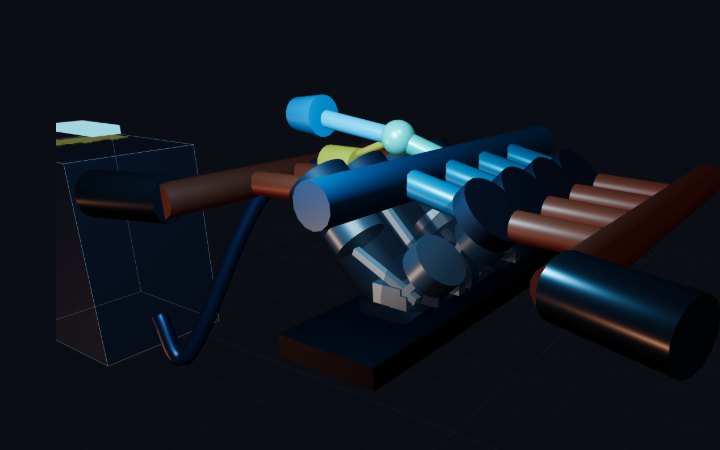
The bore is 104.8 mm, the stroke 101.6 mm and the compression ratio 11.0:1, which comes to 7,011 cc across eight cylinders in a 90 degree vee. Those figures match the Chevrolet LS7, which GM rated at 505 hp and 470 lb-ft. Nothing else here was copied from one. The torque on the dyno is a Wiebe heat release solved against crank-slider geometry, with the plenum, the runners and the collector filling and emptying around it.
Seven litres, two valves a cylinder and one camshaft in the middle of the block is a truck recipe, and this one turns 7,000 rpm. The VE peak lands at 5,600, eight tenths of redline to the rpm. Eight tenths is the ceiling the curve generator holds a four-stroke to unless the preset lifts it, and only the two Formula One engines here do that. This one is written hard against the stop, and a seven-litre pushrod that breathes best at 80 percent of redline is what makes an LS7 odd in the first place.
It pays for that with the stroke. The model charges friction on mean piston speed rather than on rpm, because rubbing follows how far the rings travel. At 7,000 rpm a 101.6 mm stroke moves 23.7 metres a second. The 5.0 litre V8 on the same redline moves 21.0, and that is why the base friction figure reads 0.846 bar here where the 5.0 reads 1.3: the piston-speed terms have already collected the difference.
Things to try
- Pull Redline down from 7,000. The curve generator pins VE peak rpm to eight tenths of whatever you set, so the breathing peak walks down with it and the top of the curve flattens rather than ending sooner.
- Take Compression up from 11.0:1. On 98 octane it keeps making torque well past stock and the knock reading stays at zero until around 14:1. What shows up then sits near 4,900 rpm, in the middle of the range and not at the top.
- Drop Flywheel below 0.30. The reciprocating and rotating masses here undercut the 8.4 litre V10's on an engine nearly as big, and pulling the flywheel down on top of that is something you hear: the revs pick up and drop away faster between gears.
Seen in
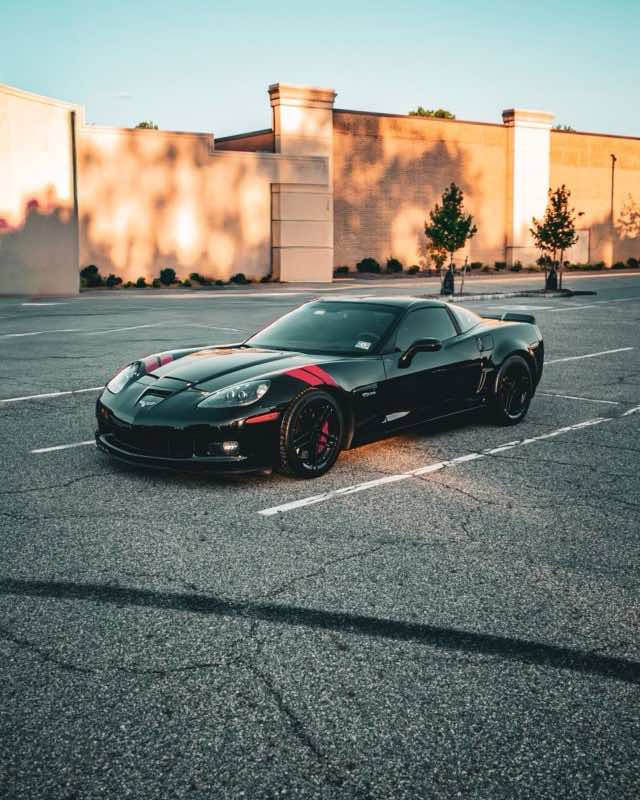
Chevrolet Corvette Z06 (C6)
Runs this engine2006–2013. GM built the LS7 for this car, and the Z06 is the only Corvette that ever got it.
Photo: Ashlyn Decorges · Pexels
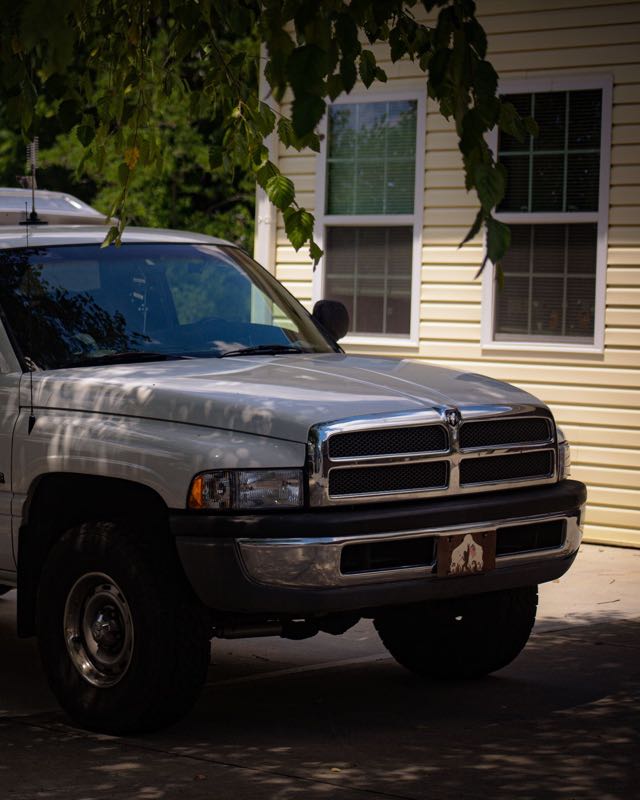
Dodge Ram (second generation)
Same layoutSame layout, different engine: the Magnum V8 that hauled these 1994–2001 trucks is a pushrod 90 degree V8 as well, two valves a cylinder and one camshaft in the vee.
Photo: Owen.outdoors · Pexels
Variants
Other Cross-plane V8 engines in the simulator.
Five litres, cross-plane, no boost. The one to learn a V8 on.
8 cyl · 5.0 L · gasoline
Four point six litres, a cam over each bank, and the idle of every police car you have heard.
8 cyl · 4.6 L · gasoline
More like this
Hear it run
It cranks, idles, revs and knocks in the browser. Nothing to download, nothing to install.