PISTON · Diesel V8
Turbo Diesel V8 6.7L
The same diesel with a turbo and an intercooler. Peak torque just over 2,000 rpm.
The real engine
Same layout as the Ford 6.7 Power Stroke and the GM Duramax 6.6.
8 cyl · 6.6 L · diesel · turbo
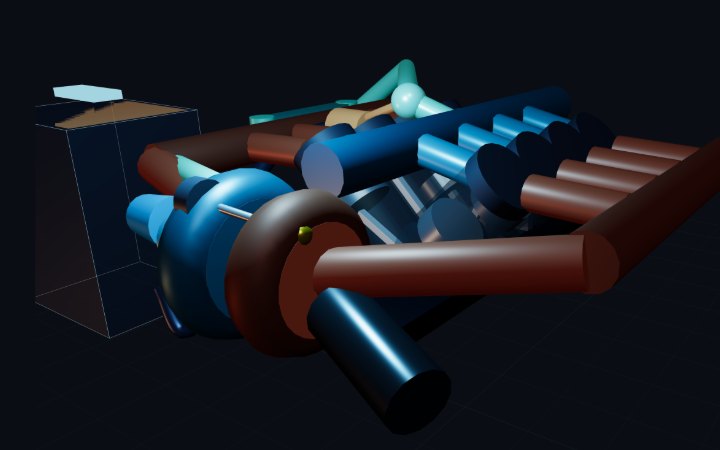 594hp
594hpPeak power
594hp
@ 4,500 rpm
Peak torque
1,278N·m
@ 2,033 rpm
Displacement
6,618cc
6.6 litres
Redline
4,500rpm
Specifications
- Cylinders
- 8
- Layout
- V
- 90° between banks
- Bore × stroke
- 107.0 × 92.0 mm
- Displacement
- 6,618 cc
- 6.6 litres
- Compression ratio
- 17.0:1
- Conrod length
- 165.0 mm
- Firing order
- 1-8-4-3-6-5-7-2
- Cycle
- Four-stroke
- Fuel
- Diesel, 50 cetane
- Induction
- Turbocharged
- 98 mm compressor wheel
- Boost target
- 2.40 bar absolute
- Wastegate spring pressure, so boost creeps above it as flow rises
- Intercooler
- 72% effectiveness
- Idle
- 800 rpm
- Redline
- 4,500 rpm
Check these numbers in the engine displacement calculator, the bore and stroke calculator or the compression ratio calculator, with this engine already filled in.
Measured on the dyno
Every point is a full sweep of this engine in the simulator, not a figure copied off a spec sheet.
What it is
Bore is 107 mm, stroke is 92 mm and the compression ratio is 17:1, which comes to 6,618 cc across eight cylinders in a 90 degree vee. No production diesel carries that bore with that stroke. The Ford 6.7 Power Stroke and the GM Duramax 6.6 share the architecture, and that is the whole of the claim. Torque on the dyno comes out of a two-part heat release, a sharp premixed spike near top dead centre carrying 60 percent of the heat and a slower diffusion tail carrying the rest, solved against crank-slider geometry with the plenum, the runners and the collector filling and emptying around it.
The roster carries a naturally aspirated version of this engine, and the two match part for part: the same bore and stroke, the same 17:1, the same 1.266 bar of friction MEP, injection starting 9 degrees before top dead centre on both, a breathing peak at 2,000 rpm on both. Past the compressor and the cooler, one figure differs: this engine breathes 0.97 at that peak against 0.95, raised to hold its power once the exhaust left in the cylinder above intake pressure started taking room from the charge. Compression stays where it is once the turbo arrives, because a diesel lights on the heat of compression alone and no end gas sits ahead of a flame front waiting to go off. The petrol V8s here hand compression back the moment a blower or a turbo shows up. Run the two diesels one after the other and boost is very nearly the only variable you changed.
Everything on this turbo derives from displacement except the turbine housing. Throat area is set at 0.12 of the wheel disc against the 0.17 the sizing rule picks on its own at a 2.4 bar target, and tight is how a working diesel gets matched: more backpressure, more turbine power out of weak exhaust, an earlier peak, a worse top end. The compressor measures 97.6 mm and the turbine 85.9 mm, and the intercooler takes 72 percent of the compressor's temperature rise back out.
Things to try
- Open Housing A/R from 0.12 toward the 0.25 the 7.3 Power Stroke on this roster runs. The turbo goes lazy off idle, breathes better near the limiter, and peak torque walks past 3,000 rpm.
- Take Boost target from 2.4 bar absolute down to the 1.0 bar floor. The curve walks back toward the naturally aspirated V8 on the same shelf, which is this engine with nothing bolted to the exhaust.
- Pull Intercooler from 72 percent toward zero. Charge temperature climbs, density falls, and fuel falls with it, since diesel fuel mass here is air mass divided by one smoke limit. No KNOCK chip arrives, because compression ignition in this model cannot knock.
Seen in
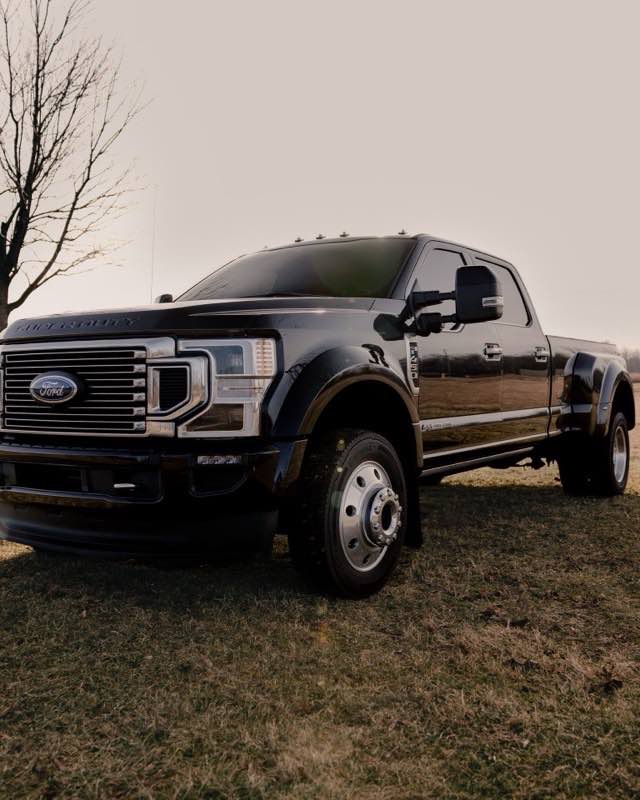
Ford Super Duty (F-450)
Same layout2011 onward. Ford's own 6.7 Power Stroke replaced the bought-in Navistar diesels here, and it has been the only diesel in the Super Duty range since.
Photo: Matt Weissinger · Pexels
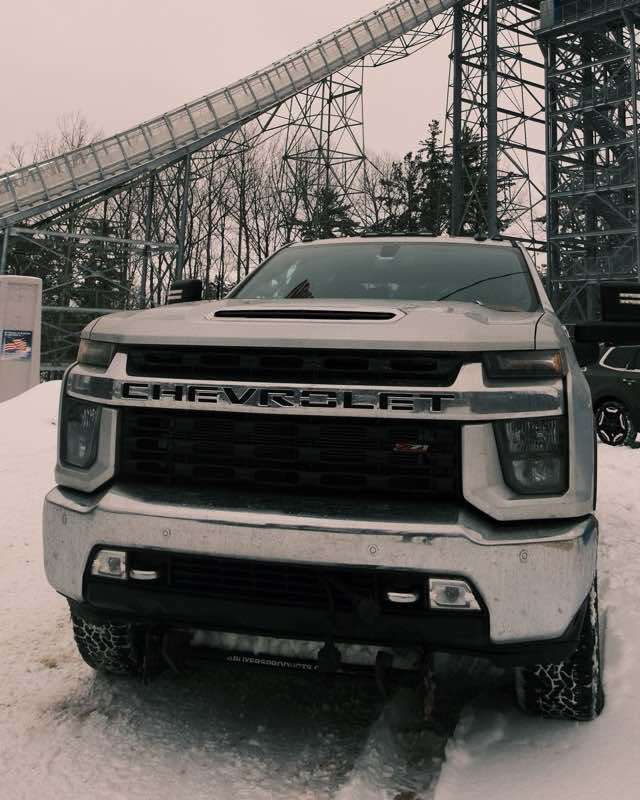
Chevrolet Silverado HD
Same layout2001 onward. The Duramax 6.6 has been the diesel in the 2500HD and the 3500HD, and in the GMC Sierra HD beside them, for its whole life.
Photo: Zak Mogel · Pexels
Variants
Other Diesel V8 engines in the simulator.
Naturally aspirated 6.7 diesel V8. All torque, no boost.
8 cyl · 6.6 L · diesel
More like this
Hear it run
It cranks, idles, revs and knocks in the browser. Nothing to download, nothing to install.