PISTON · Ford 7.3 Power Stroke
Diesel V8 7.3L Power Stroke
Mid-nineties heavy-duty truck diesel. All of its torque lands before 2,000 rpm.
The real engine
Same bore, stroke, compression ratio and displacement as the Ford 7.3 Power Stroke.
Same layout as the International DT466.
8 cyl · 7.3 L · diesel · turbo
 224hp
224hpPeak power
224hp
@ 3,300 rpm
Peak torque
686N·m
@ 2,108 rpm
Displacement
7,273cc
7.3 litres
Redline
3,300rpm
Specifications
- Cylinders
- 8
- Layout
- V
- 90° between banks
- Bore × stroke
- 104.4 × 106.2 mm
- Displacement
- 7,273 cc
- 7.3 litres
- Compression ratio
- 17.5:1
- Conrod length
- 177.1 mm
- Firing order
- 1-2-7-3-4-5-6-8
- Cycle
- Four-stroke
- Fuel
- Diesel, 50 cetane
- Induction
- Turbocharged
- 101 mm compressor wheel
- Boost target
- 1.24 bar absolute
- Wastegate spring pressure, so boost creeps above it as flow rises
- Intercooler
- 72% effectiveness
- Idle
- 700 rpm
- Redline
- 3,300 rpm
Check these numbers in the engine displacement calculator, the bore and stroke calculator or the compression ratio calculator, with this engine already filled in.
Measured on the dyno
Every point is a full sweep of this engine in the simulator, not a figure copied off a spec sheet.
What it is
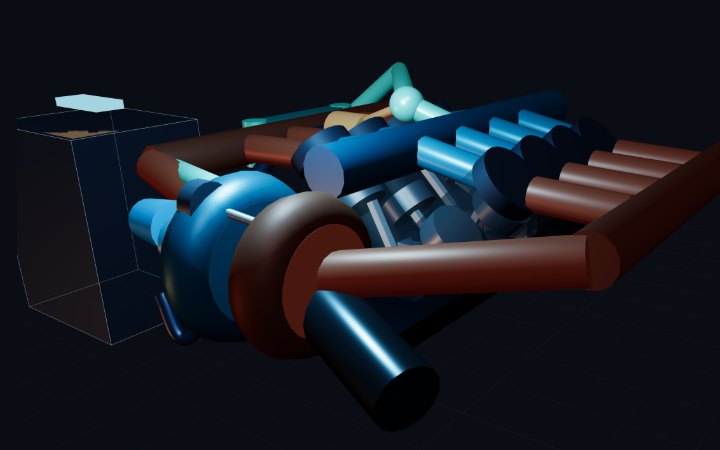
Bore is 104.4 mm, stroke is 106.2 mm and the compression ratio is 17.5:1, which comes to 7,273 cc across eight cylinders. Those four figures match the Ford 7.3 Power Stroke, the Navistar T444E as Ford sold it. Nothing else here was copied from one. The torque on the dyno comes out of a two-part heat release, a sharp premixed spike near top dead centre and a slower diffusion tail, solved against crank-slider geometry with the plenum, the runners and the collector filling and emptying around it.
Compression stays at 17.5:1 with the turbo fitted, because a diesel has nothing to run from. It lights on the heat of compression alone, so no end gas sits ahead of a flame front waiting to go off, and the boost the wastegate holds turns almost straight into torque rather than buying knock margin back. The petrol V8s on this roster give compression away the moment a compressor arrives. The intake breathes best at 1,900 rpm and the rev limit sits at 3,300, about where the real engine is governed.
The boost target reads low against the real engine's roughly one bar, and it stands in for a limit the model does not have. Diesel fuel mass is air mass divided by a single global smoke limit of 28, so every extra kilogram of air buys proportional fuel and there is no injector to run out of. The pump and the nozzles cap a real 7.3 long before it runs short of air, which is why Ford rated 7.3 litres at 235 hp at 2,700 rpm and 678 N·m at 1,600. With no per-preset injector ceiling to set, the rating gets matched on the air side: the boost target comes down until the power does.
Things to try
- Take Boost target from 1.24 up to 2 bar absolute, roughly what the real engine runs. Torque climbs past anything a 7.3 ever made, because nothing in the model caps the fuel once the air is there.
- Tighten Housing A/R from the derived 0.25 toward the 0.12 the roster's 6.7 turbo diesel runs. The turbo lights earlier against more backpressure, and the wastegate, all but shut at the derived width, opens a quarter of its travel to hold the target.
- Open ADVANCED and walk VE peak rpm up from 1,900 toward the rev limit. The torque peak follows it, and the engine stops pulling like a truck well before it gets there.
Seen in
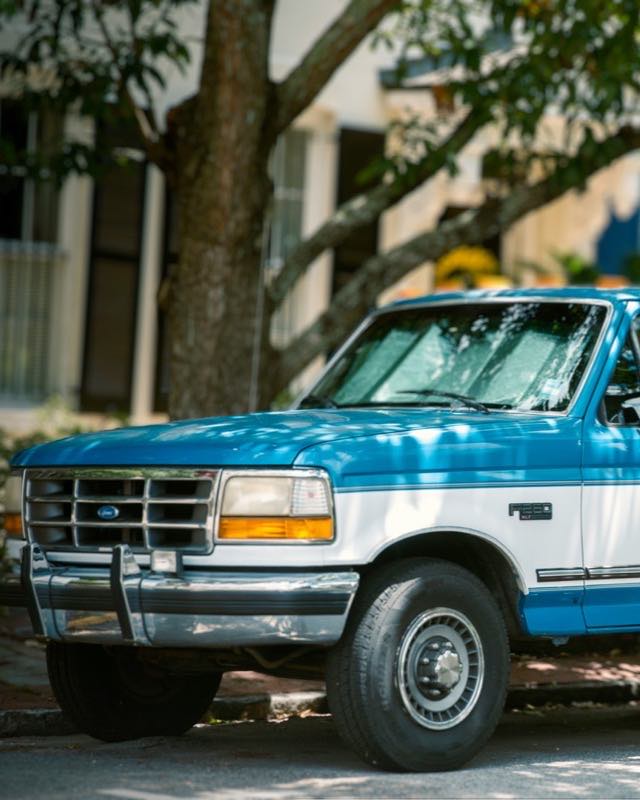
Ford F-250 (OBS)
Runs this engine1992–1997. The 7.3 Power Stroke replaced the old indirect-injection 7.3 here in 1994, and this is the body people mean when they say OBS.
Photo: Brendan Sapp · Unsplash
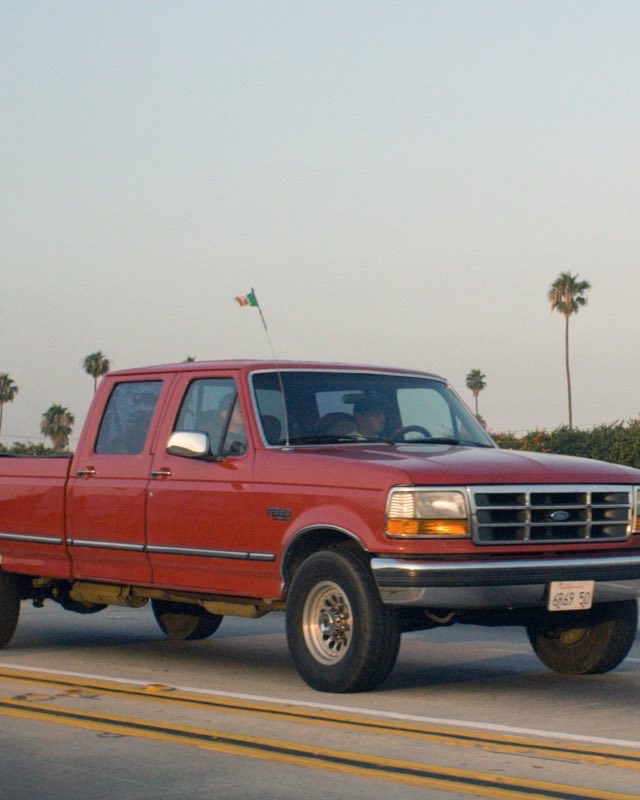
Ford F-Series Crew Cab
Runs this engine1992–1997. Four doors and a long bed on the F-250 and F-350 chassis, which is where the 7.3 was sold.
Photo: Dan Williams · Unsplash
Hear it run
It cranks, idles, revs and knocks in the browser. Nothing to download, nothing to install.