RADIAL · Pratt & Whitney R-2800
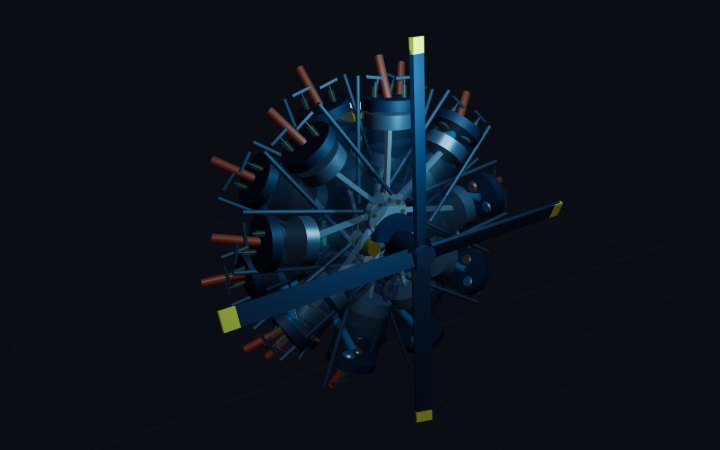
P&W R-2800 Double Wasp (18-cyl twin-row)
Eighteen cylinders, two rows, forty-six litres. The engine that flew the Corsair.
The real engine
Same layout as the Vought F4U Corsair, the Republic P-47 Thunderbolt and the Douglas DC-6.
18 cyl · 46.0 L · avgas · supercharged
 1,966hp
Peak power
1,966hp
@ 2,900 rpm
Peak torque
5,107N·m
@ 2,615 rpm
Displacement
45,957cc
46.0 litres
Redline
2,900rpm
Specifications
- Cylinders
- 18
- Layout
- Radial
- Bore × stroke
- 146.1 × 152.4 mm
- Displacement
- 45,957 cc
- 46.0 litres
- Compression ratio
- 6.7:1
- Conrod length
- 287.0 mm
- Firing order
- 1-12-5-16-9-2-13-6-17-10-3-14-7-18-11-4-15-8
- Cycle
- Four-stroke
- Fuel
- Gasoline, 130 octane
- Induction
- Centrifugal supercharger
- 1.62:1 at its rated speed
- Intercooler
- 55% effectiveness
- Idle
- 620 rpm
- Redline
- 2,900 rpm
Check these numbers in the engine displacement calculator, the bore and stroke calculator or the compression ratio calculator, with this engine already filled in.
Measured on the dyno
Every point is a full sweep of this engine in the simulator, not a figure copied off a spec sheet.
What it is
Eighteen cylinders sit in two rows of nine, on a 146.05 mm bore and a 152.4 mm stroke. That count splits the four-stroke cycle's 720 degrees into 40-degree intervals, and the published firing order alternates rows on every event, so no two cylinders in one row fire back to back. Pratt & Whitney rated the Double Wasp at 2,000 horsepower at 2,700 rpm. That rating sizes the propeller, so wide-open throttle settles at rated speed rather than against a rev limiter. The torque on the dyno comes out of a Wiebe heat release solved against the master-rod and link-rod linkage, one cylinder at a time.
The compression ratio reads 6.65:1, and it belongs to the master cylinder rather than to the engine. There is one clearance volume for all eighteen, and one rod per row reaches the crankpin. The other eight pin to knuckles on that master rod's big-end flange, 52 mm out from its centre, on rods 235 mm long against the master's 287. They swing through a different arc, so each link cylinder ends up with its own stroke, its own timing at top dead centre and its own effective compression ratio, a few hundredths above the master's. The spec panel lists all three, cylinder by cylinder. Swept volume is the sum of those real strokes rather than bore area times stroke times eighteen, which puts it a few tenths of a percent over the published 45.9 litres.
The blower is centrifugal and geared to 7.6 times crank speed. Centrifugal head rises with the square of impeller speed, so boost here follows engine speed and nothing else. The design point is 1.62:1 at 2,700 rpm, against a manifold ceiling of 1.57 bar. At that pressure ratio the charge leaves the impeller near 350 K, which is why the CB-series Double Wasp cooled it between two blower stages. The cooler here takes back 55 percent of the rise, because a period air-to-air core was nothing like a modern one. The fuel is 130-octane avgas, the grade these engines were built around.
Things to try
- Push Knuckle circle out past 52 mm. Link rod plus knuckle circle should land near the master rod's 287 mm, and once it stops doing that, a lint chip tells you the cylinder decks no longer top out on one pad circle.
- Take Fuel grade down from 130 toward pump petrol. At 95 the knock model cuts heat release at rated boost by about a third, and the engine stops making the numbers it was rated for.
- Pull Prop pitch / load below 100 percent. The blades stop absorbing rated power at rated speed, so full throttle chases the rev limiter, which is what a runaway prop does. Push it the other way and the engine bogs.
Seen in
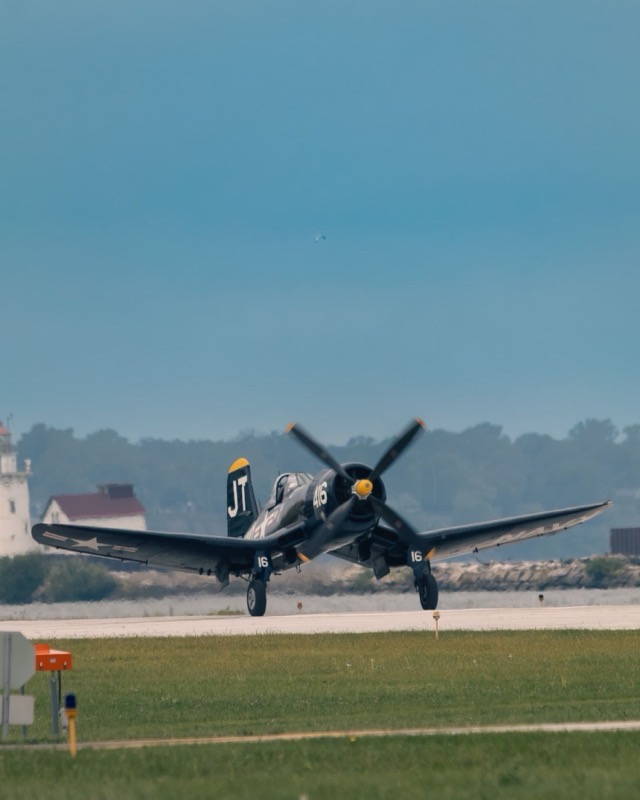
Vought F4U Corsair
Same layout1942–1953. Same architecture in the nose, an eighteen-cylinder twin-row radial, and the bent wing is what keeps a four-metre propeller clear of the deck.
Photo: Leo Lu · Pexels
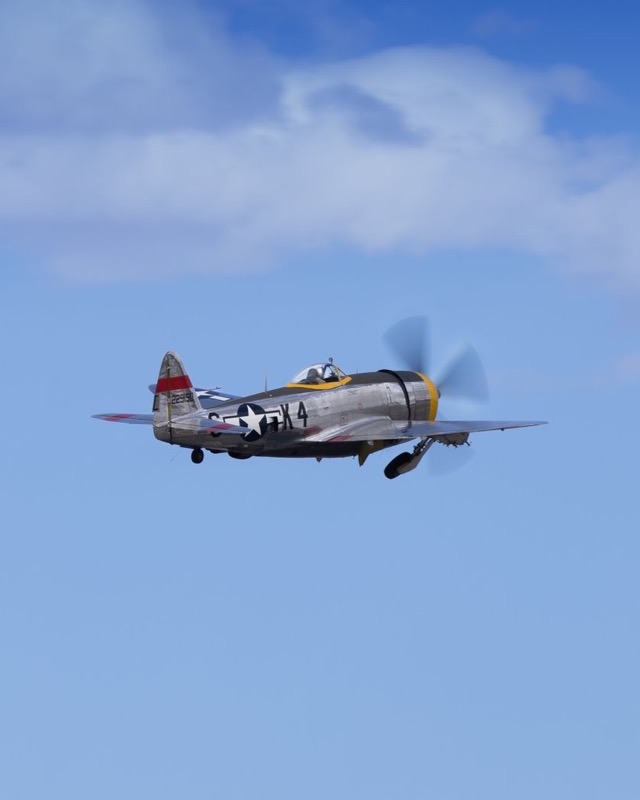
Republic P-47 Thunderbolt
Same layout1942–1945. Another eighteen-cylinder twin row, with its turbo-supercharger back in the fuselage and the ducting running the length of the airframe.
Photo: Sean P. Twomey · Pexels
More like this
Hear it run
It cranks, idles, revs and knocks in the browser. Nothing to download, nothing to install.