PISTON · Caterpillar C-15 550
Diesel I6 14.6L Turbo
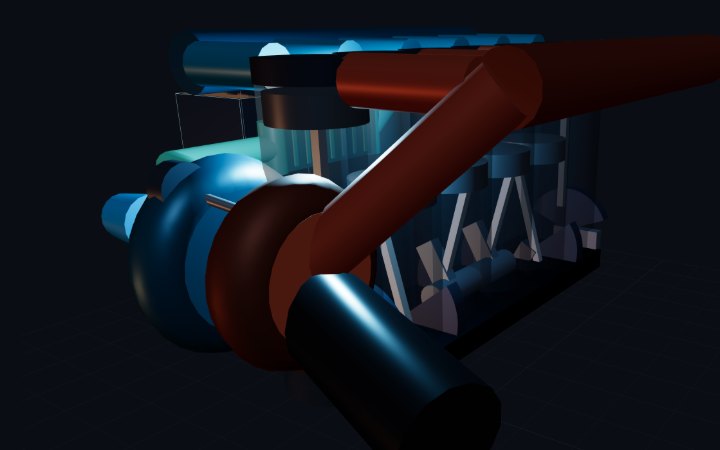
Unit injectors, one big turbo, air-to-air aftercooling. The linehaul six of the American highway, in the thirty-tonne artic it was built for.
The real engine
Same bore, stroke and displacement as the Caterpillar C-15 550.
Figures are Cat's 550 hp truck rating (DM4927) of the 14.6 L C-15; the sheet publishes no compression ratio, and the later 15.2 L C15 carried a longer stroke.
Same layout as the Cummins N14, the Cummins ISX 15 and the Detroit Diesel Series 60.
6 cyl · 14.6 L · diesel · turbo
 602hp
602hpPeak power
602hp
@ 2,100 rpm
Peak torque
2,549N·m
@ 1,288 rpm
Displacement
14,594cc
14.6 litres
Redline
2,100rpm
Specifications
- Cylinders
- 6
- Layout
- Inline
- Bore × stroke
- 137.0 × 165.0 mm
- Displacement
- 14,594 cc
- 14.6 litres
- Compression ratio
- 16.5:1
- Conrod length
- 260.0 mm
- Firing order
- 1-5-3-6-2-4
- Cycle
- Four-stroke
- Fuel
- Diesel, 50 cetane
- Induction
- Turbocharged
- 105 mm compressor wheel
- Boost target
- 2.20 bar absolute
- Wastegate spring pressure, so boost creeps above it as flow rises
- Intercooler
- 72% effectiveness
- Idle
- 600 rpm
- Redline
- 2,100 rpm
Measured on the dyno
Every point is a full sweep of this engine in the simulator, not a figure copied off a spec sheet.
What it is
The bore measures 137 mm, the stroke 165 mm, and six of those make 14.6 litres. Those figures match the Caterpillar C-15 as Cat's own truck spec sheet prints them for the 550 hp rating: 1,850 lb-ft at 1,200 rpm, full power held from 1,600, and a governor at 2,100. Nothing else here was copied from one. The sheet publishes no compression ratio, so the 16.5:1 in the spec table is a calibration choice and the page claims nothing for it. The torque on the dyno comes out of a Wiebe heat release solved against crank-slider geometry 240 times a second, with a single wastegated turbo and an air-to-air aftercooler feeding it.
This is a diesel, so there is no knock limit to run from. The fuel goes in at 12 degrees before top dead centre and burns over 62 degrees of crank, and the only thing that decides how much torque comes out is how much air the turbo can pack into 2.4 litres per cylinder. The boost target is 2.2 bar, and the breathing curve peaks at 1,250 rpm and falls toward the governor, which is what puts the whole torque curve down where a loaded truck lives. Above 1,600 the real engine's injectors run out of delivery. The model has no such limit, so the curve keeps climbing to the governor where the sheet's flattens.
Every other truck diesel in the lineup defaults to a 3.4-tonne pickup. This one ships in the Semi class: 30 tonnes, a ten-speed with a 14.8:1 first, and a 107 km/h governor on half-metre tyres. A clutch rated for a pickup slips for good under 2,500 N·m, so the class carries a 2,600 N·m clutch, fitted to this engine. Select Drive at the 600 rpm idle and the converter drags the crank to 250 before the governor catches it. A smaller diesel on the same load dies there.
Things to try
- Take Boost target down from 2.2 bar toward 1.5. The torque curve drops by a third at every speed and nothing else moves: on a diesel, boost is the level and the rest is shape.
- Move VE peak rpm from 1,250 up toward 1,600. Peak torque follows it up the range and the 1,200 rpm pull that a loaded trailer needs goes with it.
- Pull VE low-end floor from 0.70 toward 0.60. The top of the range steepens as the sheet says it should, and then the 600 rpm idle starves and the engine dies a few seconds after it starts.
Seen in
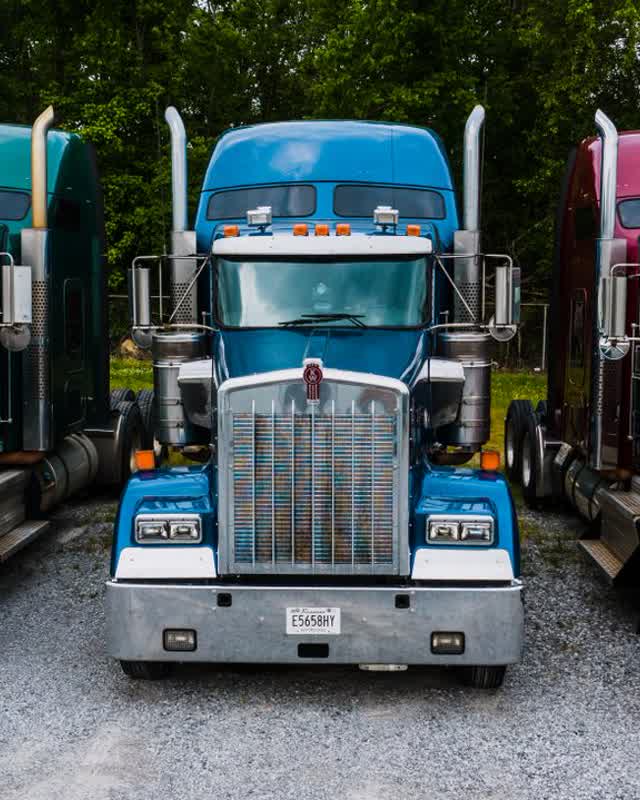
Kenworth W900
Runs this engineThe long-hood linehaul tractor the C-15 was ordered into from 1999, and still sold with the same hood two decades on.
Photo: Kelly · Pexels

Volvo VNL
Same layout2004–2017. Same layout, different engine: the VNL's D13 is a 12.8 L turbocharged inline-six diesel with an aftercooler, doing the same job on the same roads.
Photo: Quintin Gellar · Pexels
Hear it run
It cranks, idles, revs and knocks in the browser. Nothing to download, nothing to install.