PISTON · MWM Sprint 4.07 TCA 2.8
Diesel I4 2.8L Turbo
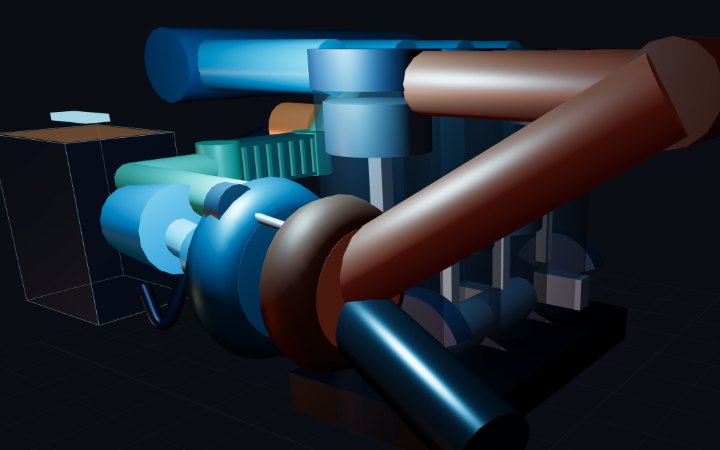
Four cylinders, a mechanical pump and one small turbo. The diesel in every South American pickup of the 2000s.
The real engine
Same bore, stroke, compression ratio and displacement as the MWM Sprint 4.07 TCA 2.8.
Figures are the 2000–2005 mechanical-pump S10 rating; the electronic 4.07 TCE made 140 cv.
Same layout as the VW 1.9 TDI, the Toyota 1KZ-TE and the Isuzu 4JB1-T.
4 cyl · 2.8 L · diesel · turbo
 153hp
153hpPeak power
153hp
@ 4,200 rpm
Peak torque
335N·m
@ 2,044 rpm
Displacement
2,799cc
2.8 litres
Redline
4,200rpm
Specifications
- Cylinders
- 4
- Layout
- Inline
- Bore × stroke
- 93.0 × 103.0 mm
- Displacement
- 2,799 cc
- 2.8 litres
- Compression ratio
- 17.8:1
- Conrod length
- 165.0 mm
- Firing order
- 1-3-4-2
- Cycle
- Four-stroke
- Fuel
- Diesel, 50 cetane
- Induction
- Turbocharged
- 60 mm compressor wheel
- Boost target
- 1.52 bar absolute
- Wastegate spring pressure, so boost creeps above it as flow rises
- Intercooler
- 72% effectiveness
- Idle
- 750 rpm
- Redline
- 4,200 rpm
Check these numbers in the engine displacement calculator, the bore and stroke calculator or the compression ratio calculator, with this engine already filled in.
Measured on the dyno
Every point is a full sweep of this engine in the simulator, not a figure copied off a spec sheet.
What it is
Bore is 93 mm, stroke 103 mm, the compression ratio 17.8:1, and four cylinders of that size come to 2,799 cc. Those figures match the MWM Sprint 4.07 TCA 2.8, the mechanical-pump diesel that Brazil's Chevrolet S10 carried from 2000 to 2005. Nothing else here was copied from one. Torque on the dyno comes out of a heat release the model computes from trapped air mass, injected fuel mass and the fuel's heating value, solved against crank-slider geometry 240 times a second. Peak torque lands within half a percent of the factory 34 kgfm, and power at 3,600 within one and a half percent of the factory 132 cv.
Knock detection needs a spark and an octane number. A compression-ignition engine has neither, so this model never detonates one and 17.8:1 reads as pressure alone. Air sets the ceiling instead. At full rack the model injects one part of fuel for 28 of air and no more. No injection-pump delivery curve exists anywhere in it either, so boost is what carries the calibration up to the factory rating. The same hole shows at the top of the range, where the curve keeps pulling to the 4,200 limiter while the real engine sits on its governor.
The compressor wheel is 60 mm across. The real turbo is a GT20-class 52, and displacement on its own would size 73. At 52 the wastegate ran out of travel above 3,600 rpm, manifold pressure reached 2.2 bar and torque was still climbing at the limiter, because wheels in this model run about 1.3 times the size of the real ones they stand in for. The turbine housing is 0.13, tight enough to spool by 1,800 where the derived width cannot. The wastegate spring holds 1.52 bar absolute and boost creeps from 1.56 bar at 1,800 to 1.77 at the limiter, short of the real engine's 1.9. The aftercooler takes 72 percent of the compressor's temperature rise back out.
Things to try
- Take Compression up from 17.8 toward the 22 the slider allows. No knock chip appears at any setting, because the detector only watches spark engines, and peak cylinder pressure climbs the whole way.
- Drop Compressor Ø to 52 mm, the wheel the real engine carries. Above 3,600 rpm the wastegate saturates and MAP climbs past 1.9 bar instead of holding, which is the measurement that put a 60 mm wheel on this preset.
- Open Housing A/R past 0.13. The turbo stops spooling by 1,800, so peak torque walks up the rev range and the low-end shove this engine is built around goes with it.
Seen in
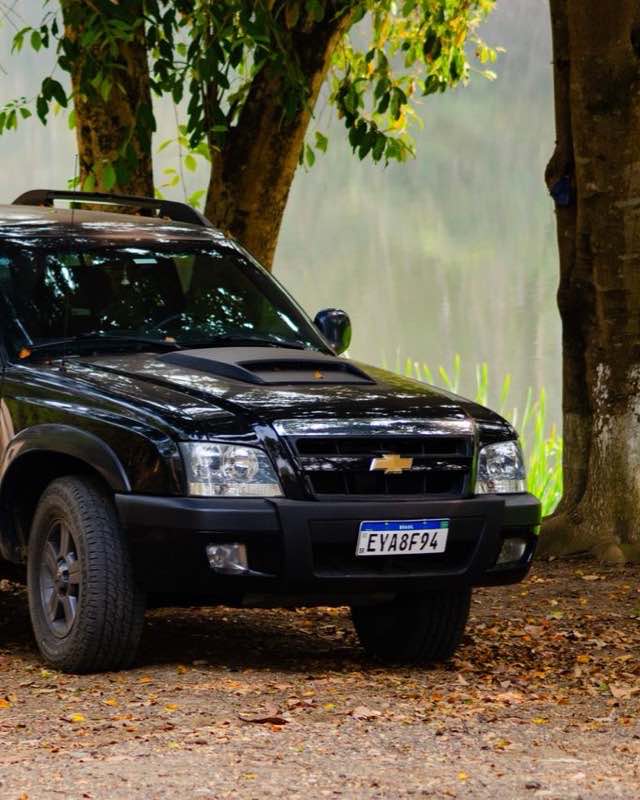
Chevrolet S10 (Brazil)
Runs this engine2000–2012. The 4.07 TCA was the diesel in Brazil's S10, with a mechanical pump until 2005 and electronic management after it.
Photo: Matheus Lara · Pexels
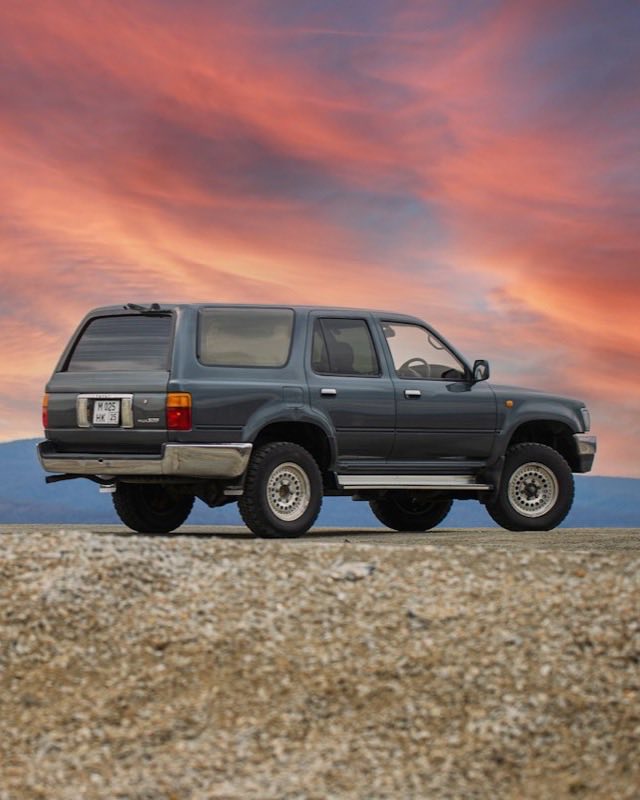
Toyota Hilux Surf
Same layoutSame layout, different engine: the 1KZ-TE is also a turbocharged 3.0-litre inline-four diesel, and the Surf is where most people met it.
Photo: Sergey Tarasov · Unsplash
Hear it run
It cranks, idles, revs and knocks in the browser. Nothing to download, nothing to install.