PISTON · Diesel Inline-4
Diesel I4 2.0 TDI
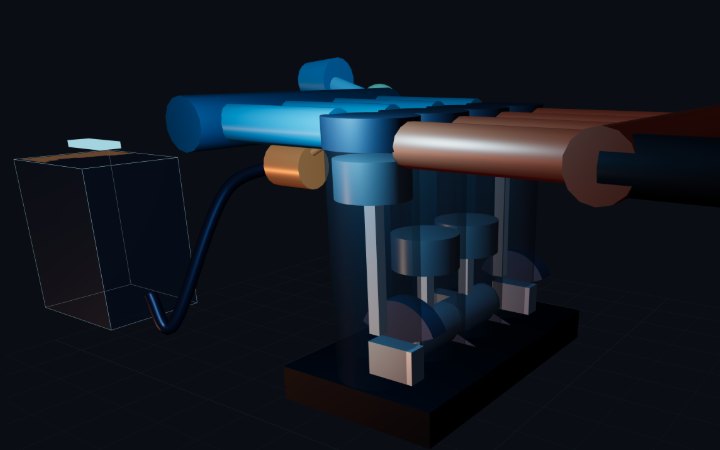
Compression ignition. Glow plugs first on a cold morning.
The real engine
Same layout as the VW 2.0 TDI and the BMW N47.
4 cyl · 2.0 L · diesel
 72hp
72hpPeak power
72hp
@ 5,000 rpm
Peak torque
152N·m
@ 2,167 rpm
Displacement
1,991cc
2.0 litres
Redline
5,000rpm
Specifications
- Cylinders
- 4
- Layout
- Inline
- Bore × stroke
- 83.0 × 92.0 mm
- Displacement
- 1,991 cc
- 2.0 litres
- Compression ratio
- 17.5:1
- Conrod length
- 145.0 mm
- Firing order
- 1-3-4-2
- Cycle
- Four-stroke
- Fuel
- Diesel, 50 cetane
- Induction
- Naturally aspirated
- Idle
- 750 rpm
- Redline
- 5,000 rpm
Check these numbers in the engine displacement calculator, the bore and stroke calculator or the compression ratio calculator, with this engine already filled in.
Measured on the dyno
Every point is a full sweep of this engine in the simulator, not a figure copied off a spec sheet.
What it is
Bore is 83 mm, stroke 92 mm and the compression ratio 17.5:1, which comes to 1.99 litres across four cylinders. The VW 2.0 TDI and the BMW N47 share that architecture, and the resemblance stops there. Nobody here transcribed a real engine's numbers. The burn is a double Wiebe curve solved against crank-slider geometry, 60 percent of the heat arriving in a premixed spike eight degrees wide and the remainder trailing over sixty as the injector keeps feeding a diffusion flame. Injection starts eleven degrees before top dead centre.
Seventeen and a half to one would destroy a petrol engine. A diesel has nowhere to detonate to, because there is no spark to fire ahead of and the fuel arrives after the air is already hot enough to light it. The simulator takes that literally: its knock model arms only for spark ignition with an octane number, so this engine has no knock chip at any compression ratio. Heat release comes from trapped air mass, injected fuel mass and the fuel's heating value over the clearance volume, so more compression leaves a smaller volume to dump that heat into and peak pressure keeps climbing.
Diesel waxes up in the cold, and the fuel system models it. Below 263 K, about minus ten Celsius, supply begins to taper, and twelve degrees further down it reaches zero: the tank is full and the lift pump runs, but nothing gets to the injectors. Supply feeds straight into combustion, so torque follows it down. Cold starting has its own wait. Hit the starter and the engine sits in a glow phase for a second and a half before the crank moves.
Things to try
- Take Compression up from 17.5:1 and no KNOCK chip appears, at any setting. That is why the turbodiesels on the roster stay near 17:1 under boost while the turbocharged petrol six sits at 8.5:1.
- Inj timing reads 11 degrees before top dead centre and the panel goes to 25. Move it earlier and peak pressure rises, until the piston is fighting that pressure on the way up.
- Drag Ambient Temp below 263 K. Fuel supply tapers off, the engine starves and stalls, and it will not restart until you warm it back up.
Seen in

BMW 320d (F30)
Same layoutSame layout, different engine: the badge on the boot names BMW's N47 diesel four, which is this architecture with a turbo bolted to it.
Photo: Mike Bird · Pexels
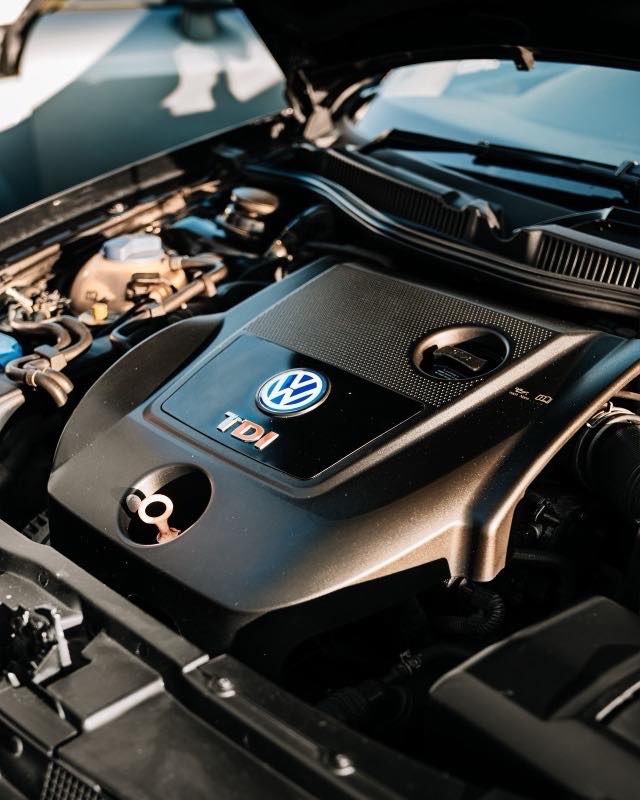
Volkswagen TDI four
Same layoutThe other engine on the layout list, photographed under a bonnet: four cylinders in line, compression ignition, and the turbo this preset does without.
Photo: Mark Arron Smith · Pexels
More like this
Hear it run
It cranks, idles, revs and knocks in the browser. Nothing to download, nothing to install.