PISTON · Inline-6
Inline-6 3.0L
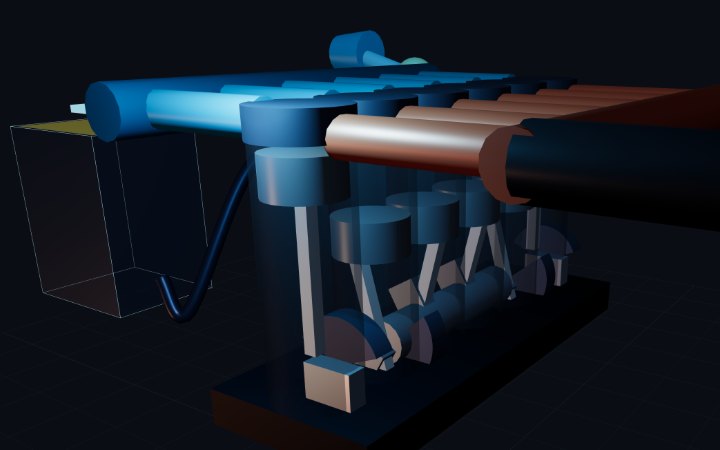
Naturally aspirated straight-six. The 2JZ-GE shape.
The real engine
Same layout as the BMW M54B30, the Toyota 2JZ-GE and the Nissan RB25DE.
6 cyl · 3.0 L · gasoline
 194hp
194hpPeak power
194hp
@ 5,200 rpm
Peak torque
280N·m
@ 4,375 rpm
Displacement
2,993cc
3.0 litres
Redline
7,400rpm
Specifications
- Cylinders
- 6
- Layout
- Inline
- Bore × stroke
- 84.0 × 90.0 mm
- Displacement
- 2,993 cc
- 3.0 litres
- Compression ratio
- 11.0:1
- Conrod length
- 150.0 mm
- Firing order
- 1-5-3-6-2-4
- Cycle
- Four-stroke
- Fuel
- Gasoline, 95 octane
- Induction
- Naturally aspirated
- Idle
- 800 rpm
- Redline
- 7,400 rpm
Check these numbers in the engine displacement calculator, the bore and stroke calculator or the compression ratio calculator, with this engine already filled in.
Measured on the dyno
Every point is a full sweep of this engine in the simulator, not a figure copied off a spec sheet.
What it is
The bore is 84 mm, the stroke 90 mm and the compression ratio 11.0:1, which comes to 2,993 cc across six cylinders in a line. Nobody copied those figures off a real engine. Four straight-sixes sit beside it on architecture alone: the BMW M54B30, the Toyota 2JZ-GE, the Nissan RB25DE and the Ford Barra 4.0. The torque on the dyno comes out of a Wiebe heat release solved against crank-slider geometry 240 times a second, with the plenum, the runners and the collector filling and emptying around it.
Six cylinders share a 720 degree cycle, so one fires every 120 degrees of crank. A power stroke lasts 180. Each fire overlaps the one before it by 60 degrees, and torque never falls to zero between them. You get that out of six cylinders and the firing order 1-5-3-6-2-4, not out of a smoothness parameter somebody tuned.
11.0:1 is what an engine gets to run when nothing forces air into it. The turbocharged six on the roster sits at 8.5:1, and the gap between them is the knock margin that boost spends. This one spent it already. Try to fit the supercharger and the model refuses: inverting the knock chain at 11.0:1 on 95 RON puts the knock-free ceiling at atmospheric pressure, so the blower would spin and make nothing. The preset source records that measurement as no change in peak power.
Things to try
- Take Compression down to the 8.5:1 the turbocharged six runs and the whole torque curve goes with it. Push it the other way and the KNOCK chip arrives, because 95 RON is all this engine drinks.
- Open ADVANCED and move VE peak rpm off 4,800. The torque peak follows. Move it up and the fall-off above the peak sharpens, because that half-width is three tenths of the distance left to the 7,400 redline.
- Shorten Stroke from 90 mm. You give up about 330 cc, and you pull mean piston speed at the redline down from 22.2 metres a second, which is what the friction model charges you for. Run the dyno before and after.
Seen in
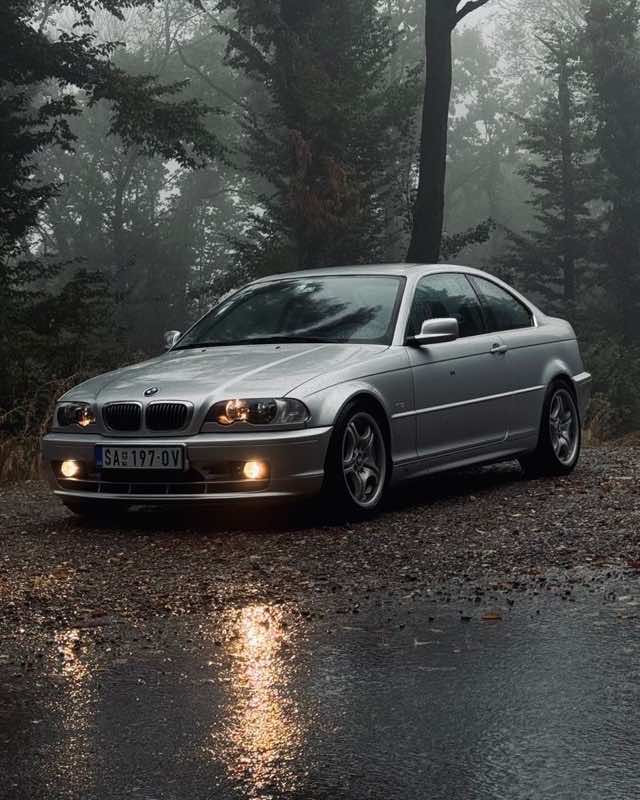
BMW 3 Series (E46)
Same layout1998–2006. Same layout, different engine: the 330i version carried the M54B30, a 3.0-litre straight-six.
Photo: Miroslav Cvetic · Pexels
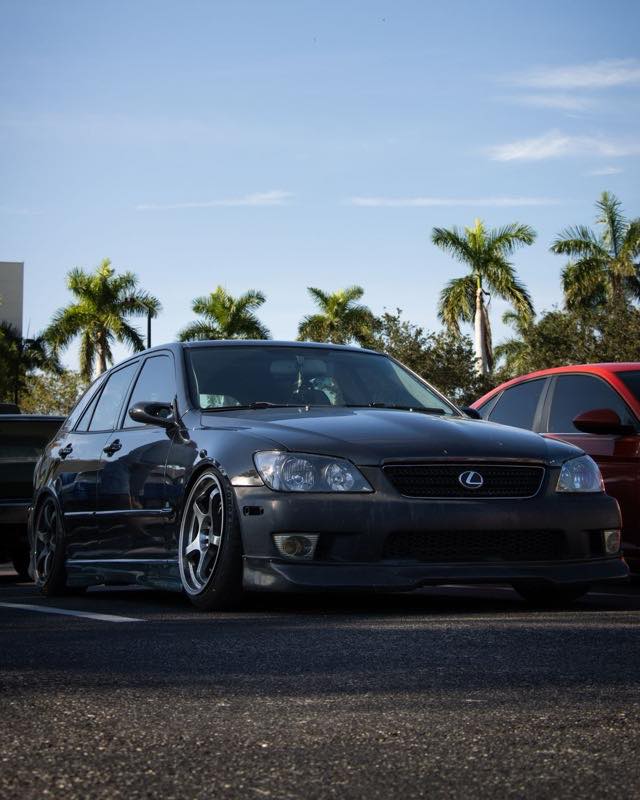
Lexus IS (XE10)
Same layout1998–2005. Same layout again: the IS 300 ran Toyota's 2JZ-GE, the naturally aspirated 3.0 straight-six.
Photo: Alex Akulov · Pexels
Variants
Other Inline-6 engines in the simulator.
Intercooled single turbo on 8.5:1. The classic boosted-six recipe.
6 cyl · 3.0 L · gasoline · turbo
More like this
Hear it run
It cranks, idles, revs and knocks in the browser. Nothing to download, nothing to install.