PISTON · Audi 2.5 TFSI
Inline-5 2.5L Turbo
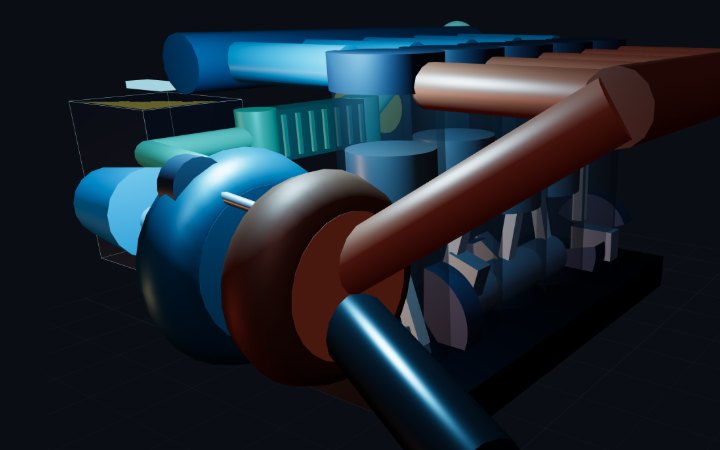
Five cylinders, 144° apart. Half a V10's beat and none of a four's symmetry.
The real engine
Same bore, stroke, compression ratio and displacement as the Audi 2.5 TFSI.
Same layout as the Volvo 850 T5 and the Ford Focus RS Mk2.
5 cyl · 2.5 L · gasoline · turbo
 423hp
423hpPeak power
423hp
@ 7,000 rpm
Peak torque
502N·m
@ 3,642 rpm
Displacement
2,480cc
2.5 litres
Redline
7,000rpm
Specifications
- Cylinders
- 5
- Layout
- Inline
- Bore × stroke
- 82.5 × 92.8 mm
- Displacement
- 2,480 cc
- 2.5 litres
- Compression ratio
- 10.0:1
- Conrod length
- 144.0 mm
- Firing order
- 1-2-4-5-3
- Cycle
- Four-stroke
- Fuel
- Gasoline, 98 octane
- Induction
- Turbocharged
- 70 mm compressor wheel
- Boost target
- 1.98 bar absolute
- Wastegate spring pressure, so boost creeps above it as flow rises
- Intercooler
- 92% effectiveness
- Idle
- 800 rpm
- Redline
- 7,000 rpm
Check these numbers in the engine displacement calculator, the bore and stroke calculator or the compression ratio calculator, with this engine already filled in.
Measured on the dyno
Every point is a full sweep of this engine in the simulator, not a figure copied off a spec sheet.
What it is
The bore is 82.5 mm, the stroke 92.8 mm and the compression ratio 10.0:1, which comes to 2,480 cc across five cylinders in a line. Those four figures match the Audi 2.5 TFSI, the EA855 evo, which Audi rated at 400 PS, or 394 hp, and 480 N·m. Nothing else here was copied from one. The torque on the dyno comes out of a Wiebe heat release solved against crank-slider geometry, with the plenum, the runners and the collector filling and emptying around it.
Five cylinders divide a four-stroke cycle's 720 degrees into five equal intervals of 144 degrees, and that number is the engine. A four fires every 180 degrees and a V10 every 72, so a five beats at half a V10's rate without a four's symmetry. The exhaust stroke lasts 180 degrees and the next cylinder lights 144 degrees into it, which leaves consecutive pulses overlapping in the collector by 36 degrees at any rpm you pick. Firing order is 1-2-4-5-3, the order the real engine runs and the one the default for five cylinders already produced. What you hear is that interval reaching the exhaust rather than a recording of one.
Ten to one is a lot of compression to put a turbocharger on, and the model will not hand this engine boost on its own. A fitted turbo takes its target from the end-gas chain, which reads compression, octane and how much heat the charge cooler removes, and at 10.0:1 that calculation lands on the spec editor's 1.0 bar floor. So the target is written into the preset at 1.98 bar absolute instead of derived, and the cooler is set to 92 percent against an editor ceiling of 95. Both figures come off the real engine: the EA855 evo runs a water-to-air charge cooler, which is most of why it takes this much boost on 98 octane. The wastegate is a spring and a diaphragm, not a controller, so delivered pressure settles 0.3 bar above the set point once flow rises.
Things to try
- Drag Cylinders off five. Four opens the firing interval to 180 degrees and six closes it to 120, and the beat goes with it either way.
- Take Compression up from 10.0:1. The boost target had to be pinned at all because the knock chain will not grant a 10.0:1 engine any boost, and adding compression under 1.98 bar pushes that calculation further the same way.
- Pull Intercooler down from 92 percent. It is the number holding 10.0:1 and nearly two bar of boost together: at 80 percent the end gas reaches 755 K, and the model stops calling 98 octane enough.
Seen in
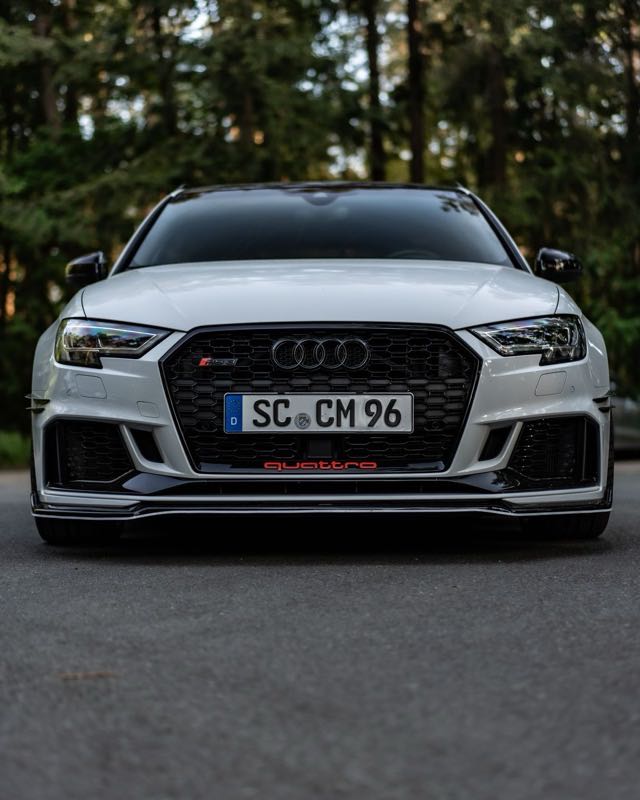
Audi RS 3 (8V)
Runs this engine2015–2020. The 2.5 TFSI sits across the nose rather than along it, driving all four wheels, which is how five cylinders ended up in a hatchback at all.
Photo: Ibrahim Bilgin · Pexels
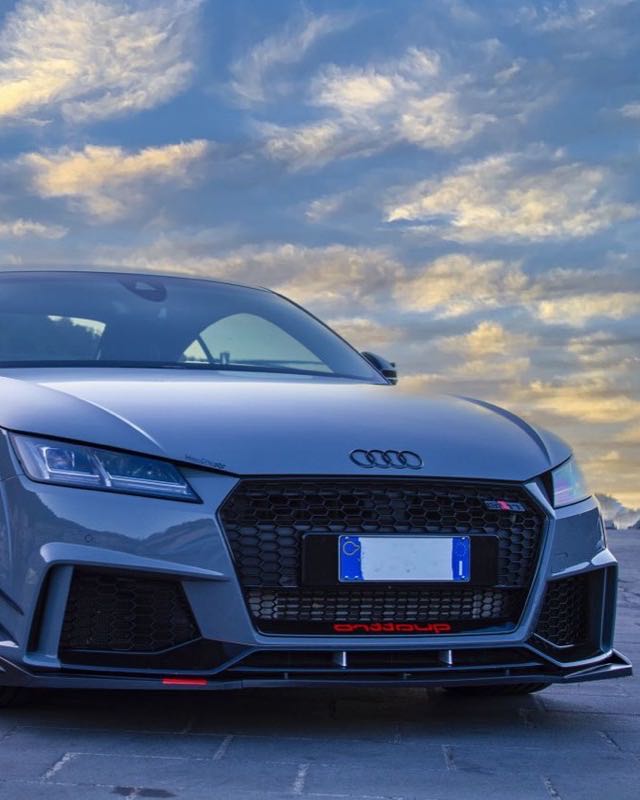
Audi TT RS (8S)
Runs this engine2016–2023. The same 2.5 TFSI in a two-seat coupe. Audi has put a turbocharged five in the TT RS since 2009, one generation before this one.
Photo: marica Pavone · Pexels
Hear it run
It cranks, idles, revs and knocks in the browser. Nothing to download, nothing to install.