PISTON · Saab 93 two-stroke
Two-Stroke I3 750
A 748 cc Saab-style screamer: three cylinders, six power pulses every two turns, in a haze of premix.
The real engine
Same bore, stroke, displacement and compression ratio as the Saab 93 two-stroke.
Firing order is the even default — Saab's published order was not verified. Output is tuned to the 93's 33 hp; later 96/GT tunes made up to 57.
Same layout as the DKW 3=6 and the Wartburg 353.
3 cyl · 748 cc · gasoline
 36hp
36hpPeak power
36hp
@ 4,146 rpm
Peak torque
67N·m
@ 3,804 rpm
Displacement
748cc
Redline
5,000rpm
Specifications
- Cylinders
- 3
- Layout
- Inline
- Bore × stroke
- 66.0 × 72.9 mm
- Displacement
- 748 cc
- Compression ratio
- 7.3:1
- Conrod length
- 125.0 mm
- Firing order
- 1-3-2
- Cycle
- Two-stroke
- Fuel
- Gasoline, 95 octane
- Induction
- Naturally aspirated
- Idle
- 900 rpm
- Redline
- 5,000 rpm
Check these numbers in the engine displacement calculator, the bore and stroke calculator or the compression ratio calculator, with this engine already filled in.
Measured on the dyno
Every point is a full sweep of this engine in the simulator, not a figure copied off a spec sheet.
What it is
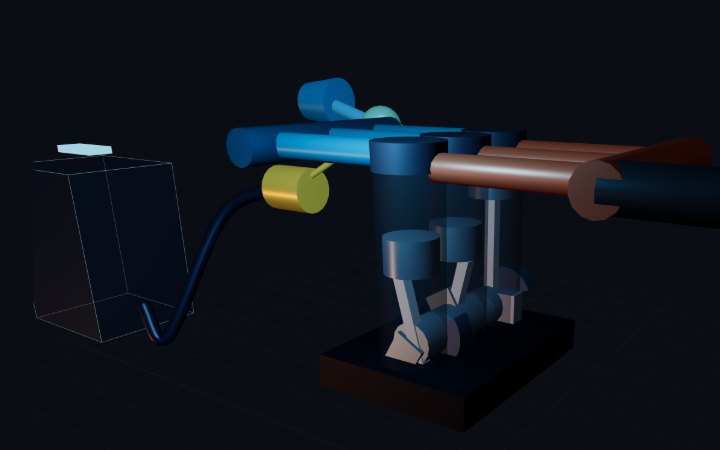
Bore is 66 mm, stroke 72.9 mm, and three cylinders of that size come to 748 cc at 7.3:1. Those four figures match the Saab 93's two-stroke triple, and Saab rated that engine at 33 hp at 4,200 rpm, which is the output this preset chases. Nothing else here was copied from one. The firing order is the even 120-degree default, because nobody here has checked Saab's published order against a factory document. The power stroke runs on the same Wiebe heat release and crank-slider geometry as every four-stroke on the roster; the gas exchange is what differs, gated by ports the piston uncovers rather than by valves on a camshaft.
Each cylinder fires once per crank revolution, so three of them put a power stroke every 120 degrees of crank. Six in two turns, evenly spaced, which is what an inline-six four-stroke gives you from twice the cylinders. That is most of why these cars charmed the people who drove them. The count is easy to check by ear: 45 firings a second at the 900 rpm idle, 250 at the 5,000 rpm redline, since the audio builds its pulse train from the fire events themselves.
The exhaust port opens 116 degrees after top dead center, and because the piston uncovers and re-covers the same hole on its way past, it closes 116 degrees before. Compression starts there, not at the bottom of the stroke, so the sealed ratio reads 5.91:1 against the 7.3:1 on the geometry line and the spec panel prints both. Trapping efficiency is 0.75, which sends a quarter of the delivered charge out the exhaust with its premix oil still in it. You cannot bolt your way around that, either. A loop-scavenged engine breathes through its own crankcase, so the model refuses it a turbocharger and a blower alike.
Things to try
- Drag Exh port opens from 116 down toward 75. Blowdown starts earlier, the trapped stroke shortens, and the Trapped CR readout beneath it falls a little with every degree. Send it the other way for the mild road port and the compression comes back.
- Take Trapping eff up from 0.75. You are handing the cylinder back the quarter of its charge that was leaving unburned, and the dyno line climbs across the range when you do.
- Compression on this engine opens the wide FREE ROAM range instead of the stock table, since 7.3 sits under the stock floor of 8. Raise it and watch Trapped CR follow at a distance. The port decides where compression begins; the piston crown only decides how far it goes.
Seen in
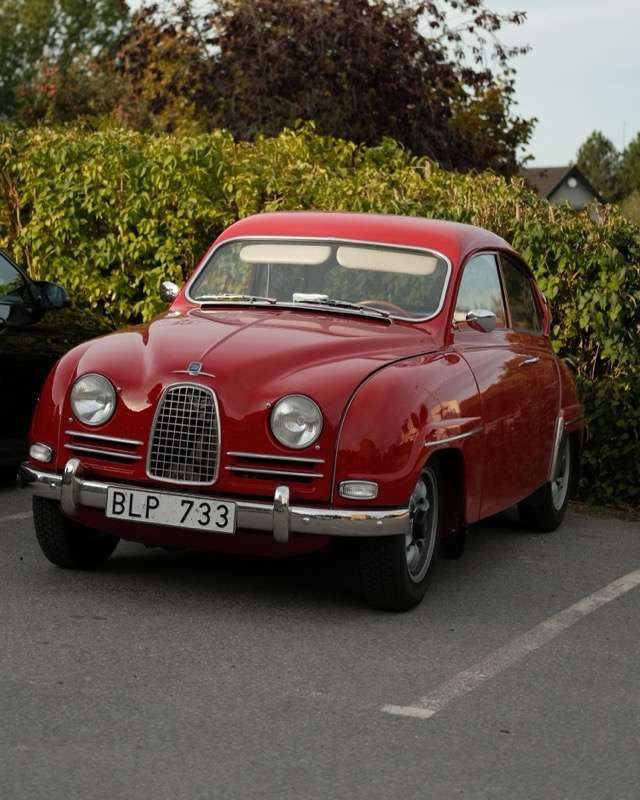
Saab 96 (two-stroke)
Runs this engine1960–1965 short nose. Saab carried the three-cylinder two-stroke over from the 93, and the 93 is the car whose bore, stroke and compression ratio this preset matches.
Photo: Jenny Tran · Pexels
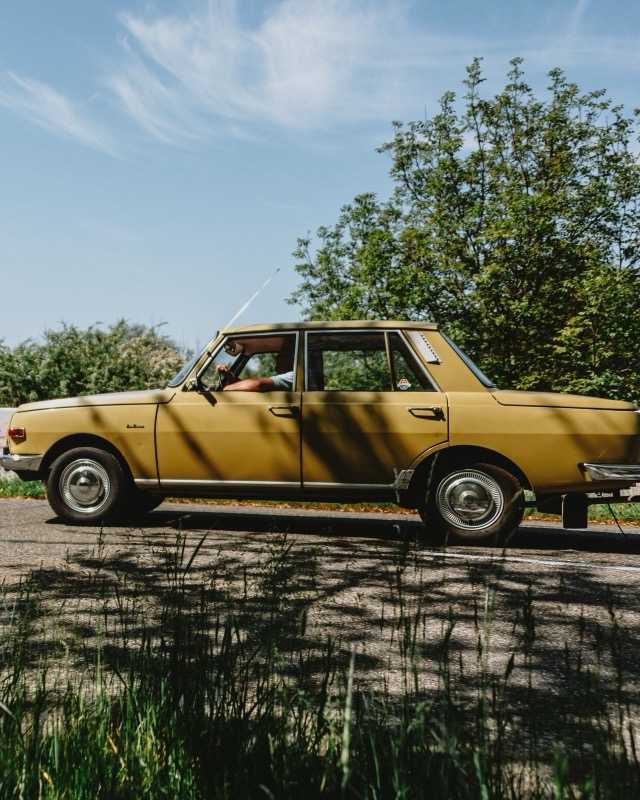
Wartburg 353
Same layoutSame layout, different engine: Eisenach built this saloon around its own three-cylinder two-stroke from 1966 to 1988, firing once per cylinder per revolution the way this one does.
More like this
Hear it run
It cranks, idles, revs and knocks in the browser. Nothing to download, nothing to install.