PISTON · Honda K20A
Inline-4 2.0L
The honest daily-driver four. Learn the basics on it.
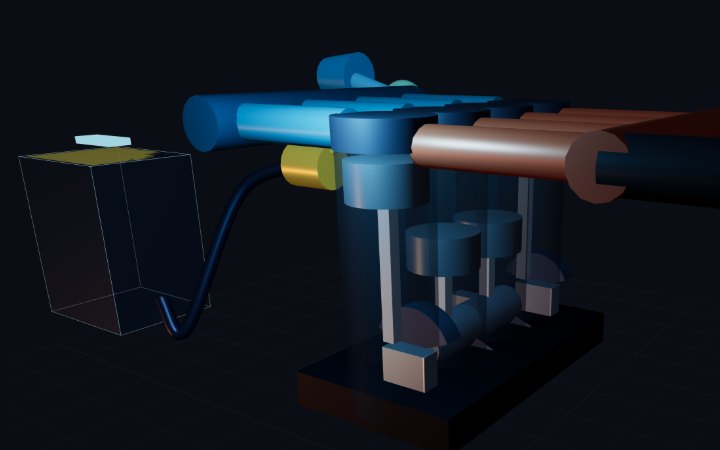
The real engine
Same bore, stroke and displacement as the Honda K20A.
The K20A runs a higher compression ratio; this one is a road four.
Same layout as the Toyota 3S-GE and the VW EA888 2.0.
4 cyl · 2.0 L · gasoline
 116hp
116hpPeak power
116hp
@ 7,200 rpm
Peak torque
179N·m
@ 4,025 rpm
Displacement
1,998cc
2.0 litres
Redline
7,200rpm
Specifications
- Cylinders
- 4
- Layout
- Inline
- Bore × stroke
- 86.0 × 86.0 mm
- Displacement
- 1,998 cc
- 2.0 litres
- Compression ratio
- 10.5:1
- Conrod length
- 144.0 mm
- Firing order
- 1-3-4-2
- Cycle
- Four-stroke
- Fuel
- Gasoline, 95 octane
- Induction
- Naturally aspirated
- Idle
- 850 rpm
- Redline
- 7,200 rpm
Check these numbers in the engine displacement calculator, the bore and stroke calculator or the compression ratio calculator, with this engine already filled in.
Measured on the dyno
Every point is a full sweep of this engine in the simulator, not a figure copied off a spec sheet.
What it is
Bore and stroke both measure 86 mm, which comes to 1,998 cc across four cylinders. Bore, stroke and displacement match the Honda K20A. Compression here is 10.5:1 and the K20A's is higher, so this is the road version of that engine rather than the Type R one. Nothing else here was copied from one. The torque on the dyno comes out of a Wiebe heat release solved against crank-slider geometry, with the plenum, the runners and the collector filling and emptying around it.
The intake breathes best at 4,400 rpm and the limiter sits at 7,200, so the last 2,800 rpm happen past the breathing peak. A four-stroke here may put that peak as high as eight tenths of redline, and the seven-litre V8 on this roster uses all of it. This one sits at six tenths. The model scales the fall-off above the peak from the gap left to redline: 840 rpm here, against 1,980 rpm on the climb into it. Breathing drops away more than twice as fast as it built, which is why the torque peak lands early and power carries on past it on revs alone.
It revs because the stroke is short. Friction gets charged on mean piston speed rather than on rpm, since rubbing follows how far the rings travel and not how often they turn around. At 7,200 rpm an 86 mm stroke averages 20.6 metres a second, where the seven-litre V8 averages 23.7 at a redline 200 rpm lower. Nothing else about this engine is unusual, and that is what it is for. The 0.95 breathing figure is what the model hands any petrol preset that states none of its own, and the simulator opens on this engine. Read the rest of the roster against it.
Things to try
- Take Compression up from 10.5:1. On the 95 octane this runs, the knock reading holds at zero through 12:1, appears at 13:1 and quadruples by 14:1, and torque stops climbing between those last two. Better fuel moves the wall. It does not remove it.
- Switch Fuel type to LPG and walk compression up again. LPG carries 110 octane against petrol's 95 and never knocks across that range. It starts behind at 11:1, because petrol holds more energy per unit of charge, and closes most of the gap by 14:1.
- Take Bore out from 86 mm. Power tracks displacement to within 0.7 percent across a 2.5 times range, and horsepower per litre falls off a fraction as you go, because friction scales with bore area and volume does not.
Seen in
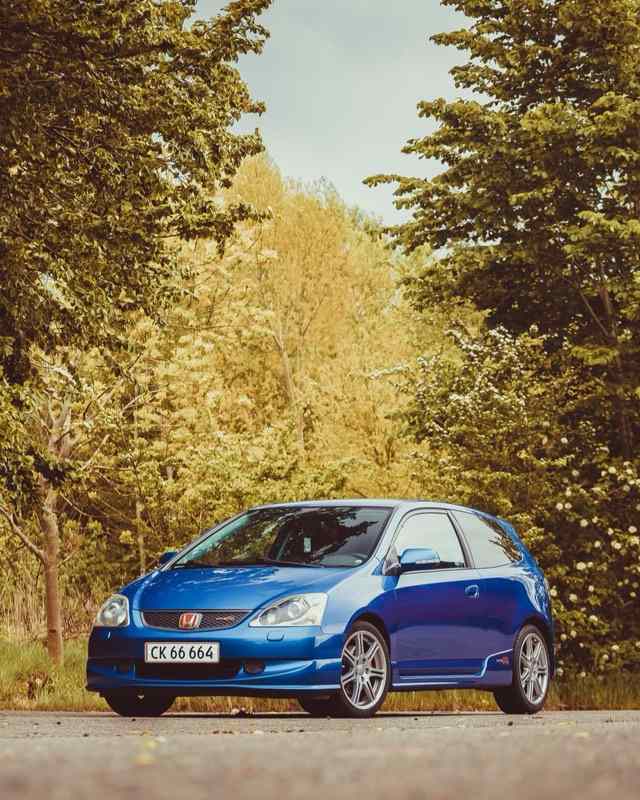
Honda Civic Type R (EP3)
Runs this engine2001 to 2005. The three-door Type R built around the K20, and the car that took the engine out of Japan and into Europe.
Photo: Sebastian Pichard · Pexels
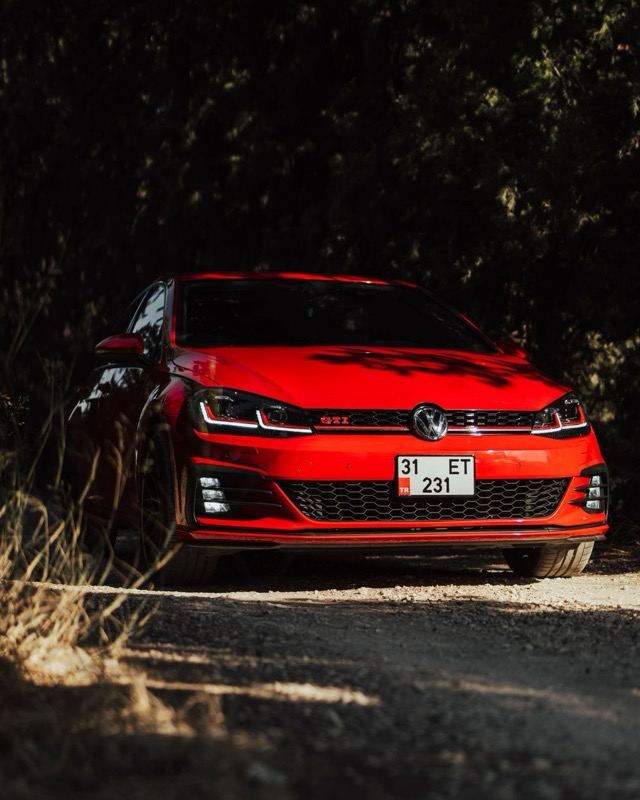
Volkswagen Golf GTI (Mk7)
Same layoutSame layout, different engine: the EA888 is another 2.0-litre four, turbocharged where this one breathes on its own.
Photo: Ertuğrul Tohma · Pexels
More like this
Hear it run
It cranks, idles, revs and knocks in the browser. Nothing to download, nothing to install.