PISTON · 60° V6
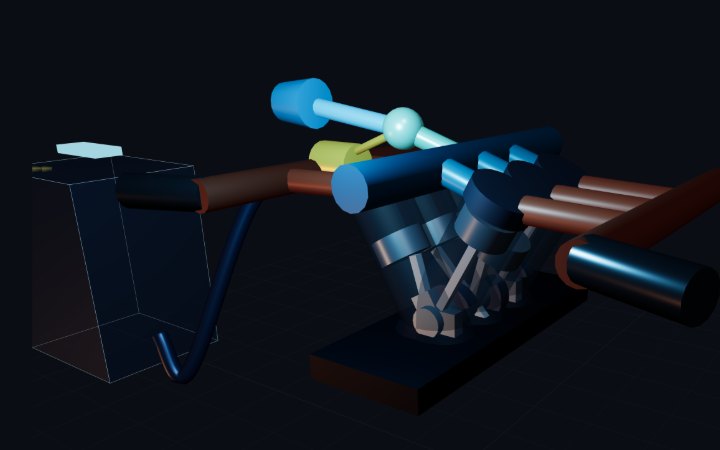
V6 3.0L 60°
Sixty-degree banks and a snarl all of its own.
The real engine
Same layout as the Alfa Romeo Busso V6, the Nissan VQ30DE and the Ford Duratec V6.
6 cyl · 3.0 L · gasoline
 193hp
193hpPeak power
193hp
@ 7,500 rpm
Peak torque
283N·m
@ 4,150 rpm
Displacement
2,986cc
3.0 litres
Redline
7,500rpm
Specifications
- Cylinders
- 6
- Layout
- V
- 60° between banks
- Bore × stroke
- 89.0 × 80.0 mm
- Displacement
- 2,986 cc
- 3.0 litres
- Compression ratio
- 11.2:1
- Conrod length
- 150.0 mm
- Firing order
- 1-4-2-5-3-6
- Cycle
- Four-stroke
- Fuel
- Gasoline, 95 octane
- Induction
- Naturally aspirated
- Idle
- 800 rpm
- Redline
- 7,500 rpm
Check these numbers in the engine displacement calculator, the bore and stroke calculator or the compression ratio calculator, with this engine already filled in.
Measured on the dyno
Every point is a full sweep of this engine in the simulator, not a figure copied off a spec sheet.
What it is
Bore is 89 mm, stroke 80 mm, compression 11.2:1, and six cylinders come to 2,986 cc. Nothing here was copied from a real engine, because the 60° vee is the subject rather than any one car's version of it. The torque on the dyno comes out of a Wiebe heat release solved against crank-slider geometry 240 times a second, with the plenum, the runners and the collector filling and emptying around it.
All six fires land 120° apart. The sim spaces them by position in the firing order, 1-4-2-5-3-6, and the angle between the banks never enters that arithmetic. The alternative sits in the same module: two cylinders whose rods share one crankpin reach top dead centre a bank angle of crank rotation apart, which is where a 45° Harley gets its uneven beat. Put a 60° pair on one pin and they sit 60° apart. Give every cylinder its own journal, as this crank does, and the pairs land on the even spacing.
The vee reaches your ears and the render, not the dyno. Bank membership picks which of two exhaust buses a cylinder sums into, so this engine has a left side and a right side. Move the angle and the torque curve stays where it was, because the crank-slider solver never reads a cylinder index. What separates this from the inline-six is the stroke, 80 mm against 90, on a friction law charged by mean piston speed: at the 7,500 rpm redline these pistons average 20.0 m/s, and the inline-six's average 22.2 at a lower one. The VR6 at 15° fires on the same 120° spacing, then differs where it counts, 10.0:1 and 6,500 rpm.
Things to try
- Drag Bank angle to 0. Below one degree the block becomes a single row, both heads stand on the centreline, and the stereo pair turns into one pipe. Run the dyno again and it reads what it read at 60°.
- Take Stroke up toward the inline-six's 90 mm. Displacement climbs and so does mean piston speed, and friction charges on that, so those ten millimetres cost you more at 7,500 rpm than they do at idle.
- Compression sits at 11.2:1 and the fuel is gasoline. Push it higher and watch the KNOCK chip answer; pull it back toward the VR6's 10.0:1 and it goes quiet again.
Seen in
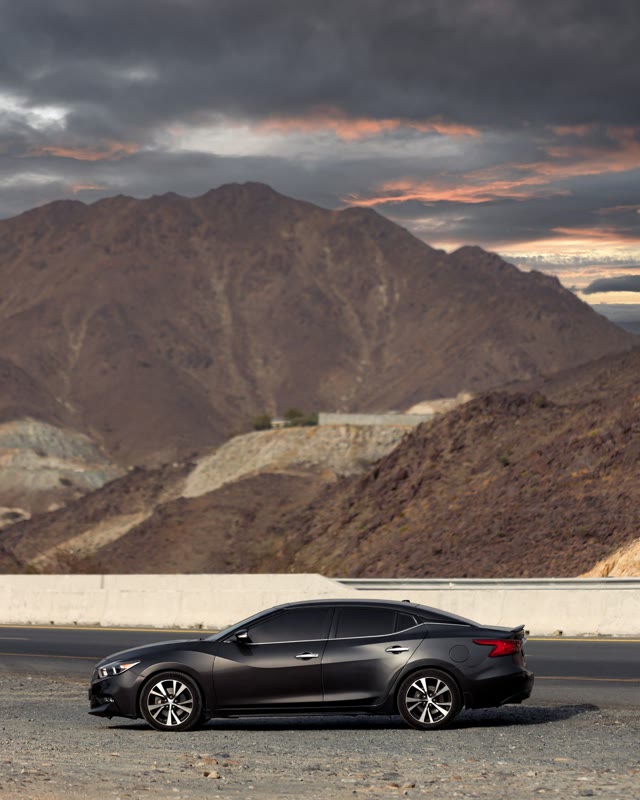
Nissan Maxima (A36)
Same layout2016–2023. Same layout, different engine: Nissan's VQ V6 family sets its banks 60° apart, and this generation runs the 3.5 where the VQ30DE ran 3.0.
Photo: Dreamer Dude · Pexels
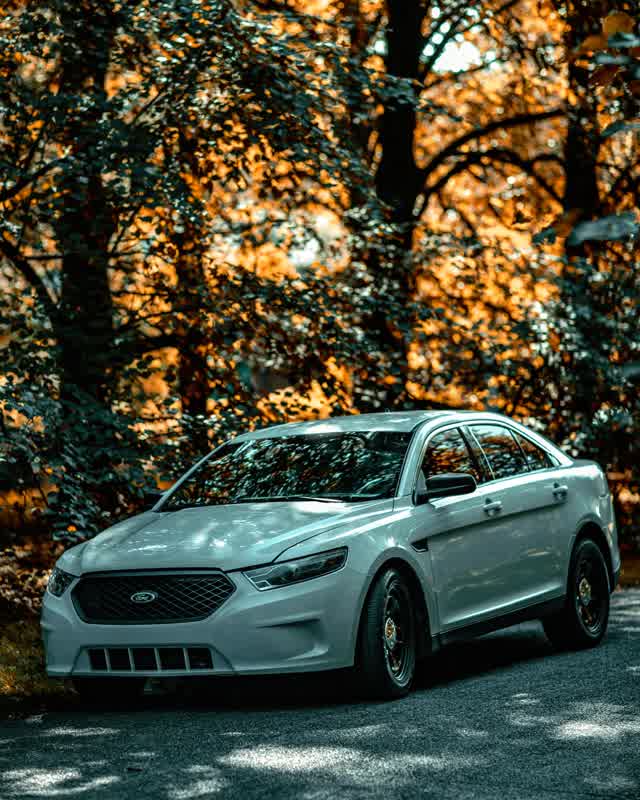
Ford Taurus (2013–2019)
Same layoutFord's Duratec V6 puts its banks at 60° as well, and the 3.5-litre version carried the last generation of Taurus, police cars included.
Photo: Gursher Gill · Pexels
More like this
Hear it run
It cranks, idles, revs and knocks in the browser. Nothing to download, nothing to install.